
Cellulose Nanofiber (Cellulose Nanofibril, Nanofibrillated Cellulose, CNFs)

- SKU:
- NG01NC0201
- Shipping:
- Calculated at Checkout


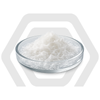
Description
25 grams: 45 €
100 grams: 130 €
500 grams: 395 €
1000 grams: 670 €
Cellulose Nanofiber (Cellulose Nanofibril, Nanofibrillated Cellulose, CNFs)
Wide: 4-10 nm, Length: 1-3 µm, Dry powder
Cellulose Nanofibril is originally generated from wood-derived fibrils with length in the micrometer and width in the nanometric range during the biosynthesis of cellulose.
Today, there is widespread scientific and commercial interest in cellulose nanofibrils (CNF). There have several application areas including foods, cosmetics, pharmaceuticals, paints,
drilling muds, paper additives and paperboard barriers, medical products, etc. Our Nanofibrillated Cellulose product competes on price and performance with counterparts.
Technical Properties:
| Appearance (Color) | White |
| Appearance (Form) | Dry powder (~4 wt.% moisture) |
| Average Particle Size | 4-10 nm wide, 1-3 µm length |
| Cellulose Crystallinity (XRD) | 92% |
| Decomposition Temperature (TGA in N2) | 329 oC |
| Density | 1.50 g/cm3 |
Applications:
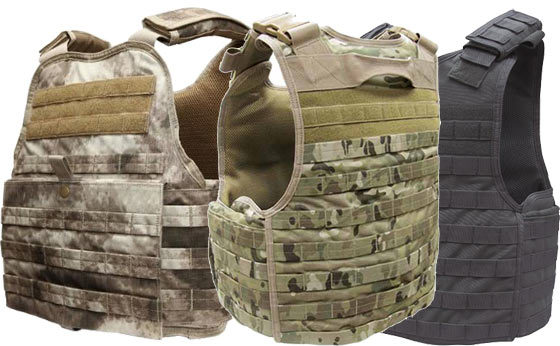
1.Body Armor Applications
Crystal structure of nanocellulose is consisting from packed array of needle-like crystals. These crystal structures are incredibly
tough and their strength value is nearly eight times higher than stainless steel. Therefore, nanocellulose can be perfect building
material for the future body armor studies.

Image retrieved from: http://modernsurvivalblog.com/wp-content/uploads/2013/07/body-armor.jpg
2.Flexible Batteries
Generally, separator parts inside batteries made up from thick and stiff material which cannot be used for bendable applications.
Instead of these materials, flexible and thin nanocellulose combined with graphene material, flexible battery as the one of the big
dream in electrical industry can be produced.

Image retrieved from: http://www.talkandroidphones.com/2012/08/07/flexible-batteries-to-power-future-devices/
3.Flexible Screens
Nanocellulose is bendable, transparent, light and strong material therefore it can easily take place of the plastic or glass.
In the future, nanocellulose will be one of the best material for bendable screen studies.
4.Filters
Nanocellulose can be used to filter and purify many types of liquids such as purifying saltwater to be drinkable, trapping
dangerous chemicals in cigarette and filtering out blood cell during transfusion.

Image retrieved from: https://www.wallenberg.com/kaw/sites/default/files/styles/700x369/public/files/Reportag-genre-KAW-T/detalj-mihranyan-t.jpg?itok=bEtXeIto

5.Absorbent Aerogels
When the nanocellulose are mixed with the aerogel foam, incredibly porous and adsorbent material can be obtained that
could make strong and light wound-dressing and tampons.
6.Fuel Efficient Cars
Nanocellulose can be obtained by algae and actually, this is quite cheap production method. Therefore, it will be possible
to use it in serious bulk materials. In the cars, components from stuff to interior trim will be produced from the light
composites reinforced with nanocellulose. By this way, decrease in the weight of the components will save the fuel
consumption of the cars.
7.Biofuel
During the production of nanocellulose by algae, it is possible to obtain biofuel at the same time by changing the DNA of the
helpful bugs. Result of these process actually will not produce real nanocellulose material, but it will bring into useful byproduct.
FAQ
Technical FAQ About Cellulose Nanofiber (CNF), 4-10 nm Wide, 1-3 µm Length
1) What are the dimensions of this Cellulose Nanofiber (CNF) grade?
This Cellulose Nanofiber (CNF) grade has an average width of 4-10 nm and a length of 1-3 µm. The material therefore combines nanometer-scale fibril width with micrometer-scale fibril length and is supplied as a dry powder.
2) What is the crystallinity of this Cellulose Nanofiber according to XRD analysis?
The cellulose crystallinity of this CNF grade is 92% as determined by X-ray diffraction (XRD). This value is a product-specific parameter that should be considered when comparing this material with other cellulose nanofiber or nanofibrillated cellulose grades.
3) What is the decomposition temperature of this CNF grade?
The reported decomposition temperature of this Cellulose Nanofiber is 329°C based on thermogravimetric analysis (TGA) under nitrogen. This value should be considered when designing processing conditions involving elevated temperatures.
4) Is this Cellulose Nanofiber supplied as a suspension or as a dry powder?
This CNF product is supplied as a white dry powder containing approximately 4 wt.% moisture. It is not supplied as a ready-to-use aqueous suspension, so dispersion preparation is required before use in liquid formulations.
5) What is the density of this Cellulose Nanofiber powder?
The reported density of this Cellulose Nanofiber grade is 1.50 g/cm³. This specification can be useful when calculating material loading and formulation ratios for composites, coatings and other CNF-containing systems.
6) What is the raw material source of this Cellulose Nanofiber?
The raw material used for this Cellulose Nanofiber grade is cotton. This is an important product-specific distinction for researchers evaluating CNF materials according to cellulose source and processing route.
7) Is the surface of this Cellulose Nanofiber chemically modified?
Yes. The surface of this CNF grade is carboxymethylated. The cellulose nanofiber is modified by carboxymethylation and subsequently mechanically processed, making surface chemistry an important characteristic of this specific grade.
8) Is this carboxymethylated Cellulose Nanofiber hydrophilic?
Yes. This Cellulose Nanofiber grade is hydrophilic. Its hydrophilic character should be considered when preparing water-based formulations, dispersions and composite systems.
9) How can this dry Cellulose Nanofiber powder be dispersed in water?
According to the product specifications, this CNF can be dispersed in water using a high-pressure homogenizer at approximately 40 MPa for 2-3 passes. Dispersion conditions may require further optimization depending on CNF concentration and the composition of the final formulation.
10) Is this CNF freeze-dried, spray-dried or TEMPO-oxidized?
This Cellulose Nanofiber grade is described as normally dried rather than freeze-dried or spray-dried. The specified surface modification for this product is carboxymethylation rather than TEMPO oxidation.
11) Which specifications are most important when selecting this CNF for a formulation?
The key specifications of this grade are its 4-10 nm fibril width, 1-3 µm fibril length, 92% cellulose crystallinity, approximately 4 wt.% moisture content, 1.50 g/cm³ density, carboxymethylated surface and hydrophilic character. These parameters should be evaluated together when determining compatibility with a specific formulation or processing route.
12) What distinguishes this Cellulose Nanofiber grade from a generic CNF specification?
This product is defined by a specific combination of 4-10 nm width, 1-3 µm length, 92% crystallinity, carboxymethylated surface chemistry, cotton-derived raw material and dry-powder form. These specifications provide a more precise basis for material selection than the general term "cellulose nanofiber" alone.
13) What is the main functional group of CNF?
The main functional group is -OH.

TEM Image of NG01NC0201(CNFs)
1 Review
-
the product is ok
Based on our experience in ordering CNF, there is one mistake where CNF sent to me is not as wanted. However, for the next order is OK. Tq
Related Products
Related Products


Cellulose Nanocrystal (Nanocrystalline Cellulose,CNC)

Nanocrystalline Cellulose (NCC) Water Dispersion, Size: <110 nm, 7.5 %wt

Carboxymethyl Cellulose (CMC) Micron Powder for Li-ion Battery Anode Materials


Carbon Nanofibers, Purity: > 95%, Outside Diameter: 50-100 nm
