
Blografi
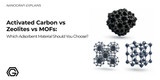
Activated Carbon vs Zeolites vs MOFs: Which Adsorbent Material Should You Choose?
Activated carbon, zeolites and metal-organic frameworks (MOFs) represent three distinct adsorbent classes with substantially different pore architectures, surface chemistries and regeneration characteristics.
Although these materials are frequently compared on the basis of BET surface area, adsorption performance under practical process conditions depends on a broader set of parameters, including pore-size distribution, adsorbate–surface interactions, humidity, working capacity, regenerati
…
20th Aug 2026
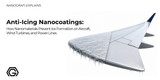
Anti-Icing Nanocoatings: How Nanomaterials Prevent Ice Formation on Aircraft, Wind Turbines, and Power Lines
Ice accretion is not a cosmetic problem for industrial equipment operating in cold climates. On aircraft, even a thin, rough layer of ice on a wing leading edge measurably degrades lift and increases drag, which is why aviation authorities treat in-flight icing as a certified flight hazard rather than an inconvenience. On wind turbines, blade icing distorts aerodynamic profiles, unbalances the rotor, and in documented cases has cut annual energy production by a significant margin at cold-climate
…
12th Aug 2026
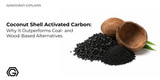
Coconut Shell Activated Carbon: Why It Outperforms Coal- and Wood-Based Alternatives
Not all activated carbon starts from the same place, and the raw material behind it matters more than most technical spec sheets let on. Coconut shell, bituminous coal, and wood all turn into "activated carbon" after carbonization and activation, but the internal pore architecture each ends up with is genuinely different, and that difference decides whether a given carbon is right for drinking water, gold recovery, or decolorizing a sugar syrup. A broader look at how these production routes work
…
4th Aug 2026
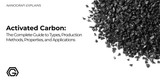
Activated Carbon: The Complete Guide to Types, Production Methods, Properties, and Applications
Activated carbon is ordinary carbon processed to develop an enormous internal pore network, the kind of processing that can push surface area from a few square meters per gram in raw charcoal up past 1,000 m2/g, and in specialty grades past 3,000 m2/g. That almost absurd amount of internal surface packed into a small volume is what makes activated carbon adsorb rather than simply sit inert. Adsorption is worth distinguishing from absorption here: a sponge absorbs water into its bulk structure, w
…
3rd Aug 2026

Graphene Coating Technology: A New Standard in Corrosion and Wear Protection
Every metal surface is, in a sense, already losing a slow chemical war. Oxygen, moisture, and dissolved salts constantly attack exposed metal, and corrosion costs the global economy hundreds of billions of dollars every year across infrastructure, transportation, and manufacturing. Coating technology has always been the main line of defense, but for decades the options have been limited: cheap barriers that degrade quickly, or expensive multilayer systems that are hard to apply and maintain. Gra
…
28th Jul 2026