
Carbon Quantum Dots (CQD)
Explore Carbon Quantum Dots (CQDs) from Nanografi for fluorescence sensing, bioimaging research, optoelectronics and advanced nanomaterial development. These carbon-based fluorescent nanoparticles offer composition- and surface-dependent photoluminescence, making them useful for a variety of optical and analytical applications.
Our carbon quantum dot portfolio includes blue (420 ± 10 nm), green (515 ± 10 nm and 528 ± 10 nm), and orange (590–620 nm) emission options, including water-soluble materials and dispersions in DI water or ethanol. Compare available products below or explore our complete Quantum Dots portfolio.
- Product
- Qty in Cart
- Quantity
- Price
- Subtotal
-

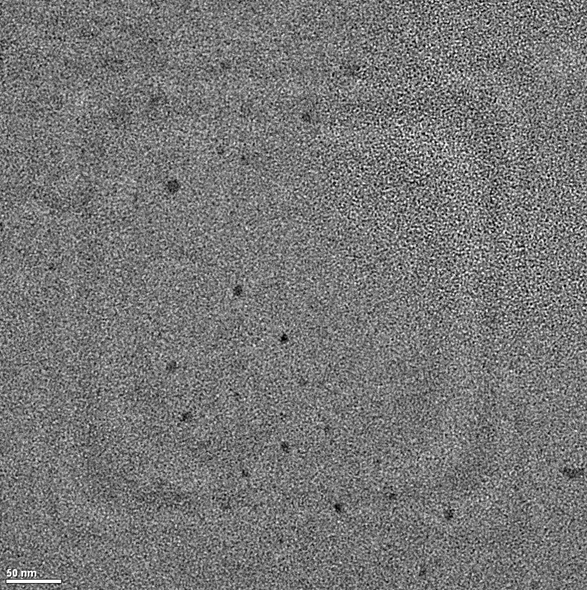
Carbon Quantum Dots (CQDs), 590-620 nm, Solvent: DI water, Concentration: 0.01 mg/ml
$49.3925 ml: 45€50 ml: 77€100 ml: 120€500 ml: 475€1000 ml: 620€ Contact us for tailored quotes on larger quantities & experience exceptional solutions from our experts. Carbon QuNG10QD0979$49.39 -

Carbon Quantum Dots (CQDs), 590-620 nm, Solvent: Ethanol, Concentration: 0.01 mg/ml
$49.3925 ml: 45€50 ml: 77€100 ml: 120€ Contact us for tailored quotes on larger quantities & experience exceptional solutions from our experts. Carbon Quantum Dots (CQDs), 590-620 nmNG10QD0980$49.39 -

Water Soluble Carbon Quantum Dots 420±10 nm
$571.8550 mg: 521€100 mg: 783€ Contact us for tailored quotes on larger quantities & experience exceptional solutions from our experts. Water Soluble Carbon Quantum Dots 420±10 nmNG10QD0949$571.85 -


Carbon Quantum Dots (CQDs), 590-620 nm, Solvent: Ethanol, Concentration: 0.1 mg/ml
$49.3925 ml: 45€50 ml: 77€100 ml: 120€ Contact us for tailored quotes on larger quantities & experience exceptional solutions from our experts. Carbon Quantum Dots (CQDs), 590-620 nmNG10QD0981$49.39 -

Water Soluble Carbon Quantum Dots 528±10 nm
$571.8550 mg: 521€100 mg: 783€ Contact us for tailored quotes on larger quantities & experience exceptional solutions from our experts. Water Soluble Carbon Quantum Dots 528±10 nm Water Soluble Carbon...NG10QD0952$571.85 -

Water Soluble Carbon Quantum Dots 515±10 nm
$571.8550 mg: 521€100 mg: 783€ Contact us for tailored quotes on larger quantities & experience exceptional solutions from our experts. Water Soluble Carbon Quantum Dots 515±10 nm Water Soluble Carbon...NG10QD0951$571.85
What Are Carbon Quantum Dots (CQDs)?
Carbon Quantum Dots (CQDs), also known as carbon dots or C-dots, are nanoscale carbon-based materials that can exhibit photoluminescence when exposed to suitable excitation light. Their optical behavior is influenced by carbon-core structure, surface functional groups, particle dimensions and synthesis conditions.
Unlike conventional semiconductor quantum dots containing cadmium or lead, carbon quantum dots are primarily composed of carbon-based structures. Their chemical versatility and potential for surface modification make them attractive for fluorescence-based sensing, imaging research, photocatalysis and experimental optoelectronic systems.
Nanografi offers blue-, green- and orange-emitting carbon quantum dots in different formulations. The available portfolio includes water-soluble materials and liquid dispersions, allowing researchers to select products according to emission wavelength, solvent compatibility and experimental requirements.
Available Carbon Quantum Dots by Emission Wavelength
Emission wavelength is one of the most important selection criteria for fluorescence experiments. Nanografi's CQD range covers multiple regions of the visible spectrum, enabling researchers to compare different optical detection windows.
Blue Carbon Quantum Dots: 420 ± 10 nm
Blue-emitting carbon quantum dots are investigated for fluorescence detection, optical sensing, luminescent coatings and experimental imaging systems. Their emission in the blue region can be useful when the excitation source, optical filters and detector are appropriately matched.
Nanografi offers Water Soluble Carbon Quantum Dots 420 ± 10 nm for research requiring blue photoluminescence.
Researchers should evaluate possible interference from sample autofluorescence, particularly in biological or chemically complex environments.
Green Carbon Quantum Dots: 515 ± 10 nm and 528 ± 10 nm
Green-emitting carbon quantum dots provide an alternative spectral region for fluorescence sensing, optical labeling and materials research. Differences in nominal emission wavelength may be relevant when selecting filters, excitation sources or detection channels.
Available options include:
- Water Soluble Carbon Quantum Dots 515 ± 10 nm: A green-emitting material for fluorescence-based analytical and optoelectronic research.
- Water Soluble Carbon Quantum Dots 528 ± 10 nm: A green-emitting formulation for studies requiring a slightly longer nominal emission wavelength.
The difference between these two grades should not be interpreted as evidence of superior brightness or sensing performance. Selection should also consider quantum yield, spectral bandwidth, excitation wavelength and the intended measurement conditions.
Orange Carbon Quantum Dots: 590–620 nm
Orange-emitting carbon quantum dots provide longer-wavelength visible photoluminescence and are relevant to research on optical probes, fluorescence-based analytical systems and functional luminescent materials.
Nanografi's orange CQDs are available in different solvent and concentration combinations:
- Orange CQDs, DI Water, 0.01 mg/mL: An aqueous dispersion for fluorescence measurements and water-based formulation studies.
- Orange CQDs, Ethanol, 0.01 mg/mL: An ethanol-based dispersion for solvent-compatible optical experiments and formulation development.
- Orange CQDs, Ethanol, 0.1 mg/mL: A higher-concentration ethanol dispersion for preparing working solutions and evaluating concentration-dependent behavior.
The listed orange CQD grades have a nominal emission range of 590–620 nm. Actual fluorescence intensity and spectral response depend on excitation conditions, concentration and sample environment.
Key Optical and Chemical Properties of Carbon Quantum Dots
Photoluminescence and Surface States
Carbon quantum dots can absorb incident light and subsequently emit photons through radiative relaxation processes. Depending on their structure, photoluminescence may involve carbon-core electronic states, surface-related states or molecular fluorophores associated with the material.
Some CQDs show excitation-dependent emission, while others exhibit relatively stable emission maxima across selected excitation wavelengths. These behaviors are formulation-specific and should be verified using photoluminescence spectroscopy.
Surface Functionalization
Carbon quantum dots may contain hydroxyl, carboxyl, amino or other surface functional groups depending on their preparation route. Such groups can influence solvent compatibility, chemical interactions and the potential for further functionalization.
For sensor development, surface chemistry is particularly important because interactions between the CQD surface and target analytes can affect fluorescence intensity or spectral response.
Particle Size and Morphology
Carbon dots are generally nanoscale particles, although the exact size range depends on synthesis and classification. Nanografi's orange CQD product specifications list spherical morphology and particle diameters below 15 nm.
Particle dimensions should be evaluated together with surface chemistry and optical characterization. Emission wavelength alone is not a reliable measure of particle diameter.
Photoluminescence Quantum Yield
Photoluminescence quantum yield (PLQY) describes the ratio of emitted photons to absorbed photons under specified measurement conditions. It is an important parameter for comparing fluorescent materials, but reported values depend on excitation wavelength, solvent, concentration and measurement methodology.
Researchers should compare quantum yield values only when the underlying characterization methods and experimental conditions are sufficiently consistent.
Carbon Quantum Dots in DI Water vs. Ethanol
The choice of solvent affects how carbon quantum dots can be incorporated into experimental formulations. Nanografi offers orange-emitting CQD dispersions in both deionized water and ethanol.
DI Water-Based Carbon Quantum Dots
Aqueous CQD dispersions are relevant to water-based sensing experiments, fluorescence measurements and research involving compatible biological or environmental sample matrices.
However, dispersion in DI water does not guarantee stability in buffers, saline solutions or media containing proteins and other dissolved components. Changes in ionic strength, pH or solvent composition can affect colloidal stability and fluorescence.
Ethanol-Based Carbon Quantum Dots
Ethanol dispersions may be useful in compatible organic-solvent formulations, optical coating preparation and experimental thin-film processing.
Researchers should consider solvent evaporation, substrate compatibility, flammability and interactions with polymers or other formulation components.
Solvent compatibility is product-specific. Transferring a CQD dispersion from water to ethanol, or vice versa, may change aggregation behavior and optical performance. Such transfers should be experimentally validated.
Applications of Carbon Quantum Dots
Fluorescence-Based Chemical Sensors
Carbon quantum dots are investigated as optical sensing materials for detecting selected metal ions, organic compounds and environmental analytes. Changes in fluorescence may arise from quenching, enhancement, charge transfer or interactions with surface functional groups.
Sensor performance depends on analyte selectivity, detection limits, calibration and the composition of the sample matrix. A fluorescence response observed in laboratory conditions does not automatically establish suitability for field measurements.
Bioimaging and Fluorescent Probe Research
CQDs are studied as potential fluorescent probes for cell imaging, biological labeling and experimental diagnostic platforms. Their tunable optical properties and surface functionalization potential make them useful candidates for developing research-stage imaging materials.
Nevertheless, carbon-based composition does not automatically establish biocompatibility or low toxicity. Biological compatibility, cellular uptake and dose-dependent effects must be assessed for the specific formulation.
Photocatalysis and Environmental Research
Carbon quantum dots are investigated as components of photocatalytic composites, where they may influence light absorption, interfacial charge transfer or charge-carrier recombination.
Research applications include pollutant degradation, photoelectrochemical systems and experimental environmental remediation materials. Performance depends on the complete catalyst composition and reaction conditions.
Solar Cells and Energy Conversion
CQDs are investigated in photovoltaic research as optical modifiers, interfacial materials and components of hybrid photoactive structures. Their contribution depends on the electronic properties of the dots and their interactions with the other device layers.
For additional technical background, read Nanografi's Quantum Dot Technology in Solar Cells, which discusses carbon-based quantum dots and their investigated roles in photovoltaic systems.
Optoelectronics and Luminescent Materials
Carbon quantum dots are also studied for luminescent coatings, optical films, photodetectors and experimental light-emitting structures.
Photoluminescence under optical excitation should not be confused with electroluminescence under an applied voltage. For materials specifically developed for electrically driven quantum dot devices, explore Nanografi's QLED Quantum Dots category.
Carbon Quantum Dots vs. Graphene Quantum Dots
Carbon Quantum Dots (CQDs) and Graphene Quantum Dots (GQDs) belong to related families of carbon-based fluorescent nanomaterials, but they are not necessarily structurally identical.
Carbon quantum dots commonly refer to nanoscale carbon-based luminescent particles that may contain amorphous, graphitic or molecularly associated structures depending on the synthesis method.
Graphene quantum dots are generally associated with small graphene-like carbon domains, often exhibiting graphitic ordering and a significant contribution from edge and surface states.
Both materials can display tunable photoluminescence, but their properties depend on the specific formulation rather than the category name alone. Published terminology may overlap, making structural and spectroscopic characterization important.
Researchers interested in alternative carbon-based fluorescent materials can compare Nanografi's Graphene Quantum Dots (GQDs), including blue- and green-emitting aqueous dispersions.
How Are Carbon Quantum Dots Synthesized?
Carbon quantum dots can be prepared through different synthesis approaches, commonly divided into top-down and bottom-up strategies.
Top-Down Synthesis
Top-down methods involve converting larger carbon structures into nanoscale carbon-based particles. Investigated techniques include laser ablation, electrochemical processing and chemical oxidation.
Bottom-Up Synthesis
Bottom-up methods form carbon dots from smaller molecular precursors through processes such as hydrothermal treatment, solvothermal synthesis, microwave-assisted reactions and controlled thermal carbonization.
Precursor chemistry, reaction temperature, processing time and purification can influence particle structure, surface functional groups and optical properties. Consequently, CQDs prepared by different routes may exhibit substantially different fluorescence behavior.
For a broader discussion of material preparation and research applications, explore Nanografi's article 4 Great Uses of Carbon Quantum Dots.
How to Select Carbon Quantum Dots for Research
Choosing the appropriate carbon quantum dot material requires evaluating several parameters together:
- Emission Wavelength: Select blue, green or orange emission according to the required optical detection window.
- Excitation Wavelength: Confirm compatibility with the available light source and measurement equipment.
- Solvent: Choose a formulation compatible with the experimental medium and subsequent processing steps.
- Concentration: Consider the required working concentration, dilution range and sample volume.
- Quantum Yield: Evaluate photoluminescence efficiency using comparable measurement conditions.
- Particle Size: Review the available size characterization when particle dimensions are important to the application.
- Surface Chemistry: Consider functional groups, colloidal stability and interactions with the surrounding matrix.
Higher CQD concentration does not necessarily produce a proportionally stronger fluorescence signal. Inner-filter effects, aggregation and concentration-dependent quenching may alter the measured intensity.
Carbon Quantum Dot Characterization
Reliable characterization helps researchers distinguish optical performance from structural and formulation-related effects.
- Photoluminescence Spectroscopy: Determines emission characteristics under defined excitation conditions.
- UV-Visible Absorption Spectroscopy: Provides information about optical absorption and concentration-dependent behavior.
- Transmission Electron Microscopy (TEM): Can be used to examine particle morphology and dimensions.
- FTIR Spectroscopy: Helps identify selected surface functional groups.
- Raman Spectroscopy: Provides information about carbon structure and disorder.
- Quantum Yield Analysis: Evaluates fluorescence efficiency.
- Fluorescence Lifetime Measurement: Investigates excited-state relaxation behavior.
Nanografi's orange CQD product listings include excitation and emission wavelength measurements by photoluminescence spectrophotometry among the standard analyses. Additional characterization services may be available for an extra fee, depending on the selected product.
Carbon Quantum Dot Research and Scientific Publications
Carbon quantum dots are investigated in analytical chemistry, nanotechnology, materials science, energy conversion and experimental biomedical systems. Scientific publications provide useful examples of synthesis methods, fluorescence mechanisms and application-specific testing.
For additional research background, visit Nanografi's Carbon Quantum Dots application guide and explore the Nanografi Publication Library for scientific publications and material-related research references.
Results from published studies should be evaluated in relation to the specific CQD composition, synthesis route, surface chemistry and experimental conditions before being applied to another material formulation.
Buy Carbon Quantum Dots from Nanografi
Nanografi supplies carbon quantum dots for fluorescence research, optical sensing and advanced material development. Available products include blue, green and orange emission options, with water-soluble grades and selected dispersions in DI water or ethanol.
Browse the product listings above to compare emission wavelengths, solvents, concentrations, technical specifications and available quantities. For other semiconductor and carbon-based nanocrystal materials, explore the complete Quantum Dots product portfolio.
Frequently Asked Questions About Carbon Quantum Dots
What are carbon quantum dots used for?
Carbon quantum dots are investigated for fluorescence sensing, bioimaging research, photocatalysis, photovoltaic materials, luminescent coatings and experimental optoelectronic devices. Their suitability depends on the material formulation and application requirements.
What colors of carbon quantum dots are available?
Nanografi offers carbon quantum dots with blue emission at 420 ± 10 nm, green emission at 515 ± 10 nm and 528 ± 10 nm, and orange emission in the 590–620 nm range.
Are carbon quantum dots water soluble?
Some carbon quantum dots contain surface functional groups that support aqueous dispersibility. Nanografi offers water-soluble CQD grades and orange CQD dispersions in DI water. Water dispersibility does not necessarily imply molecular dissolution or stability in every aqueous medium.
What is the difference between carbon quantum dots and graphene quantum dots?
Carbon quantum dots are a broader family of luminescent carbon-based nanoparticles, while graphene quantum dots are generally associated with small graphene-like carbon domains. Both may exhibit fluorescence, but their structures and optical properties depend on synthesis and surface chemistry.
Are carbon quantum dots toxic?
Toxicity depends on particle composition, surface chemistry, impurities, concentration and exposure conditions. Although carbon dots are investigated as alternatives to certain heavy-metal-containing nanocrystals, safety and biological compatibility must be evaluated for each formulation.
What is the difference between 515 nm and 528 nm carbon quantum dots?
Both are green-emitting CQD grades, but their nominal emission peaks differ. Selection should consider the excitation source, optical filters, emission bandwidth, quantum yield and experimental requirements rather than emission wavelength alone.
Can carbon quantum dots be used in solar cells?
Carbon quantum dots are investigated in photovoltaic systems as interfacial modifiers, optical components and additives in hybrid materials. Their effectiveness depends on device architecture, electronic properties and processing conditions.
Where can I buy carbon quantum dots for research?
Nanografi offers carbon quantum dots with different emission wavelengths and solvent formulations. Researchers can compare product specifications, available quantities and purchasing options through the Nanografi online store.