
Battery Materials
Battery materials are the active and supporting components, from anodes and cathodes to electrolytes, separators, foils, and coin cell hardware, that determine a battery's capacity, voltage, and lifespan.
Nanografi supplies high-purity, battery-grade materials for lithium-ion, coin cell, and pouch cell development, serving electric vehicles, renewable energy storage, and portable electronics, all at competitive prices with worldwide shipping.
- Product
- Qty in Cart
- Quantity
- Price
- Subtotal
-

CR2025 Coin Cell Cases (Positive and Negative Cases), Materials: 304SS
€39.00100 sets/39€500 sets/165 €1000 sets/265€ DESCRIPTION Majority of lithium batteries that are used are coin/button cell form. These batteries are small in size and they are shaped like small discs. These batteries are very light,...NG10BEW0997€39.00 -

Silicon Nanowires, Dia: 100-200nm, Length: >10um, Purity: 99%
€1,935.001 gram/1935 € 5 grams/7470 € Product Information Product Name Silicon Nanowires Diameter 100-200nm Length >10um Purity 99% Product...NG10NPW0978€1,935.00 -
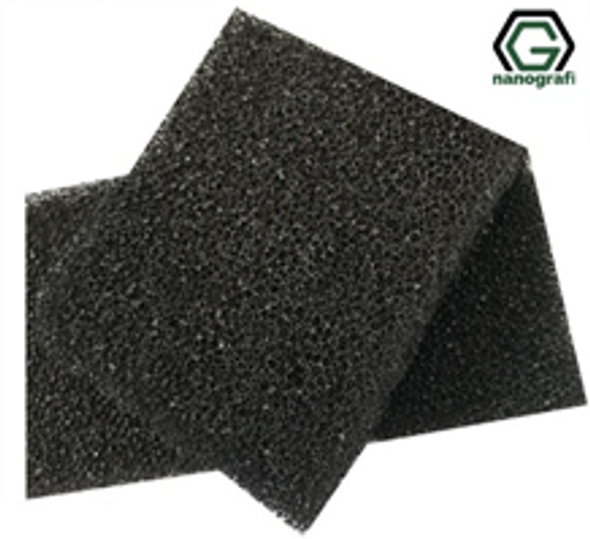
Glassy Carbon Foam for Battery and Supercapacitor Research, Purity: 95+%, Size: 100 mm x100 mm x 10 mm
€1,607.00Product Information Product Name Glassy Carbon Foam for Battery and Supercapacitor Research Product No NG10BEW0957 Purity 95+% Thickness 10 mm Width 100 mm Length 100...NG10BEW0957€1,607.00 -

CR2016 Coin Cell Cases with 304SS (Positive+Negative Cases), Diameter: 20 mm, Height : 1.6 mm
€140.00100 set/140€ 500 set/613€1000 set/1050€ Please contact us for quotes on larger quantities !!! CR2016 Coin Cell Cases with 304SS (Positive+Negative Cases) Diameter: 20 mm, Height : 1.6 mm CR2016 Coin Cell Cases (304SS)...NG10BEW0948€140.00 -

CR2450 Coin Cell Cases with 316SS (Positive+Negative Cases), Diameter: 24 mm, Height : 5 mm
€180.00100 set/180€ 500 set/750€1000 set/1500€ Please contact us for quotes on larger quantities !!! CR2450 Coin Cell Cases with 316SS (Positive+Negative Cases) Diameter: 24 mm, Height :5 mm CR2450 Coin Cell Cases (316SS)...NG10BEW0945€180.00 -

Lithium hydroxide monohydrate (Trace Metals basis, LiOH.H2O), Purity: 99.995%
€48.00Product Information Product Name Lithium hydroxide monohydrate (trace metals basis, LiOH.H2O) Purity 99.995% Product No NG10BEW0929 Formula Weight 41.96 Solubility Soluble in...NG10BEW0929€48.00 -
Lithium Iron Phosphate (LiFePO4) Coated Aluminum Foil
€198.00Product Specification Item Specification Product Name Lithium Iron Phosphate (LiFePO4) Coated Aluminum Foil Substrate Aluminum Foil Substrate Thickness 20μm Foil Substrate...NG10BEW0925€198.00 -

Nickel Foil, Purity: 99.9+% , Thickness: 0.08mm, Width: 100mm
€415.001 piece / 415 € 5 pieces / 1860 € Please contact us for quotes on larger quantities ! Nickel Foil, Purity 99.9+% , Thickness 0.08mm,...NG08BE0603€415.00 -

Meshed Lithium Air CR2032 Coin Cell Case with 304SS, Diameter: 20 mm, Height: 3.2 mm
€408.00100 pcs/408 € 250 pcs/850 €500 pcs/1360 € Please contact us for quotes on larger quantities !!! Meshed Lithium Air CR2032 Coin Cell Case with 304SS Diameter: 20 mm, Height: 3.2 mm The 304SS Meshed CR2032...NG04CO08019€408.00
What are Battery Materials?
Battery materials are the components that make up an electrochemical cell and govern how it stores and delivers energy. A battery pairs a negative electrode (anode) and a positive electrode (cathode), separated by an electrolyte that lets ions move between them and a separator that keeps the electrodes apart. The choice of materials directly determines capacity, voltage, cycle life, and safety, which is why high-purity, battery-grade inputs are essential for reliable cell performance. Nanografi provides end-to-end lithium-ion battery materials for research, prototyping, and production.
Types of Battery Materials
- Cathode materials such as LiFePO4 (LFP), NMC, NCA, and LiMn2O4, which set the cell's voltage and capacity
- Anode materials including graphite, silicon, lithium titanate (LTO), and binders like CMC and SBR
- Electrolytes and salts such as lithium hexafluorophosphate (LiPF6) for ion transport
- Conductive additives like acetylene black and Super C45 for improved electrode conductivity
- Current collector foils, including copper and aluminum, plus lithium and nickel foils
- Coin cell materials and hardware, including CR2032 cases, spacers, springs, and separators
Properties That Matter in Battery Materials
- High purity and consistent particle size for stable electrochemical performance
- High specific capacity and energy density
- Good electrical and ionic conductivity
- Strong cycle stability and long service life
- Thermal and chemical stability for safe operation
- Compatibility across cell formats, from coin cells to pouch and cylindrical cells
Applications of Battery Materials
Battery materials drive innovation across the energy landscape, powering electric vehicles, renewable energy storage, portable electronics, and grid-scale systems. The right combination of electrode and electrolyte materials is what improves capacity, fast-charging, and longevity, and choosing the best cathode and anode materials is central to optimizing any cell design. Beyond conventional lithium-ion chemistries, emerging systems such as metal-air batteries are expanding what high-performance energy storage can achieve. Advanced carbon materials like graphene and carbon nanotubes are increasingly used as conductive additives to push performance further.
Battery Materials Price and Market
The global battery materials market continues to grow rapidly, driven by electric vehicle adoption and renewable energy storage. Battery material prices vary depending on the chemistry, purity, particle size, and order volume, from research-scale grams to bulk industrial quantities. As a trusted battery materials supplier, Nanografi offers transparent, competitive pricing across cathodes, anodes, electrolytes, foils, and coin cell components, so you can source exactly what your project needs. Check the product listings above for up-to-date battery material prices and available specifications.
Frequently Asked Questions
Where can I buy battery materials?
You can buy battery materials directly from Nanografi. We supply battery-grade cathodes, anodes, electrolytes, conductive additives, foils, and coin cell hardware for both research and industrial use, with worldwide shipping.
How much do battery materials cost?
Battery material prices depend on the chemistry, purity, particle size, and order volume. Nanografi provides competitively priced, battery-grade materials for both research and production quantities. See the product listings above for current pricing.
What is the difference between anode and cathode materials?
The cathode is the positive electrode and largely sets the battery's voltage and capacity, while the anode is the negative electrode where ions are stored during charging. Both must be matched carefully for optimal cell performance.
What battery materials does Nanografi offer for coin cells?
Nanografi offers complete coin cell solutions, including CR2032 cases, spacers, conical and wave springs, separators, and compatible electrode materials.
Buy Battery Materials Today
Explore Nanografi's full range of battery-grade materials, from cathodes, anodes, and electrolytes to foils and coin cell hardware, all engineered to meet global quality standards at competitive prices. Whether you are building lithium-ion, coin, or pouch cells, you can find everything your project needs in one place.