
Polyhydroxylated Fullerene (Fullerenols)/ C60, (-OH) Functionalized, Dispersed in Water, 130 ppm Dry powder

- SKU:
- NG10FC0303
- Shipping:
- Calculated at Checkout

Description
25 ml/119 €
100 ml/363 €
500 ml/1425 €
1000 ml/2325 €
Please contact us for quotes on larger quantities.
Polyhydroxylated Fullerene (Fullerenols)/ C60
(-OH) Functionalized, Dispersed in Water, 130 ppm Dry powder
The starting material is >98% purity C60 fullerenes. C60 bearing over 40 hydroxyl groups that have higher water solubility (>50 mg/mL).
These exist as monodisperse nanoparticles in water, and have a valiant polishing effect. They exhibit superior antioxidant and anti-inflammatory properties.
Applications:
1. Pharmaceutical: Diagnostic reagents, super drugs, cosmetics, nuclear magnetic resonance (NMR) with the developer. DNA affinity, anti-HIV drugs,
anti-cancer drugs, chemotherapy drugs, cosmetics additives and scientific research.
2. Energy: Solar battery, fuel cell, secondary battery.
3. Industry: Wear resistant material, flame retardant materials, lubricants, polymer additives, high-performance membrane, catalyst, artificial diamond,
hard alloy, electric viscous fluid, ink filters, high-performance coatings, fire retardant coatings, manufacturing bioactive materials , memory materials,
embedded molecular and other characteristics, composite materials etc.
4. Information industry: Semiconductor record medium, magnetic materials, printing ink, toner, ink, paper special purposes.
5. Electronic parts: Superconducting semiconductor, diodes, transistors, inductor. ,
6. Optical materials, electronic camera, fluorescence display tube, nonlinear optical materials.
7. Environment: Gas adsorption, gas storage.
FAQ
FAQ About Polyhydroxylated Fullerene (Fullerenols) C60-OH, 130 ppm
1) What makes fullerenols different from pristine C60?
Pristine C60 is hydrophobic and essentially insoluble in water. Fullerenols are C60 cages bearing over 40 hydroxyl groups, and that surface chemistry inverts the behaviour completely: water solubility exceeds 50 mg/mL and the cages exist as monodisperse nanoparticles in water rather than aggregating. Every aqueous and biological application of the fullerene cage depends on this functionalisation; unmodified C60 cannot be used the same way.
2) What does the 130 ppm specification refer to?
The product is supplied as a dry powder together with a specified dispersion concentration of 130 ppm in water. Nanografi offers this fullerenol across a range of concentrations, so the figure identifies which grade you are ordering rather than describing a property of the molecule. Selecting between concentrations is a question of the working dilution your protocol needs and how much handling and dilution you want to perform in-house.
3) What is the starting purity of the fullerene cage?
The starting material is stated as C60 fullerene of greater than 98% purity. This matters because the principal impurity in commercial C60 is other fullerene species, chiefly C70, which hydroxylate differently and carry different biological and optical behaviour. Beginning from a high-purity cage keeps the hydroxylated product compositionally consistent, which is a precondition for reproducible results in pharmacological and antioxidant studies.
4) Why are fullerenols studied as antioxidants?
The product page reports superior antioxidant and anti-inflammatory properties. The underlying reason is that the conjugated carbon cage readily accepts radical species, and the hydroxyl shell makes that reactivity accessible in aqueous and biological media where pristine C60 would simply aggregate. This combination is why fullerenols appear in pharmaceutical research, cosmetics additives and diagnostic reagent development rather than only in materials science.
5) Does it need dispersing before use?
Because the hydroxyl shell confers genuine water solubility rather than colloidal suspension, fullerenols dissolve rather than requiring the sonication and surfactant handling that carbon nanomaterials normally need. That said, the material is supplied as a dry powder, so it should be brought into solution deliberately and the resulting concentration verified rather than assumed, particularly where a dose-dependent biological response is being measured.
6) Which application areas does this material serve?
Reported areas span pharmaceutical research including diagnostic reagents, NMR developers, DNA affinity work and anti-HIV, anti-cancer and chemotherapy drug research; cosmetics additives; energy applications in solar cells, fuel cells and secondary batteries; industrial uses as polymer additives, lubricants, high-performance membranes and catalysts; and gas adsorption and storage. The wider fullerene family and how derivatives differ is set out in types of fullerenes and their specific uses.
7) What volumes are supplied?
This grade is available in 25 ml, 100 ml, 500 ml and 1000 ml volumes, with larger quantities quoted on request. Other concentrations and dry powder formats within the same product family are listed under polyhydroxylated fullerene (fullerenols), which is the place to compare grades before ordering.
Related Products
Related Products
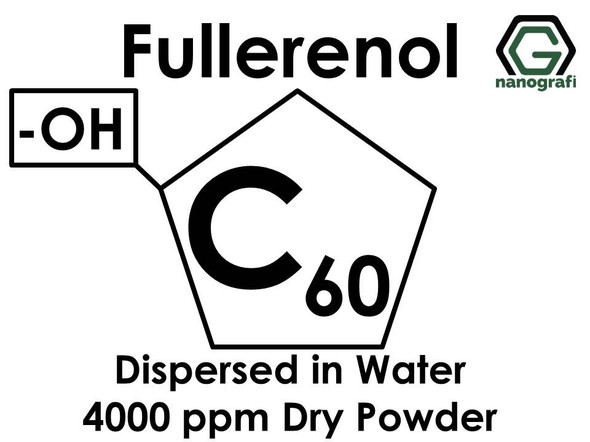
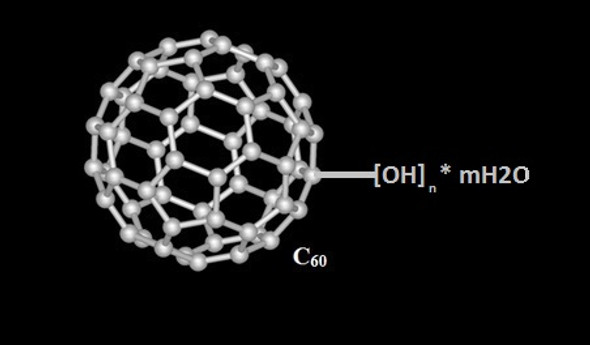
Polyhydroxylated Fullerene (Fullerenols)/ C60, (-OH) Functionalized, Dispersed in Water, 4000 ppm Dry powder


Polyhydroxylated Fullerene (Fullerenols)/ C60, (-OH) Functionalized, Dispersed in Water, 250 ppm Dry powder
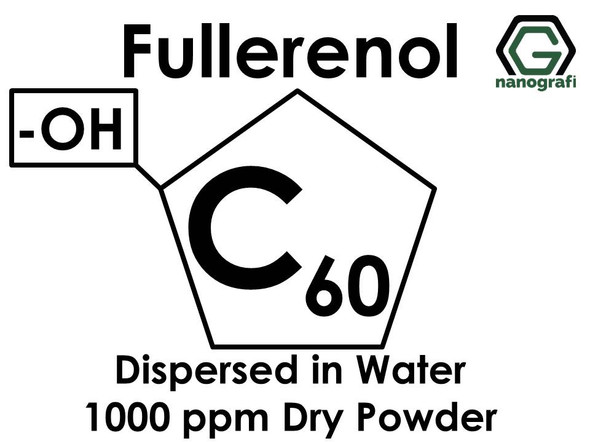

Polyhydroxylated Fullerene (Fullerenols)/ C60, (-OH) Functionalized, Dispersed in Water, 1000 ppm Dry powder

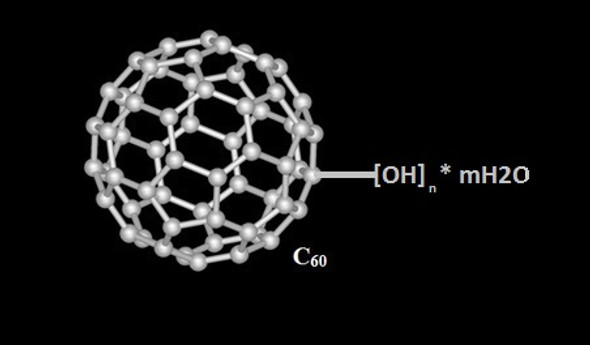
Polyhydroxylated Fullerene (Fullerenols)/ C60, (-OH) Functionalized, Dispersed in Water, 500 ppm Dry powder

