
Silicon (Si) Micron Powder, Purity: 99.99 %, Size: 100 mesh

- SKU:
- NG01EM3009
- Shipping:
- Calculated at Checkout

Description
25 grams/48 €
100 grams/83 €
500 grams/215 €
1000 grams/354 €
Product Overview of Silicon (Si) Micron Powder, Purity: 99.99 %, Size: 100 mesh
Silicon (Si) Micron Powder with 99.99% purity and 100 mesh particle size is a premium-grade material designed for advanced industrial and technological applications. With its diamond-like crystal structure, high hardness, and stable conductivity, this fine powder offers excellent thermal and mechanical performance. Its controlled particle size distribution ensures consistency and reliability, making it suitable for precision processes where purity and uniformity are critical.
Technical Properties of Silicon (Si) Micron Powder, Purity: 99.99 %, Size: 100 mesh
| Purity | 99.99% |
| Particle Size | 100 mesh |
| Melting Point | 1410 °C |
| Density | 2.33 g/cm3 |
| CAS No | 7440-21-3 |
Applications of Silicon (Si) Micron Powder, Purity: 99.99 %, Size: 100 mesh
- Plasma Spray Coatings: Used in plasma spray processes to produce durable protective and functional layers with superior thermal resistance and mechanical strength.
- Semiconductor Industry: Applied in semiconductor manufacturing, supporting microelectronics and integrated circuit technologies with high-purity silicon feedstock.
- Optoelectronics: Utilized in specialized optical and electronic devices where silicon’s refractive and conductive properties enhance performance.
- Advanced Materials and Composites: Integrated into high-performance composites to improve conductivity, hardness, and stability in demanding environments.
FAQ
Frequently Asked Questions About Silicon (Si) Micron Powder, 100 Mesh
1. What is 100 mesh silicon micron powder used for?
High-purity silicon (Si) micron powder is investigated for powder metallurgy, ceramic processing, composite materials, surface coatings, and semiconductor-related materials research. Its properties make it relevant for applications requiring elemental silicon in particulate form. The suitability of this 100 mesh grade depends on particle size distribution, morphology, surface condition, and processing requirements. Researchers can explore NANOGRAFi's Elemental Micron Powder collection for related materials.
2. What does 100 mesh mean for silicon powder particle size?
A 100 mesh designation generally refers to a sieve with approximately 149 micrometer openings under the US standard sieve system. If the powder is specified as passing 100 mesh, this typically indicates that particles pass through that sieve. However, the mesh designation alone does not establish the average particle size or complete particle size distribution. Researchers should consult the product's technical documentation for the applicable sieve specification.
3. What is the difference between 100 mesh and 325 mesh silicon powder?
The primary difference is the sieve designation. A 325 mesh sieve has smaller openings than a 100 mesh sieve, so powder specified as passing 325 mesh generally has a finer maximum sieve size. Finer silicon powders may offer greater surface area and different packing or reaction characteristics. Researchers requiring a finer grade can compare NANOGRAFi's Silicon Micron Powder, 99.99% Purity, 325 Mesh.
4. How does 100 mesh silicon powder compare with 10 µm and 1-3 µm silicon powders?
Silicon powders with specified micrometer-scale particle sizes may be more appropriate when a defined fine-particle grade is required. Smaller particles generally provide greater surface area per unit mass, although actual behavior also depends on morphology and particle size distribution. For comparison, NANOGRAFi offers Silicon Micron Powder, 10 µm, 99.99% Purity and Polycrystalline Silicon Micron Powder, 1-3 µm.
5. Can 99.99% purity silicon powder be used in semiconductor research?
High-purity elemental silicon powder may be used in selected semiconductor materials research, precursor preparation, and experimental processing. However, 99.99% chemical purity does not establish electronic-grade or device-grade suitability. Semiconductor fabrication often requires substantially stricter control of trace impurities, dopants, crystal structure, and contamination. Researchers should verify the impurity profile and processing requirements before selecting this powder for semiconductor-related experiments.
6. Is 100 mesh silicon powder suitable for lithium-ion battery anode research?
Silicon is investigated as a lithium-ion battery anode material because of its high theoretical lithium-storage capacity. However, silicon undergoes substantial volume changes during lithiation and delithiation, which can contribute to electrode degradation. The suitability of 100 mesh silicon powder depends on particle dimensions, electrode formulation, conductive additives, and cycling conditions. Researchers seeking a finer grade developed for battery research can explore Silicon Nanopowder for Battery Applications, 100 nm.
7. Can silicon micron powder be used in ceramic and composite manufacturing?
Silicon powder can be investigated as a precursor or constituent in selected ceramic and composite manufacturing processes. It may participate in reactions used to form silicon-containing ceramic phases or be incorporated into specialized material formulations. For applications requiring an already formed ceramic compound, researchers can compare alternative materials in NANOGRAFi's Compound Micron Powder collection, including silicon carbide and silicon nitride powders.
8. Does silicon micron powder develop an oxide layer during storage?
Silicon surfaces can develop a native silicon oxide layer when exposed to oxygen and moisture. The extent and characteristics of surface oxidation depend on environmental conditions, particle size, surface chemistry, and storage history. High chemical purity does not necessarily indicate an oxide-free surface. For applications sensitive to surface oxidation, appropriate characterization and controlled storage conditions may be necessary.
9. How should high-purity silicon micron powder be stored and handled?
Silicon micron powder should be stored in its original, tightly closed container under clean, dry conditions, following the product-specific Safety Data Sheet (SDS). Powder handling should minimize airborne dust, contamination, and exposure to ignition sources. Fine silicon powders may present combustible dust hazards under certain conditions. Suitable ventilation, dust-control procedures, and personal protective equipment should be selected according to the powder characteristics and laboratory safety requirements.
Related Products
Related Products
Silicon (Si) Micron Powder, Purity: 99.99 %, Size: 325 mesh

Silicon (Si) Micron Powder, Purity: 99.99 %, Size: 10 µm

Germanium (Ge) Micron Powder, Purity: 99.99 %, Size: 100 mesh
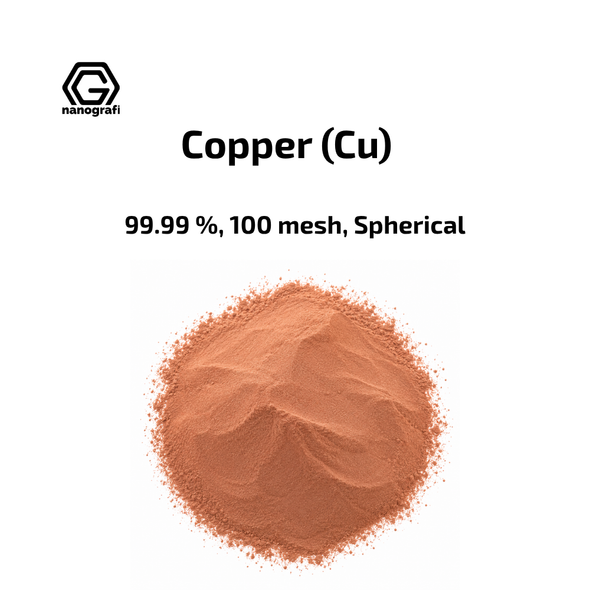
Copper (Cu) Micron Powder, Purity: 99.99 %, Size: 100 mesh, Spherical
