
Vanadium Oxide (VO2) Nanopowder/Nanoparticles, Purity: 99.5+%, Size: 30-60 nm

- SKU:
- NG04SO1703
- Shipping:
- Calculated at Checkout
Description
100 grams/980 €
Product Overview | Vanadium Oxide (VO2) Nanopowder 99.9+%, Size: 30-60 nm
CAS: 1314-62-1
| Appearance | Black Powder |
| Purity | >99.90 % |
| Particle Size | 30-60 nm |
| Al | <0.05% |
| Fe | <0.05% |
| Bi | <0.05% |
| Zn | <0.01% |
| Ti | <0.01% |
| Ca | <0.01% |
| Na | <0.01% |
| Pb | <0.0002% |
| Sn | <0.0002% |
FAQ
Technical FAQ About Vanadium Oxide (VO2) Nanopowder, 30-60 nm
1) Why is VO2 considered a phase-change material for optical and electronic applications?
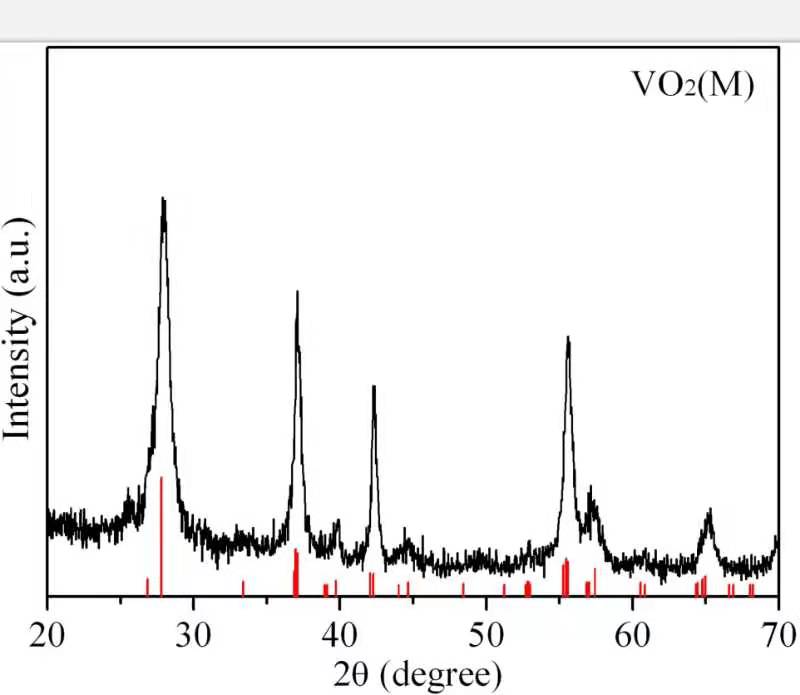
Vanadium dioxide undergoes a reversible structural and electronic transition at approximately 68°C, changing from an insulating monoclinic state to a more metallic rutile state. This temperature-dependent behavior makes VO2 relevant for research involving switching, sensing and tunable optical systems. Nanografi NG04SO1703 provides VO2 nanopowder with a 30-60 nm particle size for such material-development studies.
2) Can Nanografi VO2 nanopowder be evaluated for smart-window research?
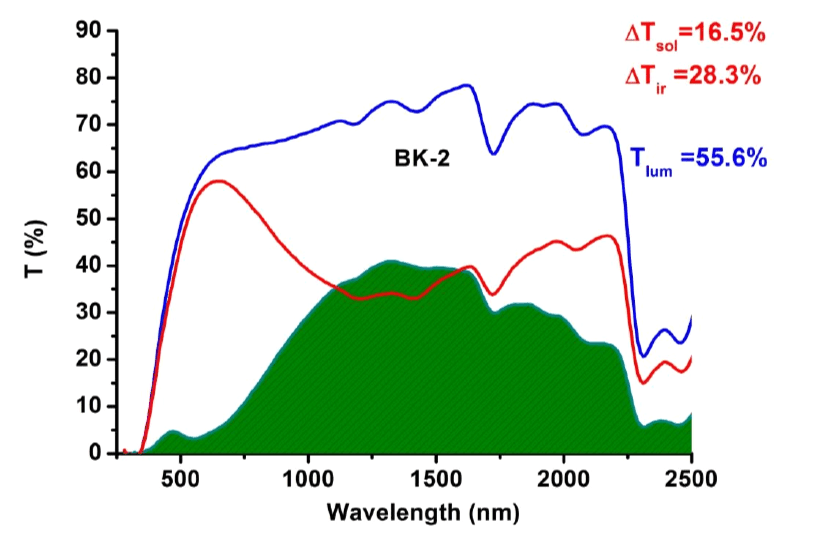
Yes. Smart windows are one of the established application areas for VO2 because its optical and electrical behavior changes near the phase-transition temperature. Researchers working on thermally responsive glazing can also review Nanografi's Vanadium Oxide Nanoparticles category for broader material context.
3) What should be considered when selecting this VO2 grade for phase-transition studies?
Particle size, purity, impurity profile and the thermal conditions required by the experiment should all be considered. NG04SO1703 is specified with a 30-60 nm particle size and >99.90% purity in its technical data, with controlled levels of Al, Fe, Bi, Zn, Ti, Ca, Na, Pb and Sn.
4) Is the 30-60 nm VO2 grade relevant for optical and RF switching research?
Yes. Optical, electrical and RF-microwave switching are established research areas for VO2 because its electrical and optical properties change during the phase transition. Final switching performance will depend on film formation, particle integration, substrate choice and device architecture.
5) Can this material be investigated for sensors and photonic devices?
Yes. Sensors and photonics are relevant application areas for VO2 nanoparticles, particularly where temperature-dependent electrical or optical response is useful. Related transition-metal oxide materials can be explored through Nanografi's Nanoparticles portfolio.
6) How is VO2 different from other metal-oxide nanoparticles used in smart optical systems?
VO2 is distinguished by its thermally driven insulator-to-metal transition near 68°C. Other metal oxides can serve different functions in optical systems; for example, Tungsten Trioxide (WO3) Nanoparticles are widely evaluated for electrochromic systems, while VO2 is particularly relevant to thermally responsive switching behavior.
7) Can VO2 be combined with transparent conductive materials in smart-window research?
Yes. Smart-window device architectures may combine an active optical material with transparent conductive layers depending on the system design. Researchers evaluating transparent conductive components can also review Nanografi's Indium Tin Oxide (ITO) Nanoparticles range.
8) What impurity information is available for Nanografi NG04SO1703?
The technical specification defines limits for several elements, including Al and Fe below 0.05%, Zn, Ti, Ca and Na below 0.01%, and Pb and Sn below 0.0002%. These values are useful when comparing VO2 grades for experiments where elemental impurities may influence material behavior.
9) How should VO2 nanopowder be handled and stored before use?
Metal-oxide nanopowders should be handled with appropriate laboratory controls and stored to minimize contamination, moisture exposure and unintended environmental contact. For broader guidance, see Nanografi's Handling and Storage Best Practices for Metal Oxide Nanopowders.
10) Where can researchers compare related oxide materials or review published Nanografi material use?
Related oxide nanopowders can be explored across Nanografi's metal-oxide and nanoparticle categories. Researchers looking for published application examples and material-use references can also review the Nanografi Publication Library.
Related Products
Related Products
Zinc Oxide (ZnO) Nanopowder/Nanoparticles, Purity: 99.5+%, Size: 30-50 nm

Iron Oxide (Fe3O4) Nanopowder/Nanoparticles, High Purity: 99.5+%, Size: 30 nm

Platinum Oxide (PtO2) Nanopowder/Nanoparticles, Purity: 99.5+%, Size: <100 nm

Magnesium Oxide (MgO) Nanopowder/Nanoparticles, Purity: 99.5+%, Size: < 55 nm
