
MIL-101(Fe)

- SKU:
- NG10MOF0904
- Shipping:
- Calculated at Checkout




Description
1 gram: 159 €
5 grams: 695 €
10 grams: 1190 €
Contact our team for custom bulk pricing tailored to your project!
Product Overview of MIL-101(Fe)
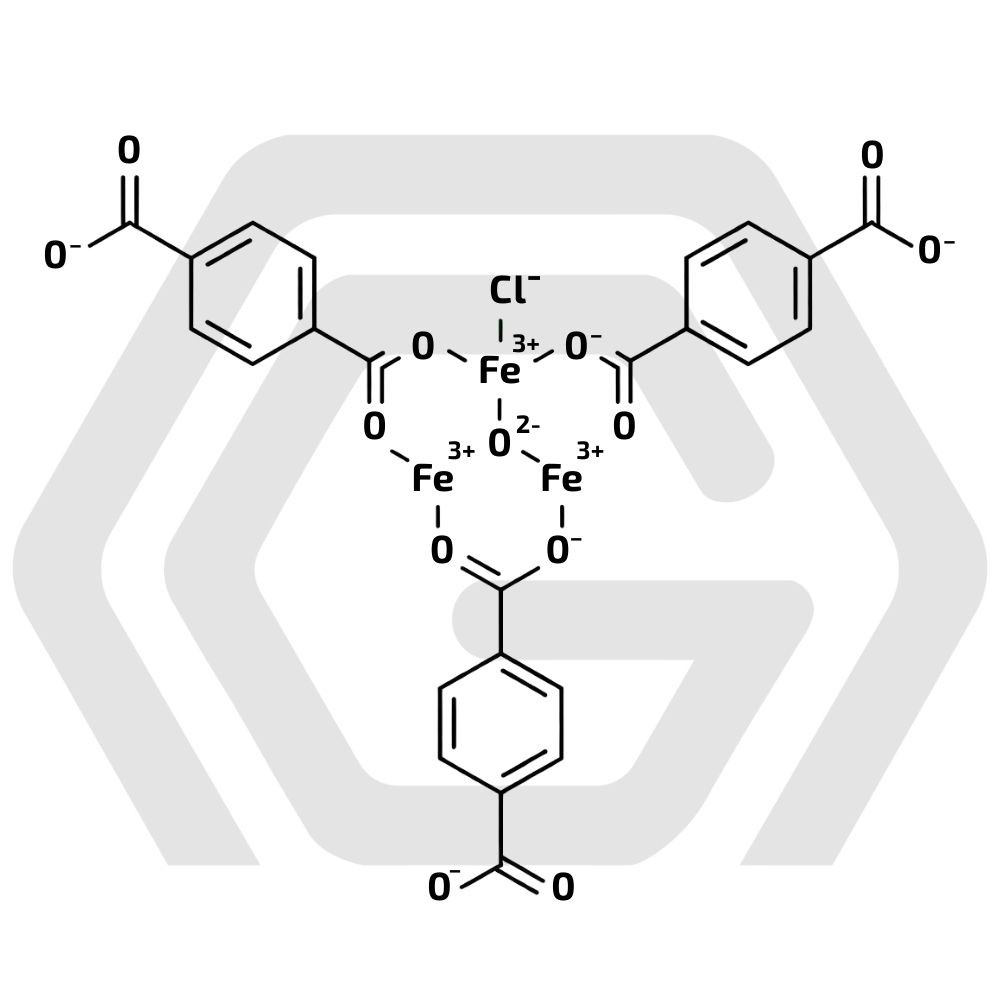
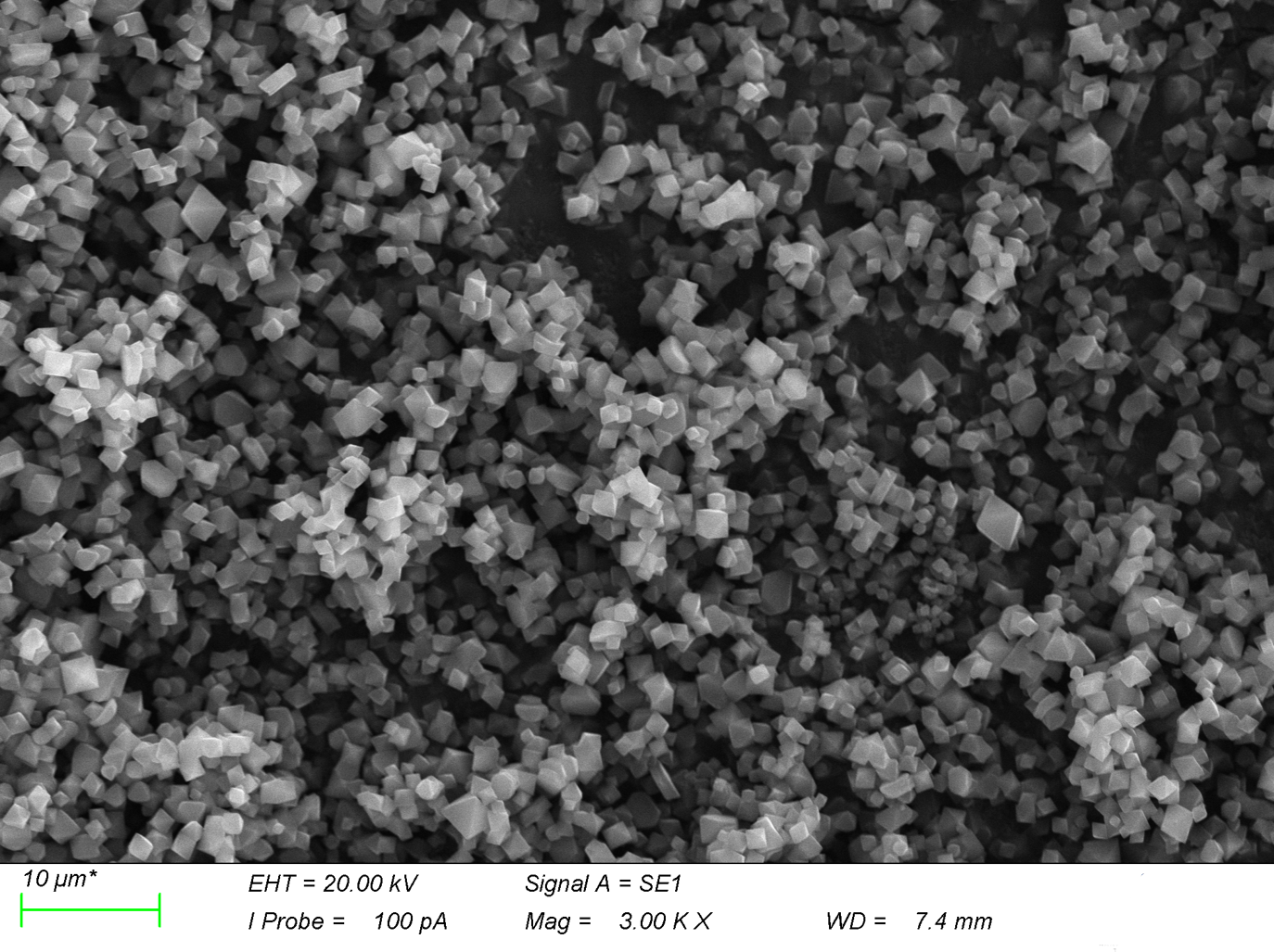
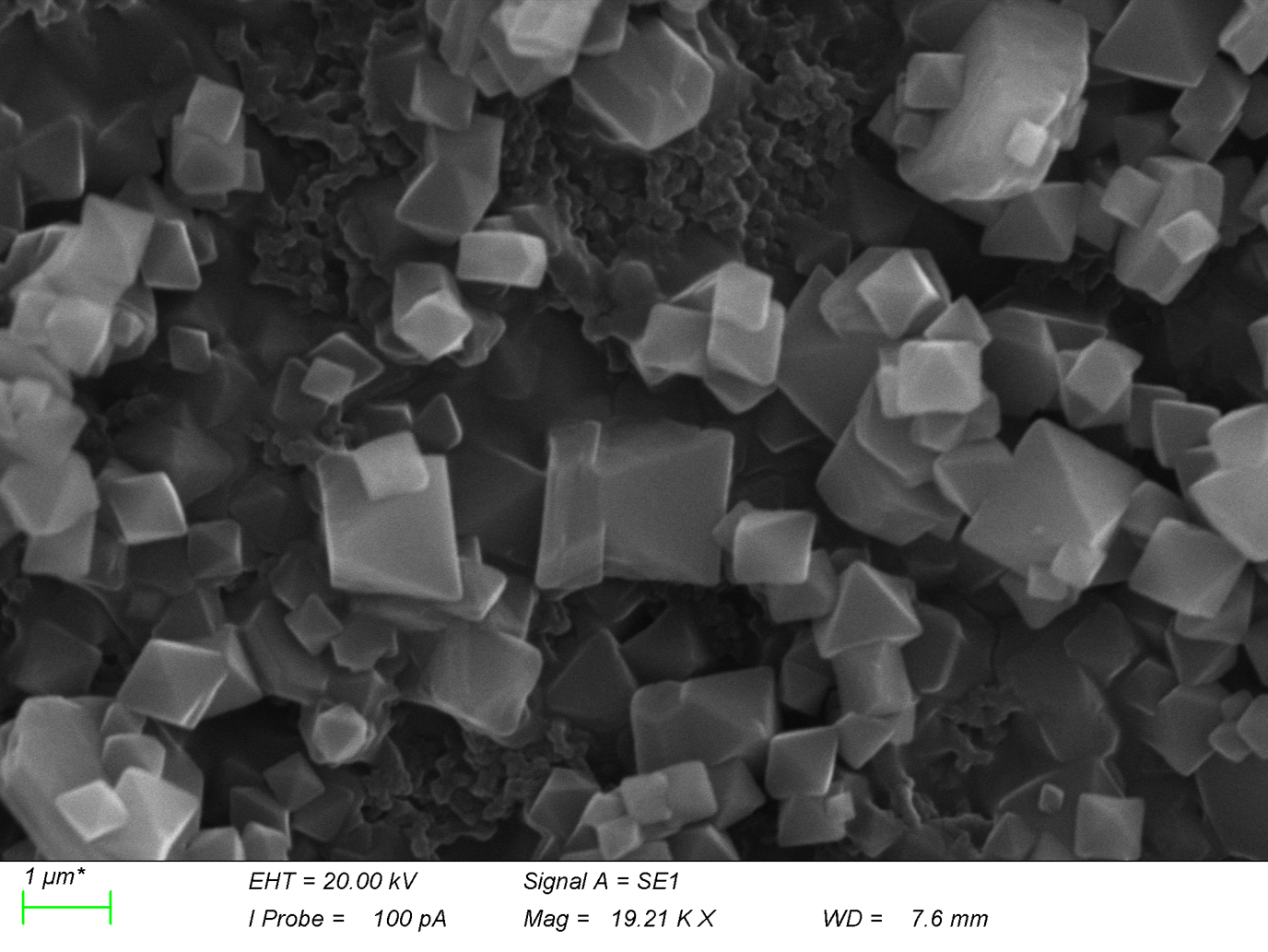
MIL-101(Fe) is a highly crystalline metal-organic framework (MOF) composed of iron (Fe) clusters and 1,4-benzenedicarboxylate (BDC) linkers. It is characterized by its exceptionally large pore size, high internal surface area, and robust thermal stability. The iron-based metallic centers provide unique redox activity and significant Lewis acid sites, making it a superior alternative for applications in heterogeneous catalysis and environmental remediation. Due to its biocompatible and eco-friendly nature, MIL-101(Fe) is particularly ideal for advanced drug delivery systems, phosphate removal from water, and selective gas adsorption (especially CO2 and H2 storage). Our MIL-101(Fe) is produced with precise control over its octahedral morphology and high phase purity to ensure maximum performance in both research and industrial-scale applications.
Technical Properties of MIL-101(Fe)
| Chemical Formula | Fe3O(BDC)3(OH)(H2O)2 |
| Purity | 99% |
| Thermal Stability | 250°C |
| BET Surface Area | 1890 m²/g |
| Average Pore Size | 2-4 nm |
| Appearance | Light Orange Powder |
| CAS No | 1189182-67-9 |
SEM Images
XRD Analysis

Applications of MIL-101(Fe)
- Heterogeneous Catalysis: Acts as a high-performance catalyst for oxidation, hydrogenation, and Lewis acid-catalyzed organic transformations due to its dense population of active iron sites.
- Gas Adsorption and Carbon Capture: Leverages its massive pore volume for the efficient sequestration of CO2 and the high-capacity storage of clean energy gases like H2 and CH4.
- Environmental Remediation: Exhibits superior efficiency in the adsorptive removal of hazardous pollutants from wastewater, including heavy metals, phosphates, arsenic, and organic dyes.
- Advanced Drug Delivery: Utilized as a non-toxic, biocompatible carrier for the encapsulation and controlled release of therapeutic agents, benefiting from its large cages and stable framework.
- Water Purification: Employed in advanced adsorption-based cooling and desalination systems due to its high water vapor uptake capacity and hydrothermal stability.
- Energy Storage Systems: Serves as a high-surface-area precursor or active component in the development of next-generation electrodes for supercapacitors and lithium-ion batteries.
- Chemical Sensing: Integrated into sensory devices for the selective detection of volatile organic compounds (VOCs) and liquid-phase toxins through molecular sieving and guest-host interactions.
FAQ
Frequently Asked Questions About MIL-101(Fe)
1. What is MIL-101(Fe) used for?
MIL-101(Fe) is an iron-based metal-organic framework investigated for adsorption, heterogeneous catalysis, environmental remediation, and gas separation. Its porous structure and iron-containing sites make it suitable for various research applications.
2. Why is MIL-101(Fe) suitable for heterogeneous catalysis?
MIL-101(Fe) contains iron centers that can participate in redox reactions and act as Lewis acid sites. Its porous framework can facilitate access to these sites, making it a promising candidate for oxidation reactions and catalytic pollutant degradation.
3. Can MIL-101(Fe) be used for CO2 capture?
MIL-101(Fe) is investigated for carbon dioxide adsorption and gas separation because of its porous architecture. Actual CO2 uptake and selectivity depend on temperature, pressure, activation conditions, and gas composition.
4. How is MIL-101(Fe) used in wastewater treatment?
MIL-101(Fe) can be investigated for the adsorption or catalytic removal of organic dyes and selected contaminants from water. Its effectiveness depends on solution pH, contaminant concentration, contact time, and competing substances.
5. What is the difference between MIL-101(Fe), ZIF-8, and UiO-66?
MIL-101(Fe) is an iron-based framework of interest for catalysis and adsorption. ZIF-8 is a zinc-based framework investigated for molecular separation and encapsulation, while UiO-66 is a zirconium-based framework recognized for its structural robustness. Selection depends on the intended application and operating conditions.
6. Can MIL-101(Fe) be used in drug delivery research?
MIL-101(Fe) is being investigated as a porous carrier for drug encapsulation and controlled-release systems. However, biocompatibility, cytotoxicity, stability, and release behavior must be evaluated for each formulation. Research use does not establish clinical suitability.
7. Does MIL-101(Fe) require activation before adsorption experiments?
Activation may be required to remove residual solvents or guest molecules from the pores before adsorption measurements. Appropriate activation conditions depend on the material's preparation history and thermal stability.
8. How should MIL-101(Fe) be stored?
MIL-101(Fe) should be stored in a tightly sealed container under clean, dry conditions to minimize moisture exposure and contamination. Follow the product's Safety Data Sheet (SDS) for handling precautions.
Related Products
Related Products

Iron Nickel (Fe-Ni) Alloy Powder, Purity: 99.9%, Size: 325 mesh, Fe/Ni: 5:5

Iron (II) Acetate Fe(C2H3O2)2, Purity: > 95%

Iron (Fe) Nanopowder/Nanoparticles, Purity: 99.9%, Size: ~500 nm

Carbon Nanotubes Doped with 32 wt% Iron (Fe) Nanopowder/Nanoparticles
