
Zeolitic Imidazolate Framework-8 (ZIF-8)

- SKU:
- NG10MOF0901
- Shipping:
- Calculated at Checkout


Description
1 gram: 95 €
5 grams: 345 €
10 grams: 595 €
Need more than 10 grams? Contact our team for custom bulk pricing tailored to your project!
Product Overview of Zeolitic Imidazolate Framework-8 (ZIF-8)
ZIF-8 is a metal-organic framework (MOF) material composed of zinc ions and 2-methylimidazole linkers. It features high surface area, excellent thermal and chemical stability, and pH-responsive behavior. These properties make it ideal for applications in drug delivery, gas separation, catalysis, and sensing. We offer ZIF-8 with high purity and controlled morphology for advanced research and industrial use.
Technical Properties of Zeolitic Imidazolate Framework-8 (ZIF-8)
| Empirical Formula | C8H10N4Zn | ||
| Composition | Zn2+,C4H5N2- | ||
| Color | White | ||
| Elemental Composition | C | N | Zn |
| 56-57 wt% | 20-21 wt% | 22-23 wt% | |
| CAS No | 59061-53-9 |
SEM Images
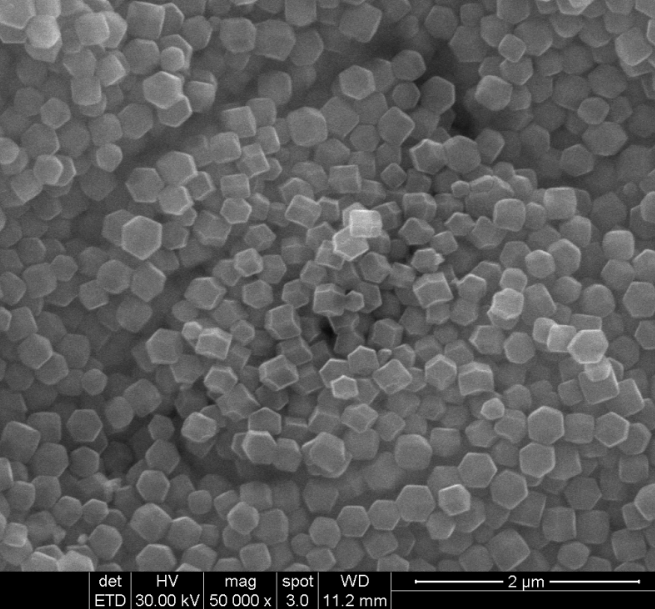
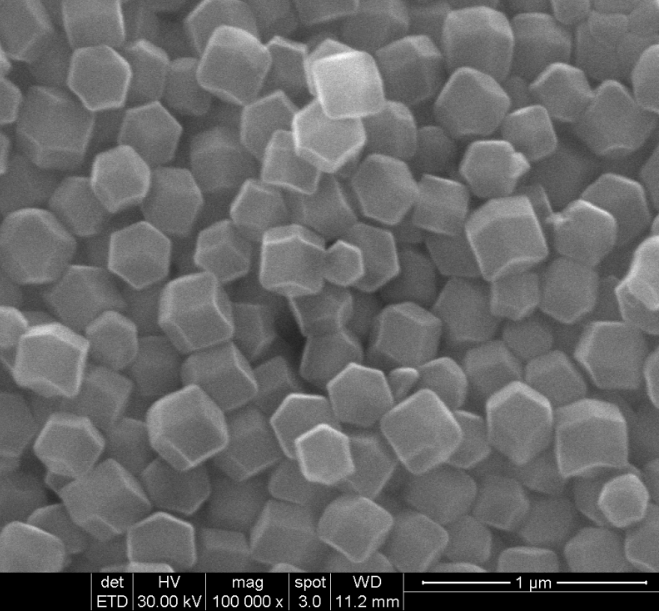
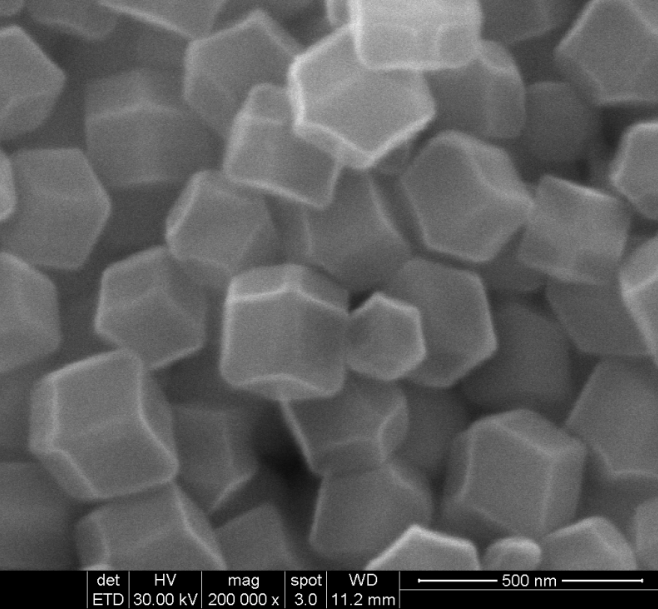
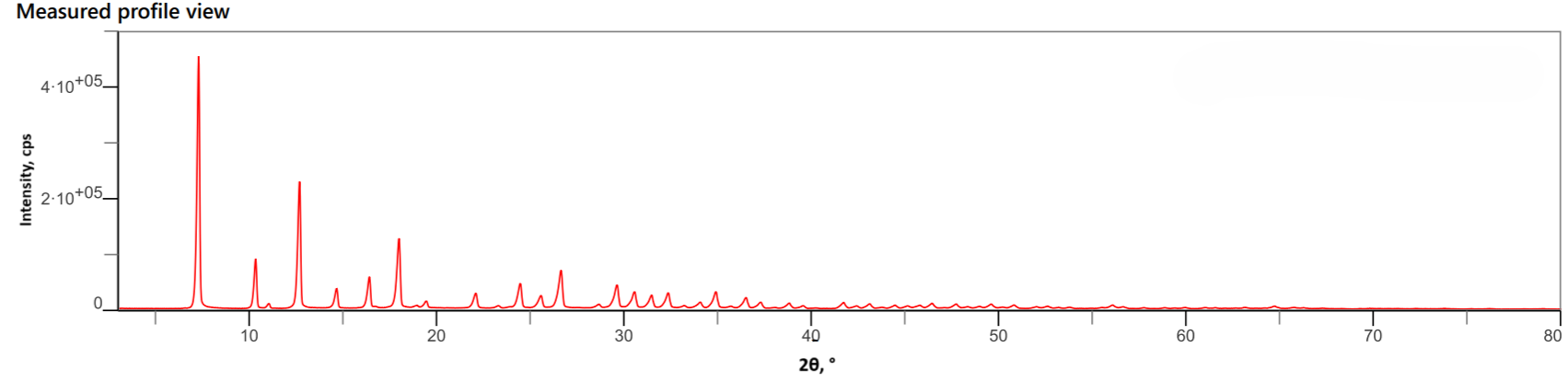
XRD Analysis
Applications of Zeolitic Imidazolate Framework-8 (ZIF-8)
- Drug Delivery & Cancer Therapy: Enables pH‑responsive release in acidic environments, supporting targeted cancer treatment.
- Gas Separation & Storage: Provides high efficiency in selective adsorption and storage of gases such as CO₂ and H₂.
- Environmental Remediation: Facilitates photocatalytic degradation of pollutants, contributing to water and air purification.
- Energy Storage: Enhances performance of supercapacitors and lithium‑ion batteries by improving capacity and cycle stability.
- Electrochemical Sensors: Increases sensitivity and lowers detection limits due to its exceptional surface area.
- Biomedical Applications: Serves in antibacterial coatings, bone tissue engineering, and bioimaging platforms with biocompatibility.
- Food Packaging: Acts as an antimicrobial agent in active packaging, extending shelf life and ensuring food safety.
FAQ
Frequently Asked Questions About ZIF-8 Metal-Organic Framework
1. What makes ZIF-8 different from conventional porous adsorbents?
Zeolitic Imidazolate Framework-8 (ZIF-8) is a zinc-based metal-organic framework composed of zinc ions and 2-methylimidazolate linkers. Unlike conventional adsorbents such as activated carbon, ZIF-8 has a crystalline microporous structure with well-defined pore openings and cavities. Its framework chemistry and molecular sieving characteristics make it attractive for selective adsorption, gas separation, and membrane research.
2. How does ZIF-8 work in CO2 capture and gas separation?
ZIF-8 can separate gas molecules through a combination of molecular sieving, diffusion differences, and adsorption interactions. Its nominal pore aperture is approximately 3.4 angstroms, although framework flexibility can influence molecular transport. Researchers investigate ZIF-8 for CO2-related separations, hydrogen purification, and membrane development. Actual separation performance depends on gas composition, pressure, temperature, and membrane or adsorbent configuration.
3. What is the difference between ZIF-8 and ZIF-67?
The main difference is their metal centers. ZIF-8 contains zinc, while ZIF-67 contains cobalt. Both frameworks share related zeolitic imidazolate structures, but their chemical properties and potential applications differ. ZIF-8 is widely studied for molecular separation, encapsulation, and polymer composites, while ZIF-67 is frequently investigated as a precursor for cobalt-containing catalysts and energy-storage materials. Explore NANOGRAFi's Metal-Organic Frameworks to compare available materials.
4. How does ZIF-8 differ from ZIF-L?
Although ZIF-8 and ZIF-L are both zinc-based frameworks formed using 2-methylimidazole linkers, they differ in crystal structure and morphology. ZIF-8 generally forms a three-dimensional sodalite-type framework, whereas ZIF-L exhibits a layered structure. ZIF-L can also act as a precursor for ZIF-8 under suitable transformation conditions. The choice depends on whether the application requires three-dimensional microporosity or a layered framework morphology.
5. Is ZIF-8 stable in water and acidic environments?
ZIF-8 can exhibit stability in selected aqueous and organic environments, but its chemical stability depends strongly on pH, exposure time, temperature, and solution composition. Acidic conditions can promote framework degradation through disruption of zinc-imidazolate coordination bonds. Phosphate-containing media and other coordinating species may also affect structural integrity. Stability testing is recommended before prolonged aqueous processing or biomedical experiments.
6. Does ZIF-8 require activation before adsorption measurements?
ZIF-8 may require activation to remove residual solvents or guest molecules from its pores before gas adsorption and surface area measurements. Activation can involve controlled heating or vacuum treatment, depending on the sample's preparation history and thermal stability. Researchers should select conditions that preserve framework crystallinity and verify activation effectiveness through appropriate characterization methods.
7. Can ZIF-8 be incorporated into polymer membranes and composites?
Yes. ZIF-8 is frequently investigated as a porous filler in mixed-matrix membranes and polymer composites. Its microporous structure can influence gas transport and selective permeation, while its incorporation may modify the mechanical and barrier properties of polymer systems. Performance depends on particle dispersion, filler loading, polymer compatibility, and interfacial adhesion. Poor particle distribution or interfacial defects can reduce separation selectivity.
8. Can ZIF-8 be used for controlled drug release?
ZIF-8 is investigated as a carrier for encapsulating selected therapeutic molecules because its framework can respond to changes in environmental pH. Under acidic conditions, framework degradation may facilitate the release of encapsulated compounds. However, loading efficiency, release kinetics, zinc-ion exposure, cytotoxicity, and biological compatibility must be evaluated for each formulation. Research applications do not establish suitability for clinical use.
9. How should ZIF-8 powder be stored and handled?
ZIF-8 powder should be stored in a tightly sealed container in a clean, dry environment to minimize contamination and unwanted moisture exposure. Storage and handling conditions should follow the product-specific Safety Data Sheet (SDS). During laboratory use, appropriate ventilation, dust-control measures, and personal protective equipment are recommended.
Related Products
Related Products

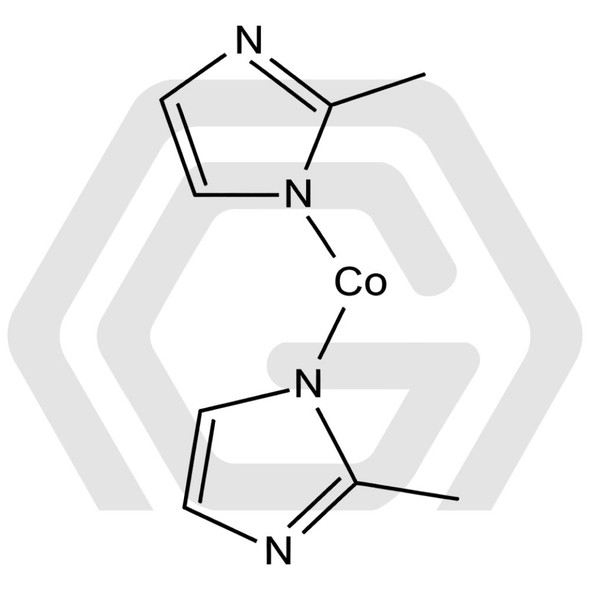
Zeolitic Imidazolate Framework-67 (ZIF-67)
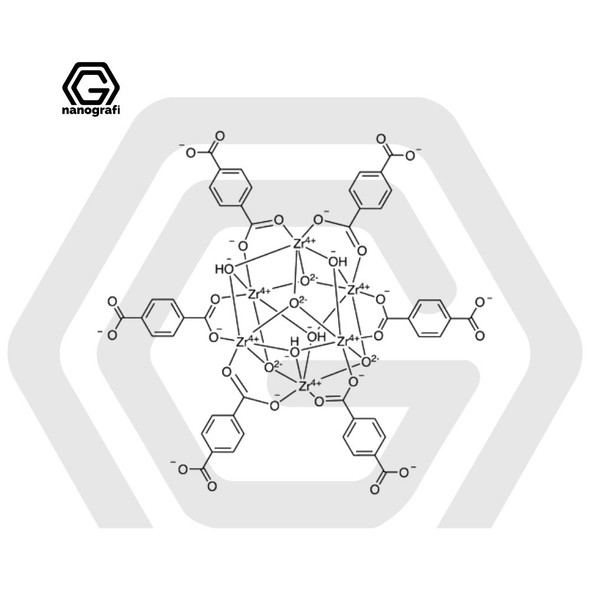
Zirconium 1,4-Benzenedicarboxylate Framework (UiO-66)

Chromium (Cr) Sputtering Targets, Purity: 99.95%, Size: 8'', Thickness: 0.125''

Nickel (Ni) Sputtering Targets, Purity: 99.99%, Size: 8'', Thickness: 0.250''
