
Blografi

Semiconductor Wafers: Types and Uses
When we look around us, we will find many
things and objects around which is an application of silicon or other
semiconductor devices in a way or another. It is there on televisions, laptops,
mobile phones, smart gadgets and other circuitries that are available. Silicon
is the second most common element on Earth, after the oxygen at first place,
and seventh most available element in the universe. It has high stability and
mobility at higher and even at standard room temperatures. Due to th
…
11th Dec 2019
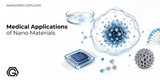
Medical Applications of Nano Materials
Medicine has advanced enormously over the past few decades, and nanotechnology has been one of the quiet engines behind that progress. Because nanomaterials are so small, often thousands of times thinner than a human hair, they can travel through the body, reach individual cells, and carry out tasks that conventional medicines and tools cannot.
This matters because many traditional treatments work bluntly. A chemotherapy drug, for example, attacks healthy cells along with cancerous ones. Nanomat
…
11th Dec 2019

Expanded Graphite
Graphite
displays both metallic and non-metallic properties making it appropriate for
some modern applications. The metallic properties incorporate heat and
electrical conductivity. The non-metallic properties incorporate idleness, high heat obstruction and lubricity. Common graphite is sought after, not just for
customary applications, for example, refractories, greases, cauldrons,
coatings, gaskets, purchaser gadgets, pencils and propelled polymer frameworks,
however with the developing
…
10th Dec 2019
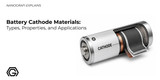
Battery Cathode Materials: Types, Properties, and Applications
The cathode is the positive electrode of a battery and the component that most defines its performance, setting the cell voltage, supplying most of the energy density, and typically accounting for the largest share of cell cost.
In a lithium-ion battery the choice of cathode chemistry decides whether a cell prioritizes range, safety, power, or price. This guide explains what cathode materials are, the properties that make a good one, the main chemistries used in 2026, and the applications each o
…
6th Dec 2019
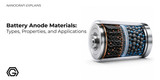
Battery Anode Materials: Types, Properties, and Applications
The anode is the negative electrode of a battery, the component that stores lithium ions while the cell is charged and releases them during discharge to deliver current.
In a lithium-ion cell the anode material sets a hard ceiling on energy density, charging speed, and cycle life, which is why it is one of the most studied components in modern energy storage. This guide explains what anode materials are, the properties that define a good one, the main material families used in 2026, and the appl
…
6th Dec 2019