
Multi Walled Carbon Nanotubes, Purity: > 96%, Outside Diameter: 8-18 nm

- SKU:
- NG01MW0301
- Shipping:
- Calculated at Checkout


Description
Multi Walled Carbon Nanotube (MWCNT) Price List
1 gram: 42 €
5 grams: 72 €
25 grams: 120 €
100 grams: 294 €
500 grams: 840 €
1000 grams: 1308 €
Multi Walled Carbon Nanotubes
Purity: > 96%, Outside Diameter: 8-18 nm
Multi Walled Carbon Nanotubes (MWCNTs) are cylindrical nanostructures composed of multiple concentric layers of single-walled carbon nanotubes. This unique architecture gives MWCNTs superior electrical conductivity, mechanical strength, and thermal stability, making them a top-tier material for a wide range of high-tech applications.
We proudly offer high-purity MWCNTs (>96%) at competitive prices with excellent batch-to-batch consistency.
Technical Properties
| Purity | > 96 % |
| Color | black |
| Outside Diameter | 8-18 nm |
| Inside Diameter | 5-10 nm |
| Length | 10-30 µm |
| Tap Density | 0.25 g/cm3 |
| True Density | 2.4 g/cm3 |
| SSA | 220 m2/g |
| Ash | 1.5 wt% |
| Electrical Conductivity | 98 S/cm |
| Manufacturing Method | CVD |
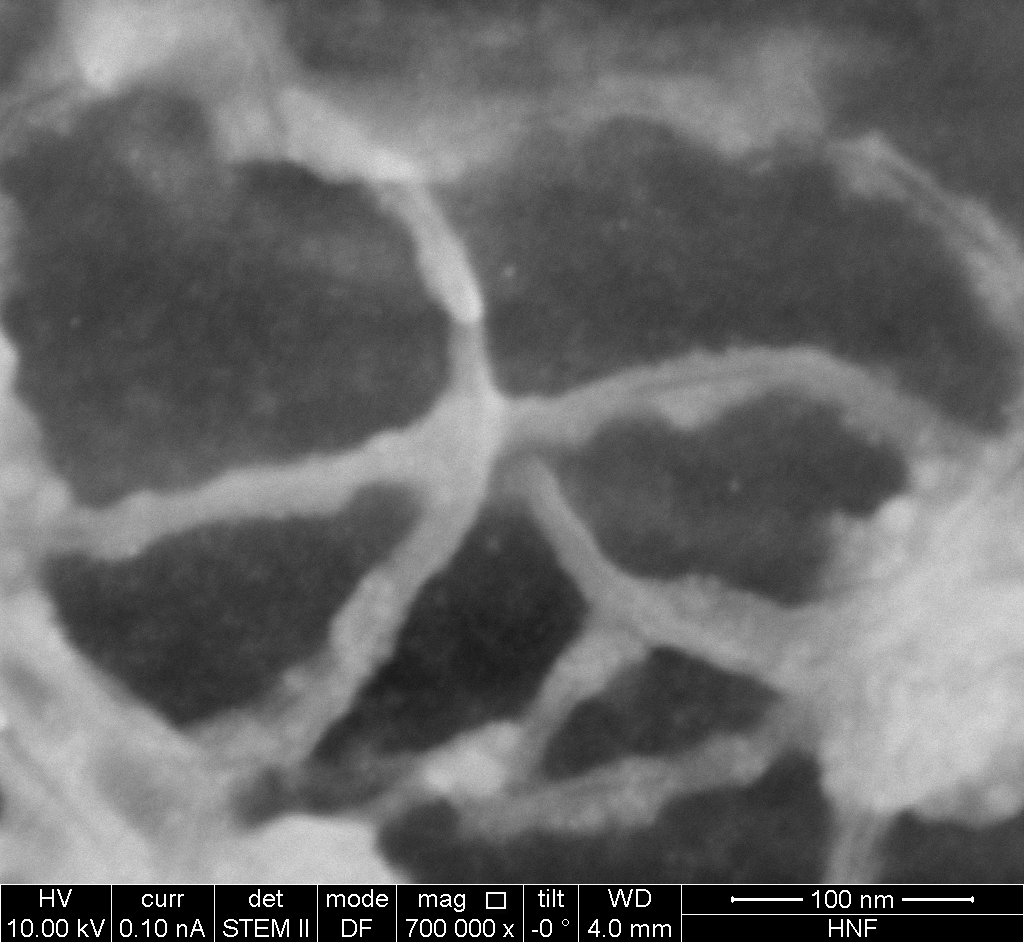
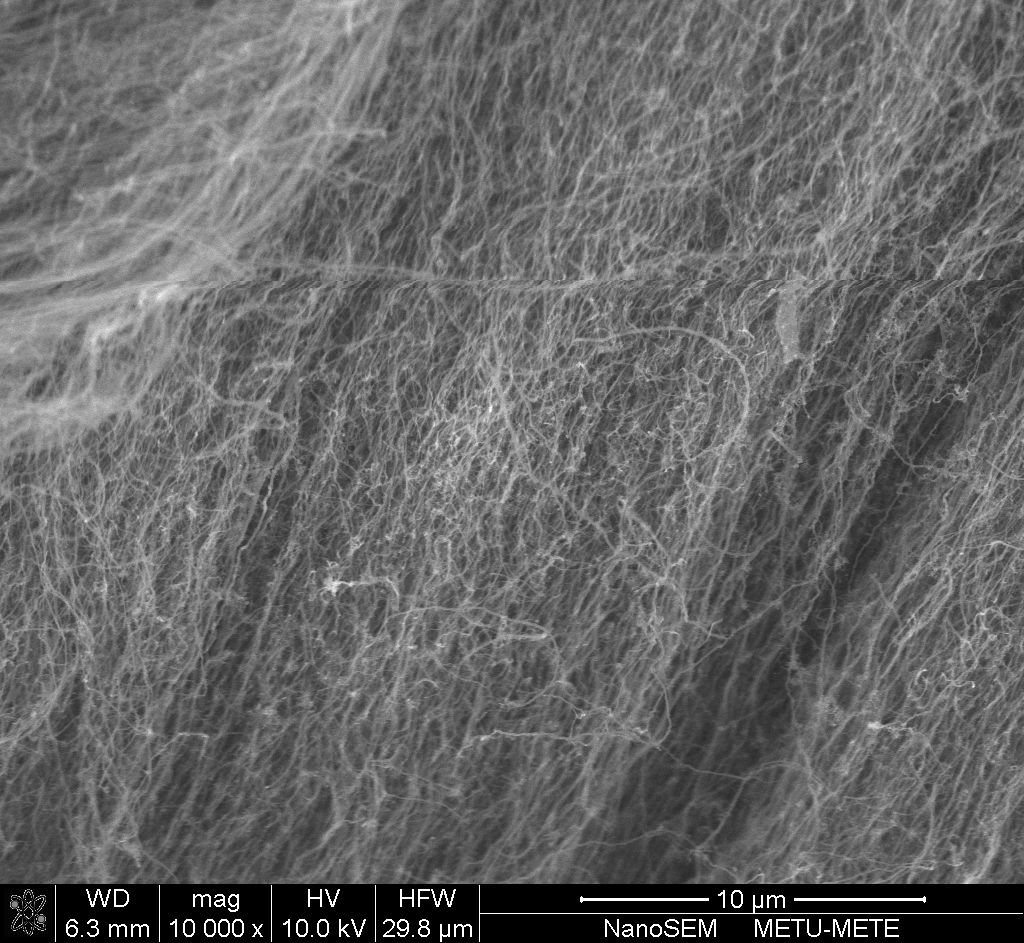
SEM Images
Applications
Thanks to their outstanding properties, MWCNTs are utilized in various fields such as:
- Energy Storage: Lithium-ion batteries, supercapacitors, hydrogen storage
- Electronics: Transistors, flat panel displays, solar cells, nanoelectronics
- Medical: Drug delivery systems, biosensors, nanoprobes
- Composites: Reinforcement in polymers and structural materials
- Catalysis and Templates: Advanced chemical synthesis and nanostructure templating
FAQ
FAQ About Multi Walled Carbon Nanotubes, >96%, OD 8–18 nm
1) What does the >96% purity grade buy compared with industrial grades?
Purity in CVD-grown nanotubes is mostly about residual growth catalyst, and it shows up in the ash figure. This grade is specified at greater than 96% purity with 1.5 wt% ash, against 9 wt% for industrial-grade material. Six times less inorganic residue matters in electrochemical measurements, catalysis and any study attributing activity to the carbon itself. For bulk composites and coatings the difference is largely immaterial and industrial grade is more economical.
2) What do the 8–18 nm outer diameter and 10–30 µm length mean for composites?
Together they give an aspect ratio in the low thousands, high enough that a percolating conductive network forms at loadings well below those required for particulate carbon fillers. Thinner tubes provide more individual conductive strands per unit mass than coarse grades, so target loading falls. In practice the limiting factor is rarely the specification but whether that aspect ratio survives mixing intact.
3) Why is the tap density 0.25 g/cm³ higher than on other MWCNT grades?
Tap density reflects how the nanotube agglomerates pack rather than the density of the tubes themselves, which is 2.4 g/cm³. A figure of 0.25 g/cm³ is comparatively high for a nanotube powder and means the material occupies less volume per unit mass. Practically it is easier to weigh, transfer and feed than very low-density grades, though denser agglomerates can also require more energy to break apart during dispersion.
4) What does the 220 m²/g surface area indicate?
It reflects the accessible outer-wall surface of tubes in this diameter range. In multi-walled nanotubes the inner walls contribute mass but very little accessible area, which is why multi-walled grades sit well below single-walled ones on this measure. For conductive additive use the figure is a useful proxy for how much interfacial contact the nanotubes make with active particles, and it drives binder and solvent demand in a slurry.
5) Should I choose this diameter or a coarser grade?
Nanografi supplies this >96% purity family across several outer-diameter bands. Finer tubes give more conductive pathways per gram and are preferred where additive loading must be minimised; coarser tubes disperse more easily, cost less per gram and are more forgiving in high-viscosity systems. The trade is conductivity efficiency against processing ease — the range is listed under multi-walled carbon nanotubes.
6) Where is this grade typically used?
Reported applications are lithium-ion batteries, supercapacitors and hydrogen storage; transistors, flat panel displays, solar cells and nanoelectronics; drug delivery systems, biosensors and nanoprobes; polymer and structural composite reinforcement; and catalysis and nanostructure templating. The biomedical and electronic entries in that list are the ones that specifically justify the higher purity grade over industrial material. A broader survey is given in applications of multi-walled carbon nanotubes.
7) What quantities are available?
This grade is supplied from 1 g through 5 g, 25 g, 100 g, 500 g and 1000 g, with custom bulk pricing above 1 kg. The 1 g entry point is unusual for a purity grade at this level and makes initial screening inexpensive before committing to a larger quantity. Nanografi states excellent batch-to-batch consistency, which matters when scaling from that first gram to production volume.
Related Products
Related Products


Multi Walled Carbon Nanotubes, Purity: > 96%, Outside Diameter: < 8 nm

(-COOH) Functionalized Multi Walled Carbon Nanotubes, Purity: > 96%, Outside Diameter: 8-18 nm

Nickel-Coated Multi Walled Carbon Nanotubes, Purity: > 96%, Outside Diameter: 8-18 nm

(-COOH) Functionalized Multi Walled Carbon Nanotubes, Purity: > 96%, Outside Diameter: < 8 nm
