
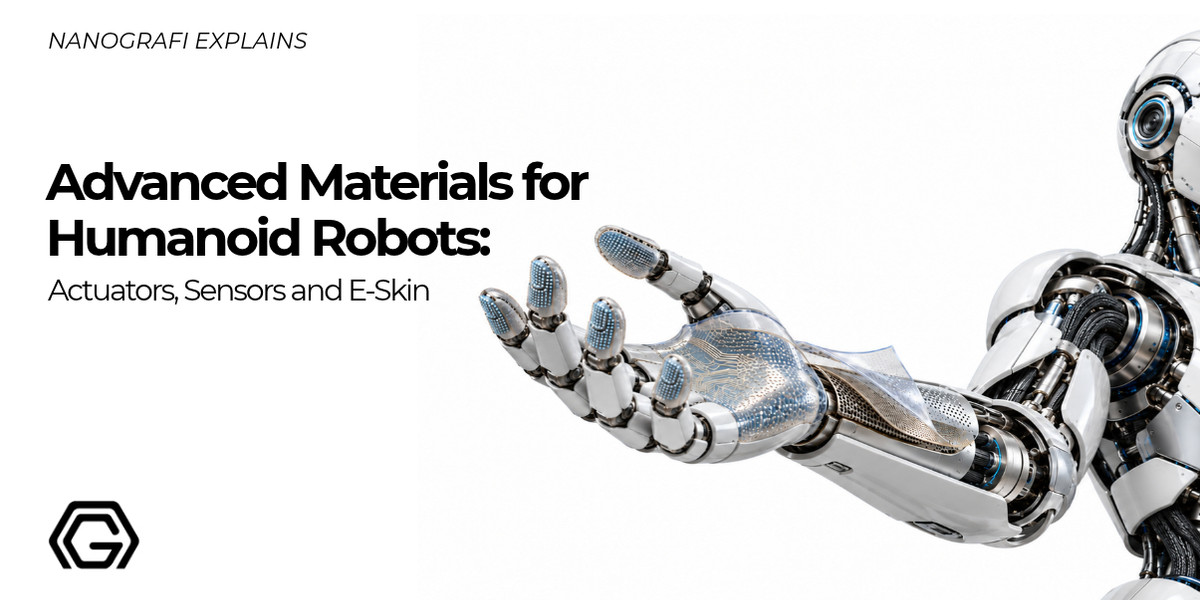
Advanced Materials for Humanoid Robots: Actuators, Sensors and E-Skin
Humanoid robots are leaving the lab. They now walk warehouse floors, handle parts on assembly lines and compete in public sporting events. Most of the attention goes to control software and AI models, yet the hardware sets the hard limits: how much torque a joint delivers per kilogram, how finely a hand senses contact, how long a battery lasts and how well the electronics shed heat. Every one of these limits is, at its core, a materials problem.
A humanoid is not built from one material but from a stack of functional layers. Metals such as titanium and aluminum alloys still carry the main loads. Around them, a growing set of advanced materials adds what metals cannot: compliance, distributed sensing, electrical conductivity under stretch and thermal paths through electrically insulating parts. This article walks through those layers and explains which advanced materials fit each one, how they work and where their limits lie.
The Material Map of a Humanoid Robot
The table below summarizes the six functional layers covered in this article and the advanced materials that matter most in each.
|
Layer |
Main function |
Advanced materials |
Property that matters |
|
Structure |
Carry loads with minimum mass |
CNT and graphene reinforced polymers, cellulose nanofibers |
Specific stiffness, fatigue resistance |
|
Actuation |
Generate force and motion |
CNT yarns, dielectric elastomers with nanocarbon electrodes, Nitinol, MXene and graphene oxide films |
Work density, strain, response speed |
|
Joints and surfaces |
Reduce friction and wear |
Hexagonal boron nitride, graphene, nanofilled polymers |
Low friction, wear resistance |
|
Sensing |
Measure strain, pressure and vibration |
Graphene nanoplatelets, rGO, MXenes, barium titanate |
Sensitivity, hysteresis, bandwidth |
|
Electronic skin |
Cover large curved areas with touch |
Silver nanowires, CNT and graphene inks, liquid metals |
Conductivity under strain, durability |
|
Power, thermal and EMI |
Store energy, remove heat, block interference |
Battery materials, BN and AlN fillers, graphene sheets, MXenes |
Energy density, thermal conductivity, shielding |
- Structure: Making Every Gram Count
The mass of a limb multiplies through the whole robot. A heavier forearm needs a stronger elbow motor, which needs a stronger shoulder motor and a larger battery. For this reason, structural design in humanoids focuses on specific stiffness and strength, meaning performance per unit mass.
Titanium alloys such as Ti-6Al-4V and 6000-series aluminum remain the backbone for high-stress nodes and housings. Advanced materials enter where polymers and composites replace metal: covers, brackets, link arms and the outer shell.
Carbon nanotubes and graphene as reinforcements. Monolayer graphene has a Young's modulus of about 1 TPa and an intrinsic strength of about 130 GPa, which places it among the strongest materials ever measured. A composite never reaches these values, but small additions of multi-walled carbon nanotubes or graphene nanoplatelets to epoxy, polyamide or PEEK can raise stiffness, fracture toughness and fatigue life. The same fillers make the polymer electrically conductive, which helps with static dissipation and lets the part act as its own strain sensor.
Cellulose nanofibers. Cellulose nanofibers offer high stiffness at very low density and come from renewable sources. They are used to reinforce polymer films and foams, and they also work as tough substrates for flexible electronics.
The key processing challenge is dispersion. Nanofillers tend to agglomerate, and agglomerates act as crack initiation sites. Surface functionalization with -COOH or -OH groups and the use of pre-dispersed grades help the filler bond to the matrix.
2. Actuation: From Electric Motors to Artificial Muscles
Today, nearly all commercial humanoids move with electric motors. Rare-earth permanent magnets and high-purity copper windings set the torque density of these motors, while gearboxes multiply the torque. Advanced materials support this setup mainly through lighter structures and better thermal paths for motor drivers.
The long-term goal is an actuator that behaves like biological muscle: soft, back-drivable, quiet and able to store elastic energy. No single technology meets all these targets yet, but several material families are maturing quickly.
|
Actuator type |
How it works |
Key materials |
Strengths |
Limitations |
|
Dielectric elastomer actuator (DEA) |
An electric field squeezes a soft film between two compliant electrodes |
Silicone or acrylic film, CNT, graphene or silver nanowire electrodes |
Large strain, fast, silent |
Needs kilovolt-level drive voltage |
|
CNT yarn actuator |
Charging or heating a twisted yarn makes it swell and untwist |
Twisted CNT yarns, often infiltrated with a guest material |
High torsional output, works in small spaces |
Electrolyte or thermal cycling needed |
|
Twisted and coiled polymer (TCP) muscle |
Heating a coiled fiber changes its twist and shortens the coil |
Nylon or polyethylene fibers, conductive coatings |
Very low cost, high work density |
Slow cooling, low efficiency |
|
Shape memory alloy (SMA) |
Heating triggers a phase change back to a trained shape |
Nickel titanium (Nitinol) wires and springs |
High force in a tiny volume |
Slow cooling, limited strain |
|
Ionic and electrochemical actuator |
Ion movement swells one side of a membrane and bends it |
Polymer membranes with MXene, graphene or CNT electrodes |
Runs at a few volts, soft |
Low force, needs encapsulation |
Dielectric elastomers. In a DEA, the electric field pulls the two electrodes together and the elastomer expands sideways. The electrodes must stretch with the film and stay conductive. Metal films crack at a few percent strain, so percolating networks of carbon nanotubes, graphene or silver nanowires are used instead. The high drive voltage is the main barrier to use in humanoids, which drives research into thinner films and higher-permittivity elastomers.
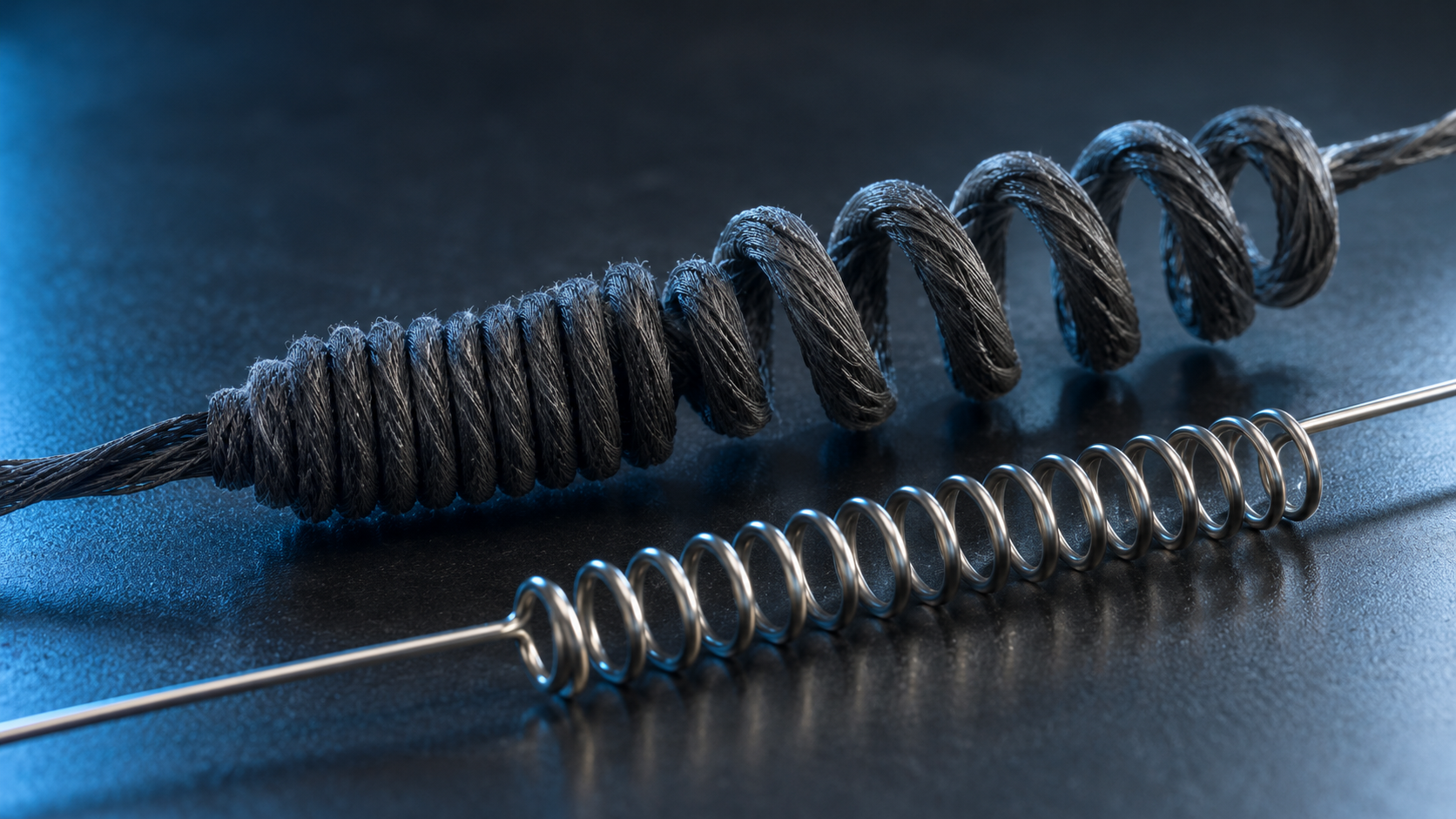
Carbon nanotube yarns. Twisted CNT yarns show how a nanomaterial can become the muscle itself. In the first demonstration, electrochemically charged CNT yarns produced reversible rotation of about 250° per millimeter of yarn length. Later designs added paraffin wax or other guest materials so that heating alone drives the motion. Such yarns are typically spun from sheets drawn from multi-walled carbon nanotube forests.
Twisted and coiled polymer fibers. The same twist principle works with ordinary fishing line and sewing thread. Coiled polymer muscles can lift loads over 100 times heavier than human muscle of the same length and weight, and they reach about 5.3 kW of mechanical output per kilogram. Their weakness is efficiency and cycle speed, because they rely on heating and cooling.
Shape memory alloys. Shape memory materials such as Nitinol switch between martensite and austenite phases with temperature. Nitinol can recover strains of up to about 8%, and it delivers high stress from a thin wire. This makes it attractive for finger tendons and compact grippers. Passive cooling limits how fast the wire can relax, so SMA actuators suit slow, strong motions better than fast ones.
Ionic and 2D material actuators. Bending actuators built from MXene materials, graphene or CNT electrodes on an ion-conducting membrane run at only a few volts. Their high electrical conductivity and large ion-accessible surface area make 2D materials well suited for this role. Layered graphene oxide films are also studied as actuators that respond to humidity and light.
3. Joints and Surfaces: Friction and Wear Control
A humanoid joint goes through millions of load cycles. Bearings, bushings and sliding liners must keep friction low and stable over that lifetime, often without liquid lubricants that could leak or attract dust.
Hexagonal boron nitride (h-BN). h-BN has a layered structure like graphite, so its planes shear easily and act as a solid lubricant. Unlike graphite, it is an electrical insulator and stays stable in air at high temperatures. Boron nitride nanopowder is added to PTFE, PEEK and coatings to lower friction and wear.
Graphene and nanocarbon fillers. Graphene platelets and carbon nanotubes in polymer liners reduce wear by spreading load and forming a protective transfer film on the counter surface. They also improve heat dissipation at the contact, which slows thermal degradation of the polymer.
4. Sensing: Proprioception and Touch
A humanoid needs two kinds of sensing. Proprioception reports joint angles and loads. Tactile sensing reports what the robot touches, how hard it presses and whether an object is starting to slip.
Human fingertips set a demanding benchmark. Studies on humanoid tactile sensing point to a spatial resolution of about 1 mm at the fingertip and response times of a few milliseconds, together with sensitivity to forces from a few grams up to several newtons. No single transduction method meets all of these needs, so most designs combine more than one.
|
Mechanism |
Physical principle |
Typical materials |
Strength |
Limitation |
|
Piezoresistive |
Resistance changes as a conductive network deforms |
CNT, graphene, rGO, MXene composites |
Simple readout, high sensitivity |
Hysteresis, temperature drift |
|
Capacitive |
Capacitance changes as a dielectric layer compresses |
Elastomers filled with high-permittivity ceramics |
Low drift, good static sensing |
Sensitive to stray fields |
|
Piezoelectric |
Deformation creates a charge |
Barium titanate, PVDF and its copolymers |
Very fast, self-powered |
Cannot measure static force |
|
Triboelectric |
Contact and separation create a charge |
Polymer pairs with conductive electrodes |
Self-powered, simple |
Signal varies with humidity |
Strain sensors. When conductive particles are dispersed in an elastomer above the percolation threshold, stretching the composite pulls the particles apart and raises the resistance. Graphene nanoplatelets and carbon nanotubes are the most common fillers. The gauge factor, the relative resistance change per unit strain, is the key figure of merit. Viscoelastic graphene and silicone composites have shown gauge factors above 500, far higher than conventional metal foil gauges.
Piezoresistive pressure sensors. Porous structures made from reduced graphene oxide or graphene aerogels compress easily, and each compression step creates new conductive contacts. MXenes such as Ti3C2Tx offer another route. Their stacked layers move closer under pressure, so the interlayer distance itself becomes the sensing variable, which gives a large signal at low loads.
Capacitive sensors. A capacitive sensor reads the change in capacitance between two electrodes as a soft dielectric compresses. Microstructured elastomer surfaces, such as pyramids or domes, make the layer easier to compress and raise sensitivity. Ceramic fillers with high permittivity increase the baseline capacitance and the signal-to-noise ratio.
Piezoelectric sensors. Piezoelectric materials are ideal for slip detection, because slip begins as a high-frequency vibration. Barium titanate is a lead-free piezoelectric ceramic. Its piezoelectric response requires a non-centrosymmetric crystal structure, which at room temperature is the tetragonal phase, stable between roughly 5 °C and the Curie temperature of about 120 °C. Above the Curie temperature the structure becomes cubic and the piezoelectric response disappears. Tetragonal barium titanate particles are often combined with PVDF to make flexible piezoelectric films that couple the ceramic's response with the polymer's toughness.
5. Electronic Skin: Architecture and Materials
Electronic skin, or e-skin, is a thin and stretchable sensor sheet that covers a robot's surface. It brings distributed touch to the palm, fingers, forearm and torso, so that the robot can grasp fragile objects and react safely to unexpected contact with people.
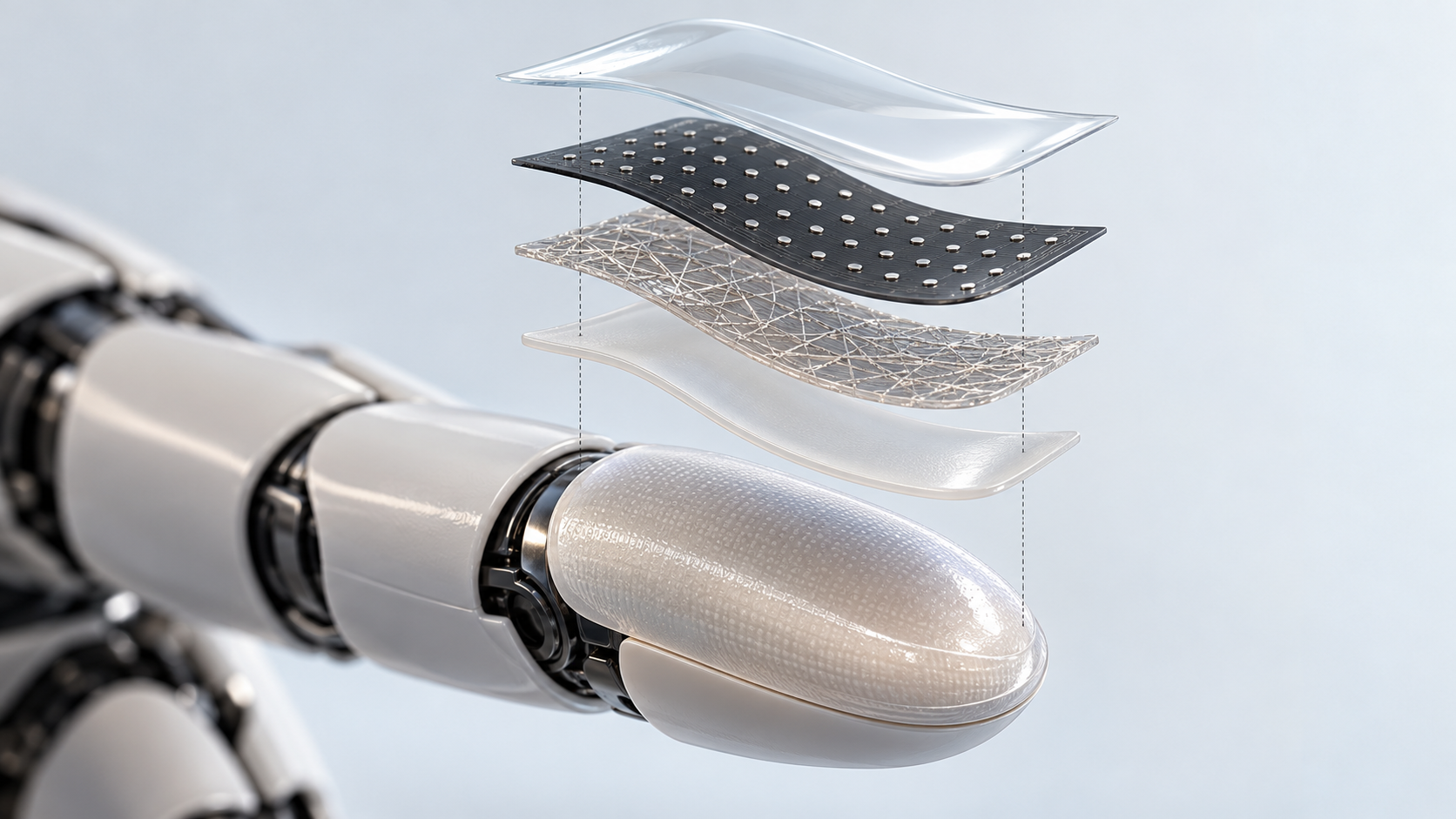
A typical e-skin is built as a stack of functional layers:
- Substrate: a soft elastomer such as silicone or polyurethane, or, for regions that need flexibility rather than large stretch, a thin, tough film reinforced with cellulose nanofibers.
- Stretchable electrodes and interconnects: conductive networks that keep their resistance stable under repeated stretching.
- Sensing layer: one or more of the piezoresistive, capacitive or piezoelectric composites described above.
- Encapsulation: a top layer that resists abrasion, moisture, oils and UV light.
The stretchable conductor is often the hardest layer to get right. The main options compare as follows:
|
Conductor |
Conductivity |
Stretchability |
Key advantage |
Key drawback |
|
Silver nanowire networks |
Very high |
Good on elastomers |
Transparent and printable |
Oxidation, wire-wire junction failure |
|
Carbon nanotube networks |
Moderate |
Very good |
Chemically stable, polymer compatible |
Higher sheet resistance |
|
Graphene and rGO films |
Moderate |
Limited as a continuous film |
Thin, barrier properties |
Cracks at high strain |
|
Gallium-based liquid metals |
Very high |
Excellent |
Stays conductive at very large strain |
Leakage, encapsulation needed |
Silver nanowires benefit from silver's position as the most conductive metal, and their high aspect ratio lets a sparse network conduct while remaining flexible. You can read more about their synthesis and processing in our article on the applications of silver nanowires. Many e-skin designs combine silver nanowires with CNTs or graphene, so that the carbon network bridges broken wire junctions.
Printing is a practical way to build these layers over large, curved areas. Stable CNT dispersions and graphene dispersions can be screen printed, spray coated or inkjet printed onto elastomer substrates. Viscosity, solid content and drying temperature must match both the printing method and the heat tolerance of the substrate.
E-skin still faces open engineering problems:
- Hysteresis and drift: viscoelastic substrates make the signal lag behind the load, which complicates force control.
- Crosstalk: neighboring sensing points can interfere, which lowers the effective spatial resolution.
- Wiring: hundreds or thousands of taxels need multiplexed readout with as few wires as possible.
- Durability: the outer surface must survive abrasion, cuts and cleaning over years of service.
6. Power, Thermal Management and EMI Shielding
Batteries. A humanoid carries its whole energy supply on board, usually in the torso. Cell chemistry sets the runtime, and battery materials such as high-capacity cathodes, silicon-containing anodes and CNT conductive additives determine energy density and fast-charge capability. Our guide to the best cathode and anode materials for batteries covers the main options.
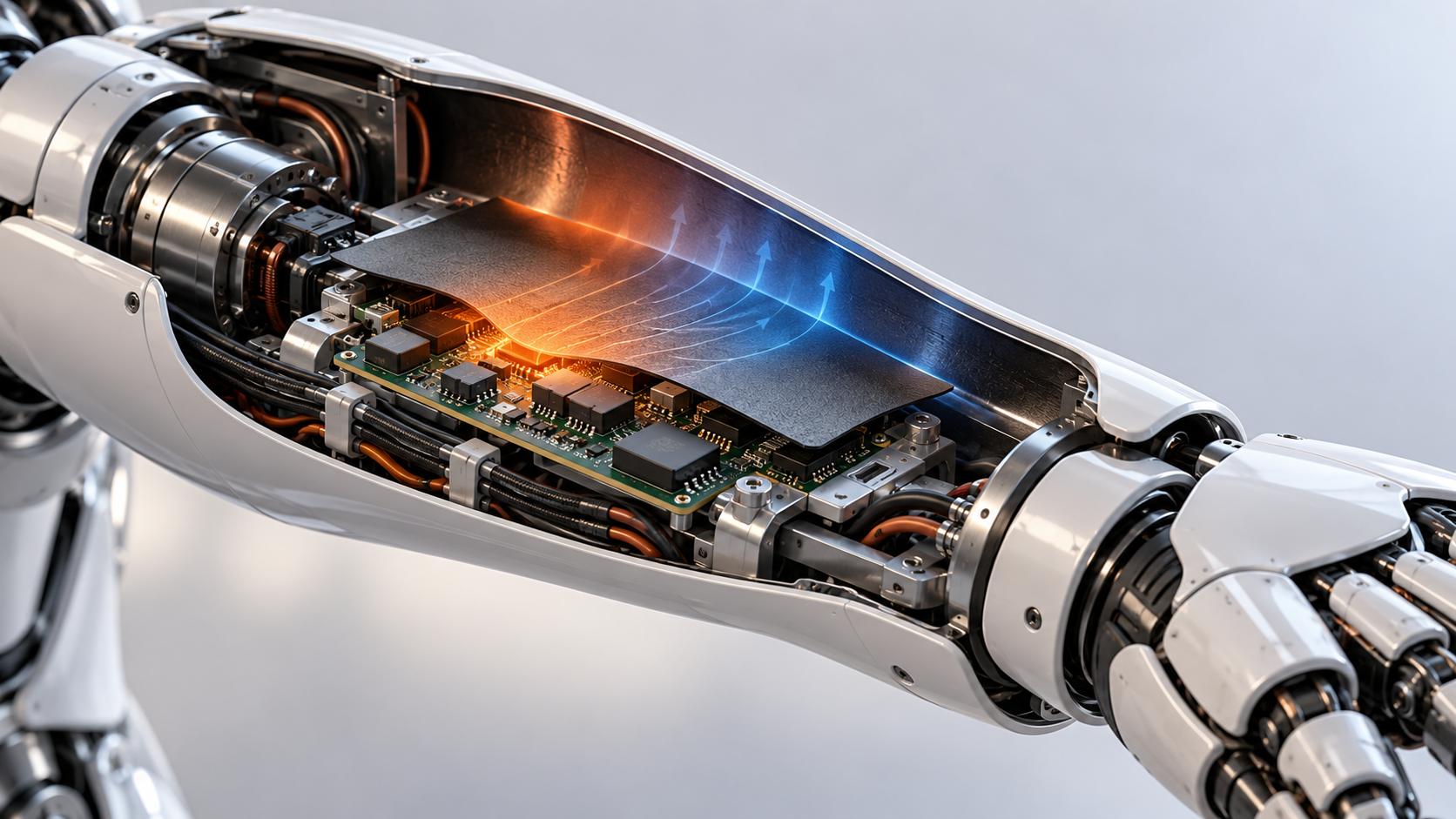
Thermal management. Motor drivers, compute modules and battery cells sit inside closed limbs and a crowded torso. Heat must pass through electrically insulating parts such as potting compounds, thermal pads and circuit substrates. Boron nitride and aluminum nitride nanoparticles combine high thermal conductivity with electrical insulation, which makes them widely used high-performance fillers for this job. For more detail, see our post on the uses of boron nitride.
Where heat must spread sideways across a surface, graphene excels. Suspended single-layer graphene has shown in-plane thermal conductivity in the range of several thousand W/m·K. Thin graphene sheets are used as heat spreaders between hot components and the robot's shell.
EMI shielding. Motors, power converters, radios and sensitive sensor lines operate side by side in a humanoid. Electromagnetic interference can corrupt tactile and position signals. Ti3C2Tx MXene films have shown very high shielding effectiveness at small thickness: in the X-band, a 45 μm film reached 92 dB and a 2.5 μm film exceeded 50 dB, among the highest values reported for synthetic materials of comparable thickness. MXene coatings may therefore offer a lightweight alternative to metal shielding cans.
Material Selection Checklist
- Dispersion and agglomeration: choose a grade and solvent system that fits your matrix, and check dispersion stability before scale-up.
- Surface chemistry: -COOH, -OH or -NH2 groups improve bonding with polar polymers and epoxy systems.
- Aspect ratio: long nanotubes and nanowires reach electrical percolation at lower loadings, which keeps composites soft and light.
- Purity and phase: residual metal catalyst changes conductivity and long-term stability, and only tetragonal barium titanate is piezoelectric at room temperature.
- Oxidation stability: silver nanowires and MXenes need encapsulation or protective coatings for long service lives.
- Process compatibility: printing, casting, coating and molding each need a different viscosity, solid content and curing window.
Humanoid robotics brings mechanics, electronics and materials science into one design problem. Metals will keep carrying the main loads, but the features that make a humanoid useful around people, such as soft muscles, sensitive hands and skin that feels contact, depend on advanced materials. Nanografi supplies carbon nanotubes, graphene, MXenes, silver nanowires, functional ceramics and battery materials in research and industrial quantities for teams building the next generation of humanoid robots.
Frequently Asked Questions
Which advanced materials are used in humanoid robots? Titanium and aluminum alloys carry the main loads. Carbon nanotubes, graphene and cellulose nanofibers reinforce polymer parts. Nitinol, CNT yarns and dielectric elastomers serve as actuators. Graphene, MXenes, silver nanowires and barium titanate are used in sensors and electronic skin. Boron nitride, aluminum nitride and graphene manage heat.
What is the difference between a robot motor and an artificial muscle? An electric motor produces rotation that a gearbox converts into joint torque. An artificial muscle contracts, bends or twists directly, without gears, and is usually soft and compliant. Artificial muscles are lighter and quieter, but most types still trail motors in efficiency, speed or lifetime.
Can carbon nanotubes work as artificial muscles? In laboratory demonstrations, yes. Twisted CNT yarns rotate and contract at the same time when they are electrochemically charged, and yarns filled with a guest material such as paraffin wax can also be driven by heating alone. Researchers have reported rotation of about 250° per millimeter of yarn.
Why is tetragonal barium titanate preferred for piezoelectric sensors? Barium titanate’s piezoelectric response requires a non-centrosymmetric crystal structure. At room temperature this is the tetragonal phase, which is stable between roughly 5 °C and the Curie temperature of about 120 °C. Above that temperature the cubic phase has a centrosymmetric structure and produces no piezoelectric signal, so the crystal phase of the powder decides whether a composite film works as a sensor.
Which is better for stretchable electrodes, silver nanowires or carbon nanotubes? Silver nanowires offer higher conductivity and suit low-resistance interconnects. Carbon nanotubes are chemically more stable, easier to combine with polymers and more tolerant of repeated strain. Hybrid networks are common because they combine both advantages.
How do MXenes help humanoid robots? MXenes such as Ti3C2Tx MXene combine metal-like conductivity with a layered structure. This makes them useful in three places: as sensitive pressure-sensing layers, as low-voltage actuator electrodes and as thin, lightweight EMI shielding coatings.
What are the biggest challenges for electronic skin? The main challenges are signal hysteresis and drift, crosstalk between neighboring sensing points, wiring many sensors with few connections, and long-term durability against abrasion and moisture.
References
- Hammock, M. L., Chortos, A., Tee, B. C.-K., Tok, J. B.-H., Bao, Z. (2013). 25th Anniversary Article: The Evolution of Electronic Skin (E-Skin): A Brief History, Design Considerations, and Recent Progress. Advanced Materials, 25(42), 5997-6038. https://doi.org/10.1002/adma.201302240
- Chortos, A., Liu, J., Bao, Z. (2016). Pursuing prosthetic electronic skin. Nature Materials, 15, 937-950. https://doi.org/10.1038/nmat4671
- Yang, J. C., Mun, J., Kwon, S. Y., Park, S., Bao, Z., Park, S. (2019). Electronic Skin: Recent Progress and Future Prospects for Skin-Attachable Devices for Health Monitoring, Robotics, and Prosthetics. Advanced Materials, 31(48), 1904765. https://doi.org/10.1002/adma.201904765
- Dahiya, R. S., Metta, G., Valle, M., Sandini, G. (2010). Tactile Sensing - From Humans to Humanoids. IEEE Transactions on Robotics, 26(1), 1-20. https://doi.org/10.1109/TRO.2009.2033627
- Rus, D., Tolley, M. T. (2015). Design, fabrication and control of soft robots. Nature, 521, 467-475. https://doi.org/10.1038/nature14543
- Lee, C., Wei, X., Kysar, J. W., Hone, J. (2008). Measurement of the Elastic Properties and Intrinsic Strength of Monolayer Graphene. Science, 321(5887), 385-388. https://doi.org/10.1126/science.1157996
- Balandin, A. A., Ghosh, S., Bao, W., et al. (2008). Superior Thermal Conductivity of Single-Layer Graphene. Nano Letters, 8(3), 902-907. https://doi.org/10.1021/nl0731872
- Mirvakili, S. M., Hunter, I. W. (2018). Artificial Muscles: Mechanisms, Applications, and Challenges. Advanced Materials, 30(6), 1704407. https://doi.org/10.1002/adma.201704407
- Foroughi, J., Spinks, G. M., Wallace, G. G., et al. (2011). Torsional Carbon Nanotube Artificial Muscles. Science, 334(6055), 494-497. https://doi.org/10.1126/science.1211220
- Haines, C. S., Lima, M. D., Li, N., et al. (2014). Artificial Muscles from Fishing Line and Sewing Thread. Science, 343(6173), 868-872. https://doi.org/10.1126/science.1246906
- Brochu, P., Pei, Q. (2010). Advances in Dielectric Elastomers for Actuators and Artificial Muscles. Macromolecular Rapid Communications, 31(1), 10-36. https://doi.org/10.1002/marc.200900425
- Otsuka, K., Ren, X. (2005). Physical metallurgy of Ti-Ni-based shape memory alloys. Progress in Materials Science, 50(5), 511-678. https://doi.org/10.1016/j.pmatsci.2004.10.001
- Amjadi, M., Kyung, K.-U., Park, I., Sitti, M. (2016). Stretchable, Skin-Mountable, and Wearable Strain Sensors and Their Potential Applications: A Review. Advanced Functional Materials, 26(11), 1678-1698. https://doi.org/10.1002/adfm.201504755
- Boland, C. S., Khan, U., Ryan, G., et al. (2016). Sensitive electromechanical sensors using viscoelastic graphene-polymer nanocomposites. Science, 354(6317), 1257-1260. https://doi.org/10.1126/science.aag2879
- Ma, Y., Liu, N., Li, L., et al. (2017). A highly flexible and sensitive piezoresistive sensor based on MXene with greatly changed interlayer distances. Nature Communications, 8, 1207. https://doi.org/10.1038/s41467-017-01136-9
- Acosta, M., Novak, N., Rojas, V., et al. (2017). BaTiO3-based piezoelectrics: Fundamentals, current status, and perspectives. Applied Physics Reviews, 4, 041305. https://doi.org/10.1063/1.4990046
- Shahzad, F., Alhabeb, M., Hatter, C. B., Anasori, B., Hong, S. M., Koo, C. M., Gogotsi, Y. (2016). Electromagnetic interference shielding with 2D transition metal carbides (MXenes). Science, 353(6304), 1137-1140. https://doi.org/10.1126/science.aag2421
- Dickey, M. D. (2017). Stretchable and Soft Electronics using Liquid Metals. Advanced Materials, 29(27), 1606425. https://doi.org/10.1002/adma.201606425
Recent Posts
-

Advanced Materials for Humanoid Robots: Actuators, Sensors and E-Skin
Humanoid robots are leaving the lab. They now walk warehouse floors, handle parts on assembly lines …23rd Oct 2026 -

What Is Conductive Masterbatch? CNT, Carbon Black and Graphene Compared
A conductive masterbatch is a concentrated blend of a conductive carbon additive and a carrier polym …14th Oct 2026 -

Biomaterials for Implants: Titanium vs Nitinol vs Hydroxyapatite Coatings
Implantable medical devices operate under very different mechanical and biological conditions. A hip …7th Oct 2026