
Hydrothermal Synthesis Autoclave Reactors
Hydrothermal Synthesis Autoclave Reactors are designed for controlled high-temperature and high-pressure synthesis processes in advanced material research. These reactors support hydrothermal, solvothermal, crystallization, nanoparticle synthesis, and laboratory-scale material development applications with reliable sealing performance and durable reactor construction.
- Product
- Qty in Cart
- Quantity
- Price
- Subtotal
-

Hydrothermal Synthesis Autoclave Reactor with PTFE Lined Vessel 50 ml
$168.241 Piece: 144 € 5 Pieces: 630 € Contact us for tailored quotes on larger quantities & experience exceptional solutions from our experts. Hydrothermal Synthesis Autoclave Reactor PTFE Lined Vessel,...NG10MCHW0944$168.24 -

Hydrothermal Synthesis Autoclave Reactor with PTFE Lined Vessel 100 ml
$175.251 Piece: 150 € 5 Pieces: 675 € Contact us for tailored quotes on larger quantities & experience exceptional solutions from our experts. Hydrothermal Synthesis Autoclave Reactor PTFE Lined Vessel,...NG10MCHW0945$175.25 -

PTFE Inside Chamber for Hydrothermal Synthesis Autoclave Reactors, Volume:50,100,500 ml
$66.5950ml: 57€ 100ml: 96€ 500ml: 261€ Product Information Product Name PTFE Inside ChamNG10MCHW0966$66.59 -
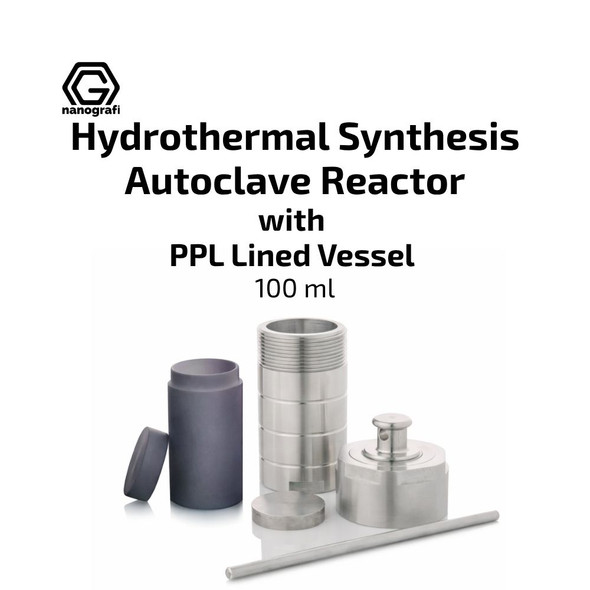
Hydrothermal Synthesis Autoclave Reactor with PPL Lined Vessel 100 ml
$240.671 Piece: 206 € 5 Pieces: 825 € Contact us for tailored quotes on larger quantities & experience exceptional solutions from our experts. Hydrothermal Synthesis Autoclave Reactor PPL Lined Vessel,...NG10MCHW0948$240.67 -

Hydrothermal Synthesis Autoclave Reactor with PTFE Lined Vessel 500 ml
$593.501 Piece: 508 € 5 Pieces: 2214 € Contact us for tailored quotes on larger quantities & experience exceptional solutions from our experts. Hydrothermal Synthesis Autoclave Reactor PTFE Lined...NG10MCHW0946$593.50 -

Hydrothermal Synthesis Autoclave Reactor with PPL Lined Vessel 500 ml
$693.971 Piece: 594 € 5 Pieces: 2658 € Contact us for tailored quotes on larger quantities & experience exceptional solutions from our experts. Hydrothermal Synthesis Autoclave Reactor PPL Lined Vessel,...NG10MCHW0949$693.97 -

Hydrothermal Synthesis Autoclave Reactor with PPL Lined Vessel 50 ml
$217.301 Piece: 186 € 5 Pieces: 822 € Contact us for tailored quotes on larger quantities & experience exceptional solutions from our experts. Hydrothermal Synthesis Autoclave Reactor PPL Lined Vessel,...NG10MCHW0947$217.30 -

Hydrothermal Synthesis Autoclave Reactor with PPL Lined Vessel 300 ml
$634.391 Piece: 543 € 5 Pieces: 2498 € Contact us for tailored quotes on larger quantities & experience exceptional solutions from our experts. Hydrothermal Synthesis Autoclave Reactor PPL Lined Vessel,...NG10MCHW1062$634.39 -
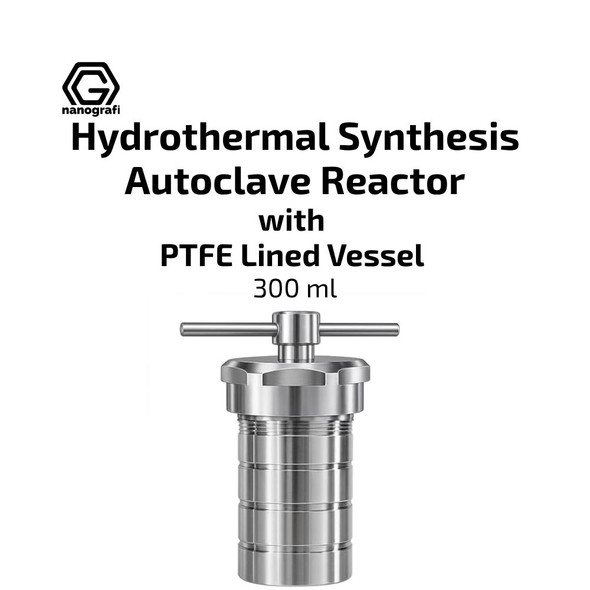

Hydrothermal Synthesis Autoclave Reactor with PTFE Lined Vessel 300 ml
$387.881 Piece: 332 € 5 Pieces: 1492 € Contact us for tailored quotes on larger quantities & experience exceptional solutions from our experts. Hydrothermal Synthesis Autoclave Reactor PTFE Lined...NG10MCHW0980$387.88 -

PPL Inside Chamber for Hydrothermal Synthesis Autoclave Reactors
$136.6950ml: 117€ 100ml: 128€ 500ml: 353€ Product Information Product Name PPL InsiNG10MCHW0967$136.69
What Are Hydrothermal Synthesis Autoclave Reactors?
A hydrothermal synthesis autoclave reactor is a sealed vessel that holds a solvent above its normal boiling point, generating autogenous pressure inside the chamber. This raises the solubility of precursors that would not dissolve at ambient conditions, allowing crystals and nanostructures to nucleate and grow under controlled temperature and pressure. The reactor consists of a stainless steel outer body that carries the pressure load and an inert inner liner that contains the reaction medium. Our overview of the applications of hydrothermal synthesis autoclave reactors covers how process parameters affect particle size and morphology.
PTFE and PPL Inner Chambers
The choice of liner sets the working temperature ceiling. PTFE liners are chemically inert across a wide pH range and are typically used up to around 200 °C, making them suitable for most aqueous hydrothermal work and acid-containing systems. PPL (polyphenylene) liners tolerate higher temperatures, generally up to about 260 °C, and offer greater mechanical rigidity, which suits solvothermal reactions and repeated thermal cycling. Both liner types are removable, allowing the same steel body to be used with different chambers depending on the chemistry.
Specifications and Operating Range
- Stainless steel outer body designed to contain autogenous pressure
- Removable PTFE inner chamber for use up to approximately 200 °C
- Removable PPL inner chamber for use up to approximately 260 °C
- Available in a range of chamber volumes for small-batch through scale-up synthesis
- Sealing arrangement designed to maintain pressure integrity across repeated cycles
- Compatible with standard laboratory ovens and heating systems
Applications
Autoclave reactors are the standard route for hydrothermal and solvothermal preparation of oxide and hydroxide nanostructures, zeolites, and framework materials. They are widely used to grow nanoparticles with controlled size and morphology, since temperature, fill ratio, and dwell time directly govern nucleation and growth. Hydrothermal routes are also used to prepare metal-organic frameworks and to reduce graphene oxide into reduced graphene oxide without harsh chemical reductants. Beyond synthesis, they serve crystallization studies, mineral processing research, and materials aging tests. For comparison with gas-phase and mechanical routes, see our overview of top-down nanoparticle synthesis.
Selecting a Reactor
Three parameters usually determine the right choice. Working temperature decides the liner material, with PTFE covering standard aqueous work and PPL required above roughly 200 °C. Chamber volume should be matched to batch size, keeping in mind that the vessel is normally filled to no more than two-thirds capacity to leave headspace for pressure development. Chemistry compatibility matters for strongly oxidizing or fluoride-containing systems, where liner selection is critical.
Research and Documentation
Equipment and materials supplied by Nanografi are used in peer-reviewed studies across synthesis, energy, and materials research. You can review the publications citing Nanografi products to see how researchers have applied them in published work. Reactors ship with the specifications relevant to safe operation, including liner type, volume, and temperature rating.
Frequently Asked Questions
Where can I buy a hydrothermal synthesis autoclave reactor?
You can buy hydrothermal synthesis autoclave reactors directly from Nanografi. We supply reactors with PTFE and PPL inner chambers in a range of volumes, with worldwide shipping.
What is the difference between PTFE and PPL liners?
PTFE liners are chemically inert and typically used up to around 200 °C, suiting most aqueous hydrothermal reactions. PPL liners withstand higher temperatures, generally up to about 260 °C, and are more rigid, making them better for solvothermal work and repeated thermal cycling.
How full should an autoclave reactor be?
Reactors are normally filled to no more than two-thirds of the chamber volume. Sufficient headspace is required so that autogenous pressure develops within the vessel's rated range.
What can be synthesized in a hydrothermal reactor?
Common products include metal oxide and hydroxide nanoparticles, zeolites, metal-organic frameworks, reduced graphene oxide, and single crystals, with size and morphology controlled through temperature, fill ratio, and dwell time.
Buy Hydrothermal Synthesis Autoclave Reactors at Nanografi
Nanografi supplies hydrothermal synthesis autoclave reactors with documented liner type, volume, and temperature rating, so you can specify the vessel your chemistry requires. These reactors sit within our broader lab equipment range and our full catalog of advanced materials, with worldwide shipping and technical support. Browse the listings above to find the configuration for your process.