
Carbon Black Powder, Purity: 99.99 %, Size: 4 µm

- SKU:
- NG01EM1501
- Shipping:
- Calculated at Checkout

Description
25 grams: €36
100 grams: €67
500 grams: €114
1000 grams: €196
Product Overview of Carbon Black Powder, Purity: 99.99 %, Size: 4 µm:
Carbon Black Powder (CAS: 1333-86-4) is a high-purity carbon-based material with a purity of 99.99% and a particle size of 4 µm. Supplied as a fine, black, odorless powder, it is practically insoluble in water and chemically stable under recommended storage and handling conditions.
Carbon black is widely utilized as a black pigment and functional filler in industrial formulations. Its characteristic pigmentation properties make it suitable for research and development involving coatings, inks, paints, plastics, and polymer-based materials. Depending on the formulation and material characteristics, carbon black can also be investigated for applications requiring modified electrical or surface properties.
Technical Properties of Carbon Black Powder, Purity: 99.99 %, Size: 4 µm:
|
PURITY |
99.99 % |
|
PARTICLE SIZE |
4 µm |
|
CAS |
1333-86-4 |
|
DENSITY |
1.79 g/cm³ |
|
MELTING POINT |
3500 °C |
|
CRYSTAL STRUCTURE |
Not Available |
|
FORM |
Powder |
|
APPLICATIONS |
Colorants Enamels Fabrics Inks Paints Paints- Primers Pigments Plastics |
Applications of Carbon Black Powder, Purity: 99.99 %, Size: 4 µm
- Pigments and Colorants: Used in formulations requiring black coloration, opacity, and pigmentation.
- Paints and Coatings: Incorporated into paints, primers, enamels, and industrial coatings to provide black pigmentation.
- Printing Inks: Used as a black pigment in printing inks and specialized ink formulations.
- Plastics and Polymer Composites: Investigated as a pigment and functional filler in plastic and polymer-based materials.
- Textile and Fabric Coatings: Used in selected textile coloration and coating formulations.
- Conductive Composites: Investigated as a carbon-based additive in research involving electrically conductive polymer composites, subject to formulation-specific testing.
Storage Conditions of Carbon Black Powder, Purity: 99.99 %, Size: 4 µm
Store in a tightly closed container in a dry environment. Keep away from ignition sources and take precautions against dust generation and electrostatic discharge. Handle in well-ventilated areas and use appropriate protective equipment when necessary. Avoid heating the material above 290°C, as specified in the Safety Data Sheet.
FAQ
Frequently Asked Questions About Carbon Black Powder, 99.99% Purity, 4 µm
1. What is high-purity carbon black powder used for?
High-purity carbon black powder is investigated for pigment formulations, printing inks, paints, coatings, polymer composites, and selected functional materials. Its carbon-rich composition and particulate structure make it useful in applications requiring black coloration or modified material properties. Performance depends on particle morphology, dispersion, surface chemistry, and formulation conditions. Explore NANOGRAFi's Carbon Micron Powder collection for related materials.
2. What does a 4 µm particle size mean for carbon black powder?
A specified particle size of 4 µm refers to the particle-size value reported for this carbon black grade. Carbon black can form aggregates and larger agglomerates, so the reported size should not automatically be interpreted as the diameter of an individual primary carbon particle. Particle-size measurement methods and dispersion conditions can influence the result. Researchers should consult the product's technical documentation when primary particle size or aggregate-size distribution is critical.
3. What is the difference between carbon black and graphite powder?
Carbon black and graphite are both carbon-based materials, but their structures and properties differ. Carbon black generally consists of aggregates of small carbon particles with varying degrees of structural ordering, while graphite has a layered crystalline structure. These differences influence electrical behavior, lubrication, surface characteristics, and processing. Researchers can compare this material with Graphite Micron Powders for applications requiring alternative carbon structures.
4. Can carbon black powder be used in printing inks, paints, and coatings?
Yes. Carbon black is widely used as a black pigment in printing inks, paints, primers, and coating formulations. Color strength, opacity, gloss, and dispersion stability depend on carbon black structure, particle characteristics, binder compatibility, and processing conditions. A high-purity grade may be investigated in specialized formulations, but purity alone does not establish pigment performance. Researchers should evaluate colorimetric and rheological properties in the finished formulation.
5. Can 4 µm carbon black powder improve the electrical conductivity of polymer composites?
Carbon black can act as a conductive filler in selected polymer composites when its structure, concentration, and distribution support the formation of interconnected electrical pathways. However, not every carbon black grade is optimized for conductivity. A 99.99% purity value and 4 µm particle-size specification do not independently establish conductive performance. Researchers seeking a dedicated conductive grade can compare KETJENBLACK EC-600JD Conductive Carbon Black and KETJENBLACK EC-300J.
6. Is this carbon black powder suitable for lithium-ion battery electrodes?
Carbon black is commonly investigated as a conductive additive in lithium-ion battery electrodes, where it can help establish electronic pathways between active material particles. However, electrode performance depends on carbon structure, specific surface area, conductivity, impurity profile, and compatibility with the binder system. This general-purpose carbon black grade should not automatically be considered battery-grade. Researchers can compare C-NERGY Super P Conductive Carbon Black and other materials in NANOGRAFi's Battery Raw Materials collection.
7. What is the difference between carbon black and activated carbon?
Carbon black is commonly selected for pigmentation, reinforcement, and selected conductive applications, while activated carbon is generally engineered for adsorption through its developed pore structure and high accessible surface area. Their production methods, porosity, and intended uses differ. Carbon black should not be assumed to provide the adsorption performance of activated carbon. For adsorption-related research, explore NANOGRAFi's Activated Carbon Micron Powder.
8. How can carbon black powder be dispersed in polymer, ink, or coating formulations?
Carbon black may form agglomerates that affect color uniformity, viscosity, conductivity, and surface finish. Dispersion methods can include high-shear mixing, milling, suitable wetting agents, and dispersants selected for the carrier medium and binder chemistry. Processing conditions should be optimized to achieve consistent distribution without introducing unwanted contamination. Dispersion quality should be evaluated using methods appropriate to the intended application.
9. How should high-purity carbon black powder be stored and handled safely?
Carbon black powder should be stored in tightly closed containers under clean, dry conditions to minimize moisture exposure and contamination. Handling should minimize airborne dust through suitable containment, ventilation, and appropriate personal protective equipment. Fine carbonaceous powders can present combustible dust hazards under certain conditions. Researchers should consult the product-specific Safety Data Sheet (SDS) and follow applicable laboratory and workplace safety procedures.
Related Products
Related Products
Silver (Ag) Micron Powder, Purity: 99.99 %, Size: 3 µm

Silicon (Si) Micron Powder, Purity: 99.99 %, Size: 10 µm

Germanium (Ge) Micron Powder, Purity: 99.99 %, Size: 5 µm
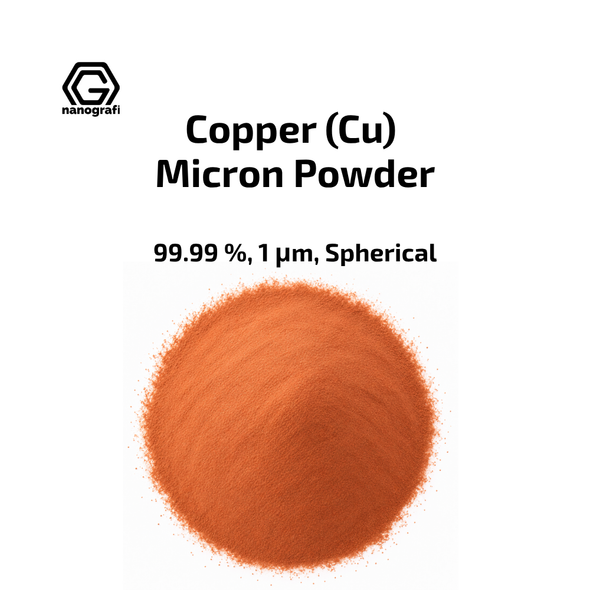
Copper (Cu) Micron Powder, Purity: 99.99 %, Size: 1 µm, Spherical
