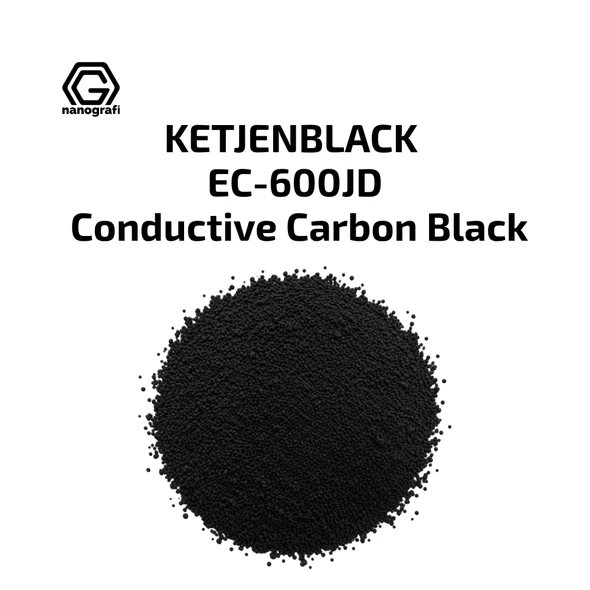
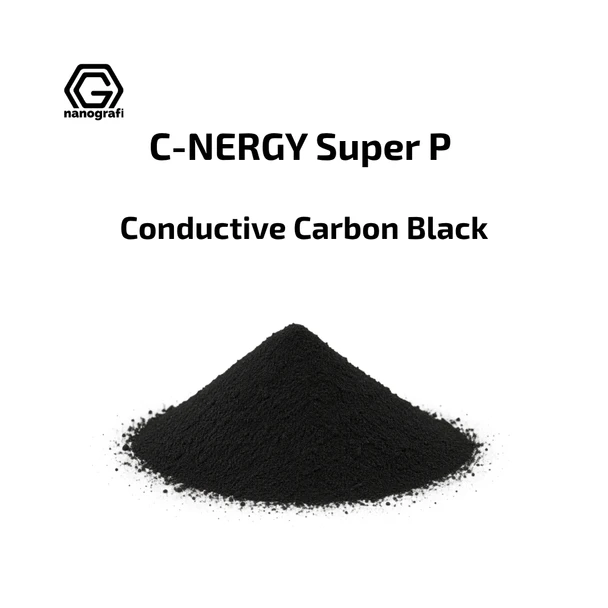
C-NERGY Super P Conductive Carbon Black
- SKU:
- NG04CO08028
- Shipping:
- Calculated at Checkout

Description
100 grams/40 €
250 grams/55 €
500 grams/95 €
1000 grams/160 €
Product Overview of C-NERGY Super PLi Conductive Carbon Black
Super P® Li is a high-purity, premium-structured specialty carbon black powder engineered specifically to meet the rigorous demands of the modern electrochemical industry. Characterized by a highly optimized and moderate specific surface area combined with an exceptional absorption stiffness profile, this traditional yet industry-leading material provides superior electrical networks within compounding matrices. Its outstanding chemical cleanliness, guaranteed low metallic impurity margins, and robust crystalline skeleton ensure excellent mechanical stability and minimal moisture pick-up. Manufactured under stringent global quality benchmarks, it eliminates the processing need for extra dispersing aids or specialized pre-milling units, delivering ultimate compound homogeneity and highly stable dispersion properties.
Technical Properties of C-NERGY Super PLi Conductive Carbon Black
| Absorption Stiffness Value | 32 ml/5g |
| BET Surface Area | 62 m²/g |
| Ash Content | Max. 0.05% |
| Grit Content > 45 microns / 325 mesh | <2 ppm |
| Grit Content > 20 microns / 625 mesh | 12 ppm |
Applications of C-NERGY Super PLi Conductive Carbon Black
- Lithium-Ion Battery Electrodes: Universally applied as a leading conductive additive in both cathode and anode mixes to fundamentally enhance the cyclability, electrochemical kinetics, and life expectancy of the battery cells.
- Electrode Mix Optimization: Enables battery manufacturers to reduce the overall dosage of electrochemically inactive components in the negative electrode, allowing the integration of more economical active materials.
- Advanced Slurry Processing: Engineered for direct integration into production lines without requiring an additional pre-dispersing unit or any chemical dispersing agents, facilitating faster electrolyte absorption and higher manufacturing output.
- Energy Storage Safety Engineering: Acts as a specialized stabilizing agent that aids in the overall reduction of the global additive costs while simultaneously increasing total battery safety and lowering cell rejection ratios.
- High-Density Power Systems: Successfully integrated into modern energy storage applications requiring elevated energy densities, improved power delivery, and enhanced structural flexibility of the coated electrode sheet.
FAQ
Frequently Asked Questions About C-NERGY Super P Conductive Carbon Black
1. What is C-NERGY Super P conductive carbon black used for?
C-NERGY Super P is a specialty conductive carbon black used in lithium-ion battery electrodes and advanced electrochemical material formulations. Its primary function is to establish electronic conduction pathways between active material particles, helping reduce electrical resistance within the electrode. Super P may be incorporated into cathode and anode formulations, depending on the electrode chemistry and processing requirements. Its effectiveness depends on carbon loading, dispersion, and electrode microstructure. Explore Nanografi's Raw Materials for Battery Applications for complementary electrode components.
2. How does Super P improve electrical conductivity in lithium-ion battery electrodes?
Super P conductive carbon black helps establish an interconnected electronic network within a battery electrode. This network can improve electron transport between active material particles and the current collector, particularly when the active material has limited intrinsic conductivity. The resulting electrode performance depends on carbon distribution, particle contact, binder content, and electrode density. Conductive carbon black does not replace the electrochemically active material. Researchers developing cathode formulations can explore Nanografi's Cathode Materials collection.
3. What is the difference between C-NERGY Super P and SUPER C65 conductive carbon black?
C-NERGY Super P and SUPER C65 are specialty conductive carbon blacks investigated for electrochemical electrode formulations. Nanografi lists a BET surface area of 62 m2/g and an absorption stiffness value of 32 ml/5g for both products, while their published impurity specifications differ. These values alone do not establish identical morphology, dispersion behavior, or electrochemical performance. Material selection should consider the complete technical specifications and electrode testing results. Compare this product with C-NERGY SUPER C65 Conductive Carbon Black.
4. What does a BET surface area of 62 m2/g mean for Super P carbon black?
The BET surface area of 62 m2/g describes the specific surface area measured through gas adsorption. This property can influence interactions between carbon particles, electrode binders, solvents, and electrolyte components. Surface area is relevant to slurry processing and interfacial behavior, but it does not independently determine electrical conductivity or battery performance. Carbon aggregate structure, impurity profile, and dispersion quality must also be considered when evaluating Super P for a particular electrode formulation.
5. Can C-NERGY Super P be used in both battery cathodes and anodes?
Yes. Super P conductive carbon black can be investigated in both lithium-ion battery cathodes and anodes. In cathodes, it can support electronic connectivity among active material particles, including lithium iron phosphate and layered oxide materials. In anodes, it may help maintain conductive pathways in graphite-, silicon-, or other active-material-based formulations. The appropriate concentration depends on electrode chemistry and processing conditions. Researchers can explore Nanografi's Anode Materials and Cathode Materials collections.
6. How should Super P conductive carbon black be dispersed in electrode slurries?
Uniform distribution of Super P is important for establishing effective conductive networks and achieving consistent electrode coatings. Dispersion behavior depends on the solvent, binder system, solids content, mixing sequence, and applied shear. Although the product is described as suitable for direct incorporation into electrode formulations, mixing conditions should still be optimized for each system. Researchers should evaluate slurry viscosity, agglomeration, coating uniformity, and electrode resistance. Additional formulation materials are available in Nanografi's Lithium-Ion Battery Materials collection.
7. What is the difference between Super P conductive carbon black and graphite powder?
Super P and graphite are both carbon-based materials, but they typically serve different functions in lithium-ion batteries. Super P is primarily used as a conductive additive to establish electronic pathways within electrode formulations. Graphite has a layered crystalline structure and is widely used as an active anode material capable of reversible lithium intercalation. Their particle morphology, surface characteristics, and processing requirements differ. Researchers can explore Nanografi's Battery Raw Materials collection to compare conductive carbon additives and graphite powders.
8. Can Super P be combined with PVDF, SBR, or PTFE electrode binders?
Super P can be evaluated in electrode formulations containing different binder systems, provided the processing chemistry and material compatibility are appropriate. PVDF is commonly used in solvent-based electrode processing, while SBR is frequently incorporated into water-based anode formulations alongside other binder components. PTFE is investigated in selected dry electrode manufacturing processes. Binder selection influences mechanical cohesion, carbon distribution, and electrode processing. Explore Nanografi's PTFE Nanopowder and Lithium-Ion Battery Materials for related formulation components.
9. How should C-NERGY Super P conductive carbon black be stored and handled safely?
C-NERGY Super P should be stored in tightly sealed containers under clean, dry conditions, following the product-specific Safety Data Sheet (SDS). Handling should minimize airborne dust through suitable containment, ventilation, and personal protective equipment. Fine carbon powders may present combustible dust hazards under certain conditions, so dust accumulation and ignition sources should be controlled. Researchers should also minimize contamination during weighing, mixing, and electrode fabrication, particularly when developing high-purity electrochemical systems.
Related Products
Related Products
C-NERGY SUPER C65 Conductive Carbon Black
C-NERGY SUPER C45 Conductive Carbon Black
Super Conductive Carbon Black Nanopowder and Carbon Nanotube Mixed

Vulcan XC72 Conductive Carbon Black