
Zirconium Hydride (ZrH2) Micron Powder, Purity: 99.5+%, Size: 1- 10 µm
(No reviews yet)
Write a Review

- SKU:
- NG04CO2801
- Shipping:
- Calculated at Checkout

Frequently bought together:
Description
1 gram: 30 €
5 grams: 60 €
25 grams: 159 €
100 grams: 369 €
500 grams: 612 €
1000 grams: 935 €
Contact us for tailored quotes on larger quantities & experience exceptional solutions from our experts.
Zirconium Hydride (ZrH2) Micron Powder
Purity: 99.5+%, Thickness: 1-10 µm
Zirconium Hydride (ZrH₂) micron powder is a high‑purity (99.5+%) advanced material known for its excellent hydrogen storage capacity, thermal stability, and controlled reactivity, ZrH₂ is widely used in nuclear technology, metallurgy, and specialty alloy production. Its fine particle size ensures uniform dispersion and reliable performance in powder metallurgy processes. Zirconium Hydride also serves as a reducing agent, foaming agent, and precursor for advanced ceramics and hydrogen‑related applications. We supply ZrH₂ micron powder with consistent morphology and quality to support both research and industrial requirements.
Technical Properties
| Purity (%) | 99.5+ | |||
| Average Particle Size (µm) | 1-10 | |||
| Density (g/cm3) | 5,80 | |||
| Melting Point (°C) | 800 | |||
| Elemental Analysis (%) | Cl | Fe | Ca | Mg |
| 0.05 | 0.4 | 0.08 | 0.15 |
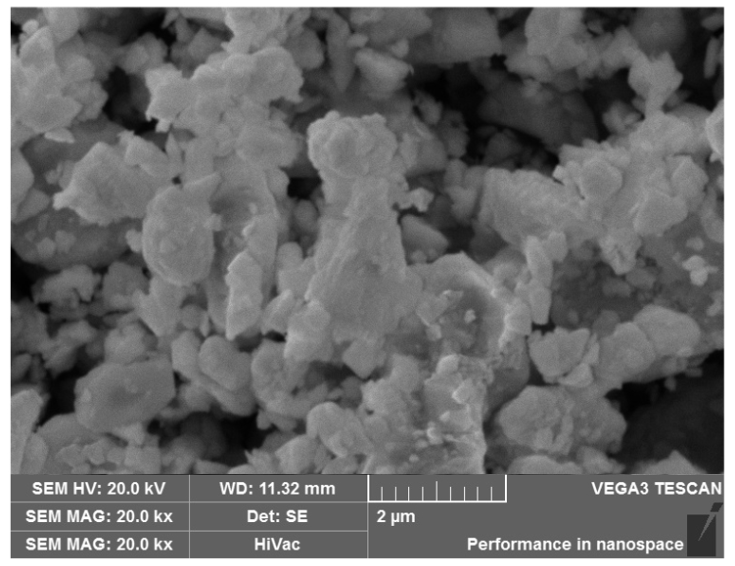
SEM Image
Applications
- Nuclear Technology: Zirconium Hydride is widely used as a neutron moderator and hydrogen storage material in nuclear reactors due to its stability and controlled reactivity.
- Metallurgy & Alloy Production: Serves as a hydrogen source and alloying additive in specialty metals, improving mechanical properties and processing efficiency.
- Powder Metallurgy: Fine particle size enables uniform dispersion, making ZrH₂ effective in sintering, foaming, and reducing agent applications.
- Energy Storage & Hydrogen Applications: Functions as a solid hydrogen carrier, precursor for hydrogen release systems, and material for advanced energy devices.
- Ceramics & Advanced Materials: Acts as a precursor in producing zirconium‑based ceramics and composites with tailored thermal and mechanical properties.
- Chemical Industry: Utilized as a reducing agent and foaming agent in various chemical processes requiring controlled hydrogen release.
Related Products
Related Products

Zirconium (Zr) Micron Powder, Purity: 99.5%, Size: 80 µm, Metal Basis
€27.00
1 gram/27 € 5 grams/95 € 25 grams/
NG04EO2501
Hydroxyapatite Micron Powder, Purity: 99.5+%, Size: 3 µm
€17.00
5 grams: 17 € 25 grams: 54 € ...
NG04EO072386

Molybdenum Disilicide (MoSi2) Micron Powder, Purity: 99.5+%, Size: 1-10 µm
€18.00
1 gram/18 € 5 grams/30 € &nbs
NG04CO1201
Titanium Hydride (TiH2) Micron Powder, Purity: 99.5%, Size: 325 mesh
€15.00
5 grams/15 € 25 grams/48 € ...
NG04EO072393

Zirconium Diboride (ZrB2) Micron Powder, Purity: 99.5%, Size: 1-3 μm
€80.00
25 grams/80 € 100 grams/255 € 500 grams/1025 €
NG10MPW1600