
Graphene Quantum Dots (GQD)
Explore Graphene Quantum Dots (GQDs) from Nanografi for fluorescence-based sensing, bioimaging research, optoelectronics and advanced nanomaterial development. These nanoscale graphene-derived materials combine size- and surface-dependent photoluminescence with a carbon-based structure, making them useful for a wide range of experimental applications.
Our blue and green graphene quantum dots are available as dispersions in deionized (DI) water at concentrations of 0.01, 0.1 and 1.0 mg/mL. Compare emission colors and concentrations below, or explore our complete Quantum Dots collection for additional fluorescent nanomaterials.
- Product
- Qty in Cart
- Quantity
- Price
- Subtotal
-


Blue Graphene Quantum Dots (GQDs), Solvent: DI Water, Concentration: 0.01 mg/ml
€45.0025 ml: 45€50 ml: 77€ 100 ml: 120€ 500 ml: 475€ 1000 ml: 620€ Blue Graphene Quantum Dots are available. ContNG10GNPW0925€45.00 -


Green Graphene Quantum Dots (GQDs), Solvent: DI Water, Concentration: 1.0 mg/ml
€45.0025 ml: 45€50 ml: 77€100 ml: 120€500 ml: 475€1000 ml: 620€ Green Graphene Quantum Dots are available. Contact us for tailored quotesNG10GNPW0970€45.00 -

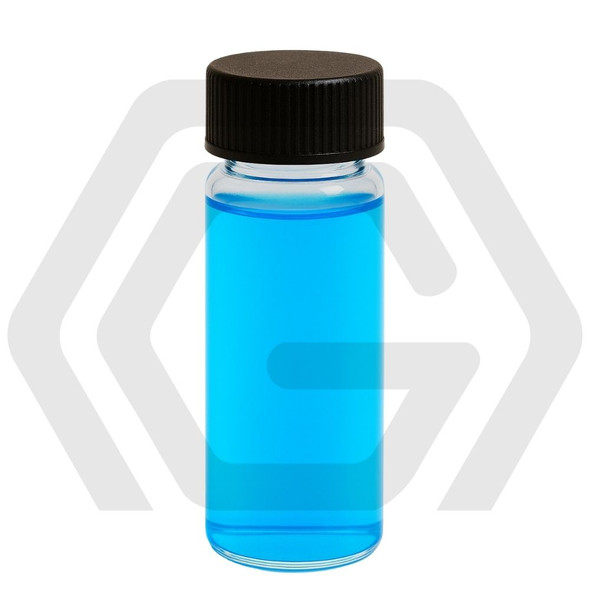
Blue Graphene Quantum Dots (GQDs), Solvent: DI Water, Concentration: 1.0 mg/ml
€45.0025 ml: 45€50 ml: 77€100 ml: 120€500 ml: 475€1000 ml: 620€ Blue Graphene Quantum Dots are available. ContactNG10GNPW0968€45.00 -

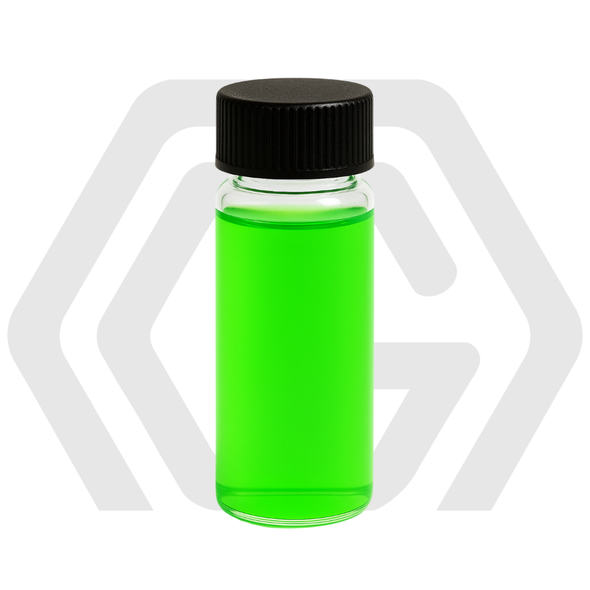
Green Graphene Quantum Dots (GQDs), Solvent: DI Water, Concentration: 0.01 mg/ml
€45.0025 ml: 45€50 ml: 77€100 ml: 120€500 ml: 475€1000 ml: 620€ Green Graphene Quantum Dots are available. Contact us for tailored quotes&nbsNG10GNPW0956€45.00 -
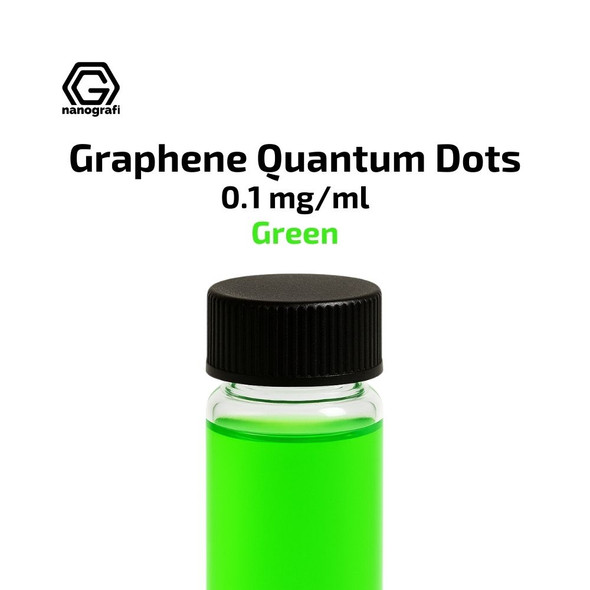

Green Graphene Quantum Dots (GQDs), Solvent: DI Water, Concentration: 0.1 mg/ml
€45.0025 ml: 45€50 ml: 77€100 ml: 120€500 ml: 475€1000 ml: 620€ Green Graphene Quantum Dots are available. Contact us for tailored quotesNG10GNPW0969€45.00 -
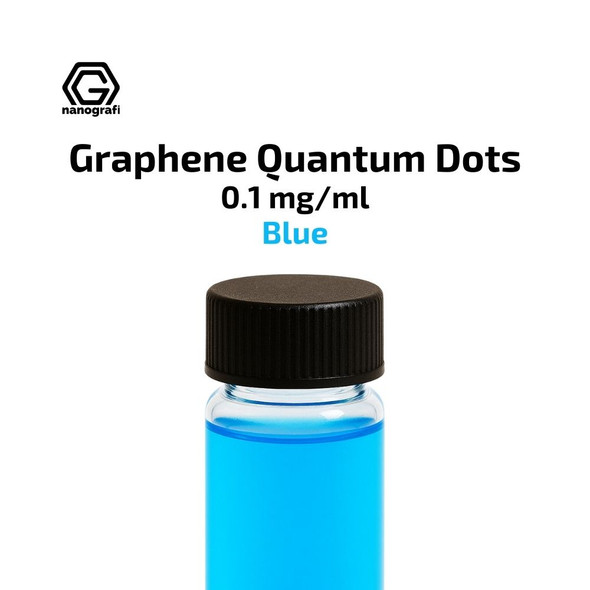

Blue Graphene Quantum Dots (GQDs), Solvent: DI Water, Concentration: 0.1 mg/ml
€45.0025 ml: 45€50 ml: 77€100 ml: 120€500 ml: 475€1000 ml: 620€ Blue Graphene Quantum Dots are available. Contact us for tailored quotesNG10GNPW0967€45.00
What Are Graphene Quantum Dots (GQDs)?
Graphene Quantum Dots (GQDs) are nanoscale, graphene-derived carbon materials consisting of small sp2-carbon domains with edge and surface functional groups. Their limited lateral dimensions and electronic structure give rise to optical and electronic properties that differ from those of extended graphene sheets.
GQDs are investigated for their photoluminescence, surface functionalization potential and compatibility with aqueous formulations. Their fluorescence behavior is influenced by particle size, structural defects, surface chemistry, excitation wavelength and the surrounding environment. Consequently, emission color cannot always be explained by particle size alone.
Nanografi offers blue- and green-emitting graphene quantum dots dispersed in deionized water, providing ready-to-use liquid formulations for laboratory investigations. Available concentrations include 0.01, 0.1 and 1.0 mg/mL.
Available Graphene Quantum Dots: Blue and Green Fluorescence
Choosing the appropriate GQD dispersion begins with the required fluorescence wavelength, sample concentration and experimental environment. Nanografi's portfolio provides two emission-color families, each available in three concentrations.
Blue Graphene Quantum Dots: 445-470 nm
Nanografi's blue graphene quantum dots have a listed emission wavelength range of 445-470 nm. These fluorescent carbon nanomaterials are relevant to optical sensing, fluorescence imaging studies and the development of experimental luminescent coatings or films.
Blue GQDs are available in DI water at the following concentrations:
- Blue Graphene Quantum Dots, 0.01 mg/mL: A dilute aqueous dispersion suitable for initial fluorescence measurements, concentration screening and exploratory sensing experiments.
- Blue Graphene Quantum Dots, 0.1 mg/mL: An intermediate concentration for formulation studies and experiments requiring greater material content per unit volume.
- Blue Graphene Quantum Dots, 1.0 mg/mL: A concentrated dispersion for preparing controlled dilutions or investigating higher-loading formulations.
The listed blue-emission range should be interpreted together with the excitation conditions and measurement method. Fluorescence intensity and spectral shape can vary with concentration, optical path length and sample environment.
Green Graphene Quantum Dots: 530-560 nm
Nanografi's green graphene quantum dots have a listed emission wavelength range of 530-560 nm. These materials provide an alternative fluorescence window for researchers developing optical probes, sensor systems and functional nanomaterial formulations.
Available green GQD dispersions include:
- Green Graphene Quantum Dots, 0.01 mg/mL: A dilute dispersion for preliminary fluorescence characterization and low-concentration experiments.
- Green Graphene Quantum Dots, 0.1 mg/mL: An intermediate-concentration aqueous dispersion for fluorescence-based research and material development.
- Green Graphene Quantum Dots, 1.0 mg/mL: A concentrated formulation suitable for controlled dilution and experimental preparation.
When comparing blue and green GQDs, researchers should consider the emission spectrum, excitation wavelength, detection system and possible interference from the sample matrix.
Key Optical and Structural Properties of Graphene Quantum Dots
Photoluminescence and Fluorescence
One of the most extensively investigated characteristics of graphene quantum dots is their ability to emit light following optical excitation. Photoluminescence can arise from different electronic states associated with carbon domains, edges, structural defects and surface functional groups.
Depending on their composition and synthesis route, GQDs may exhibit excitation-dependent or relatively excitation-independent emission. Therefore, the fluorescence behavior of a specific product should be determined experimentally rather than inferred from the general material category.
Particle Size and Surface Chemistry
GQDs typically possess nanometer-scale dimensions and a high proportion of edge atoms relative to their overall structure. Nanografi's listed blue and green GQD products specify particle diameters below 10 nm.
Surface functional groups can influence water compatibility, chemical interactions and optical response. Their exact composition depends on the synthesis and purification processes, and should be characterized when critical to an application.
Aqueous Dispersibility
Nanografi's GQD products are supplied in deionized water, making them convenient for experiments involving aqueous media. This format can reduce the need for initial powder dispersion and facilitate volumetric dosing.
However, dispersion stability can change after mixing with buffers, salts, polymers or other chemical components. Stability and fluorescence response should be checked under the intended experimental conditions.
Applications of Graphene Quantum Dots
Fluorescence-Based Chemical and Biological Sensors
Graphene quantum dots are investigated as fluorescent sensing components because their emission can respond to changes in the surrounding chemical environment. Researchers have studied GQD-based systems for detecting metal ions, selected organic compounds and biological analytes.
Possible sensing mechanisms include fluorescence quenching, fluorescence enhancement, energy transfer and surface-mediated interactions. Analytical performance depends on probe chemistry, analyte concentration, selectivity, calibration and the composition of the sample matrix.
Bioimaging and Fluorescent Labeling Research
Fluorescent GQDs are studied as potential optical probes for cell imaging and biological labeling. Their small dimensions and modifiable surfaces make them candidates for developing fluorescent nanoprobes.
Nevertheless, carbon-based composition does not automatically establish biocompatibility. Cytotoxicity, cellular uptake, dose-dependent behavior and biological stability must be evaluated for the specific formulation before biological use.
Solar Cells and Photovoltaic Research
Graphene quantum dots are investigated in photovoltaic materials as potential interface modifiers, light-absorbing or light-converting components, and charge-transport-related additives, depending on device architecture.
Their contribution to photovoltaic performance depends on electronic energy levels, surface chemistry, film formation and interactions with adjacent materials. Any efficiency improvement must be demonstrated through controlled device measurements.
Learn more in Nanografi's Quantum Dot Technology in Solar Cells article, which discusses quantum dot materials and their investigated roles in photovoltaic systems.
Light-Emitting and Optoelectronic Materials
The fluorescence of graphene quantum dots makes them relevant to research on luminescent films, optical coatings, photodetectors and experimental light-emitting structures.
Photoluminescence under external illumination should not be confused with electroluminescence under electrical excitation. For device research specifically involving electrically driven quantum dot emitters, explore Nanografi's QLED Quantum Dots category.
Photocatalysis and Environmental Sensing
GQDs are also investigated in photocatalytic composites and environmental monitoring systems. In suitable heterostructures, their optical and electronic characteristics may influence charge separation, interfacial transport or light-driven reactions.
Actual photocatalytic performance depends on the complete material system, illumination conditions and reaction environment. GQDs should not be assumed to provide effective pollutant degradation without experimental validation.
Graphene Quantum Dots vs. Carbon Quantum Dots
Graphene Quantum Dots (GQDs) and Carbon Quantum Dots (CQDs) are related carbon-based fluorescent nanomaterials, but the terminology generally reflects differences in structural characteristics.
Graphene quantum dots contain small graphene-like sp2-carbon domains, often with graphitic ordering and edge functional groups. Their optical behavior can be influenced by confinement, surface states and structural defects.
Carbon quantum dots represent a broader group of nanoscale carbon-based luminescent particles, which may contain amorphous, polymeric or graphitic domains depending on their synthesis.
Both material families can exhibit fluorescence, but their optical characteristics, surface chemistry and dispersion behavior are formulation-dependent. The categories may also overlap in published terminology.
Researchers comparing carbon-based fluorescent materials can explore Nanografi's Carbon Quantum Dots (CQDs) category for alternative emission wavelengths and formulations.
How to Choose the Right Graphene Quantum Dot Concentration
Nanografi offers GQD dispersions at three concentrations. The most suitable concentration depends on the measurement technique, desired working concentration, sample volume and preparation procedure.
- 0.01 mg/mL: Suitable for initial screening and experiments requiring dilute stock solutions with minimal additional dilution.
- 0.1 mg/mL: Provides a higher material concentration while allowing further dilution for optical characterization or formulation development.
- 1.0 mg/mL: Offers a concentrated starting dispersion for preparing multiple working concentrations or evaluating higher material loadings.
Higher concentration does not necessarily produce proportionally higher fluorescence intensity. Inner-filter effects, aggregation, self-quenching and changes in optical absorption can influence the measured response.
For quantitative fluorescence measurements, researchers should establish suitable calibration procedures and verify that the selected concentration lies within the useful measurement range of their instrument.
Graphene Quantum Dot Characterization and Quality Evaluation
Several analytical techniques can be used to evaluate graphene quantum dots, depending on the required level of material characterization.
- Photoluminescence Spectroscopy: Determines fluorescence emission characteristics under specified excitation conditions.
- UV-Visible Absorption Spectroscopy: Provides information about optical absorption features and concentration-dependent behavior.
- Transmission Electron Microscopy (TEM): Can provide information about particle morphology and lateral dimensions.
- Fourier Transform Infrared Spectroscopy (FTIR): May help identify surface functional groups.
- Raman Spectroscopy: Can provide information about carbon structure and disorder.
- Quantum Yield Measurement: Evaluates photoluminescence efficiency under defined conditions.
- Fluorescence Lifetime Analysis: Provides information about excited-state relaxation processes.
Nanografi's GQD product listings identify excitation and emission wavelength analysis by photoluminescence spectrophotometry as a standard characterization service. Additional particle-size distribution, quantum yield and fluorescence lifetime analyses may be available for an extra fee.
Graphene Quantum Dot Synthesis: Top-Down and Bottom-Up Approaches
Graphene quantum dots can be produced through different synthesis strategies, broadly classified as top-down and bottom-up methods.
Top-Down Synthesis
Top-down approaches involve breaking down larger carbon-based materials into nanoscale graphene-derived fragments. Investigated techniques include chemical oxidation, electrochemical processing, hydrothermal treatment and ultrasound-assisted methods.
Bottom-Up Synthesis
Bottom-up approaches construct nanoscale carbon structures from smaller molecular precursors through controlled chemical reactions, thermal processing or other synthetic routes.
The synthesis method can influence particle-size distribution, edge structure, surface functionalization and fluorescence behavior. As a result, GQDs produced by different routes should not be assumed to have identical optical or chemical properties.
For further scientific background, read Graphene Quantum Dots: Properties, Synthesis & Applications on the Nanografi blog.
Graphene Quantum Dot Research and Scientific Publications
Graphene quantum dots are actively investigated in materials science, analytical chemistry, optoelectronics, energy research and experimental biomedical systems. Published research provides insight into how particle dimensions, surface chemistry and processing conditions affect their behavior.
For a broader introduction to semiconductor and carbon-based nanocrystals, explore Nanografi's Complete Guide to Quantum Dots.
Researchers can also visit the Nanografi Publication Library to explore scientific publications and material-related research references.
When interpreting published results, the specific GQD composition, surface modification, optical measurement conditions and experimental system should be considered before applying findings to another formulation.
Buy Graphene Quantum Dots from Nanografi
Nanografi supplies blue and green graphene quantum dot dispersions for academic laboratories, industrial research teams and advanced material development.
Available aqueous formulations include 0.01, 0.1 and 1.0 mg/mL concentrations, allowing researchers to choose an appropriate starting solution for fluorescence studies, sensor development and experimental optoelectronic applications.
Browse the products listed above to compare emission colors, technical specifications, available volumes and current pricing. For other fluorescent nanomaterials, explore the complete Quantum Dots product portfolio.
Frequently Asked Questions About Graphene Quantum Dots
What are graphene quantum dots used for?
Graphene quantum dots are investigated for fluorescence-based sensors, bioimaging research, optoelectronic materials, photovoltaic devices, photocatalytic composites and other advanced nanomaterial applications. Their suitability depends on optical properties, surface chemistry and formulation conditions.
What is the difference between blue and green graphene quantum dots?
The primary distinction is their fluorescence emission range. Nanografi's blue GQDs are listed at 445-470 nm, while green GQDs are listed at 530-560 nm. Researchers should select the appropriate emission color based on excitation conditions, detector compatibility and application requirements.
Are graphene quantum dots water soluble?
Many functionalized graphene quantum dots can form stable aqueous dispersions. Nanografi supplies its blue and green GQDs in deionized water. However, being dispersed in water does not necessarily mean the particles are molecularly dissolved, and stability may change in other media.
What concentrations of graphene quantum dots are available?
Nanografi offers blue and green graphene quantum dots at 0.01, 0.1 and 1.0 mg/mL in deionized water. These options support different starting concentrations and dilution requirements for experimental work.
Are graphene quantum dots the same as graphene nanoplatelets?
No. Graphene quantum dots are nanoscale graphene-derived particles investigated particularly for their optical and fluorescence properties. Graphene nanoplatelets are generally larger, multilayer graphitic particles commonly studied as conductive, thermal or reinforcing fillers in composite materials.
Can graphene quantum dots be used for bioimaging?
GQDs are investigated as fluorescent probes for bioimaging research. However, biological compatibility, toxicity, cellular uptake and optical performance must be evaluated for the specific material and experimental conditions.
Do higher GQD concentrations produce stronger fluorescence?
Not necessarily. Increasing concentration may initially increase the fluorescence signal, but inner-filter effects, aggregation and quenching can cause nonlinear behavior. An appropriate working concentration should be determined experimentally.
Where can I buy graphene quantum dots for research?
Nanografi offers blue- and green-emitting graphene quantum dots in aqueous dispersions at multiple concentrations. Researchers can review individual product specifications and available volumes on the Nanografi online store.