
Blografi
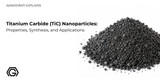
Titanium Carbide (TiC) Nanoparticles: Properties, Synthesis, and Applications
Titanium carbide (TiC) is an extremely hard refractory ceramic, the only carbide in the titanium–carbon system, with a hardness of 9 to 9.5 on the Mohs scale that rivals tungsten carbide.
In nanoparticle form, below 100 nanometers, its large specific surface area and high purity make it more reactive and more effective across coatings, cutting tools, and emerging energy and electronics applications. This guide explains what titanium carbide nanoparticles are, their structure and propertie
…
19th Sep 2019

Differences between Alpha and Gamma Alumina nanoparticles
In simple terms, nanoparticles are basically
elements within the size of 1-100 nanometers (nm), and which are surrounded by
an interfacial layer. The aforementioned layer forms a crucial aspect of the scale
matter with a major impact on all its properties. The layer basically comprises
ions, organic and inorganic elements. In the scientific field, nanoparticles
are the most sought-after areas as they form a wide gap between large materials
and molecular substances. Generally, nanoparticles
…
16th Sep 2019

Tungsten: Discovery, Types, Products, Applications
Tungsten is a matte silver-colored metal
with the highest melting point of pure metals. Tungsten is more resistant to
breakage than diamond and is much harder than steel. It is indicated by the
symbol W and has an atomic number of -74. In Mendeleev's periodic table, it is
in the sixth group, it has similar properties with the "neighbors" –
molybdenum and chromium. It has the unique properties of refractory metal - its
strength and ability to withstand high temperatures - that make it ideal
…
13th Sep 2019
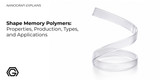
Shape Memory Polymers: Properties, Production, Types, and Applications
Shape memory polymers (SMPs) are smart materials that can be deformed into a temporary shape and then return to their original, "permanent" shape when triggered by an external stimulus, most commonly heat, but also light, moisture, electric current, or magnetic fields. Unlike shape memory alloys such as Nitinol, which rely on a metallic crystal-phase transformation, SMPs achieve this effect through their polymer network structure, which makes them lighter, cheaper to process, and capable of much
…
13th Sep 2019

SiO2 Nano powder: Properties & Applications
Silicon dioxide (SiO2) is a
compound of silicon and oxygen, commonly called silica and the elements are
linked by the covalent bond. It is one of the components of the sand and can be
found naturally in Quartz. It is usually white or colorless and is not soluble
in water or ethanol. By associating with minerals, it forms the silicate
family. Silicon dioxide (SiO2) has several industrial applications such
as an additive in the food industry. Its function is to act as an
anti-binder, a
…
6th Sep 2019