
Graphene Sheet, Size: 29 cm x 29 cm, Thickness: 35 µm, Highly Conductive

- SKU:
- NG01GS0101
- Shipping:
- Calculated at Checkout


Description
1 graphene sheet/76 €
5 graphene sheet/308 €
10 graphene sheet/460 €
20 graphene sheet/851 €
Please contact us for quotes on larger quantities !!!
Product Overview
Graphene sheets are essentially the finest materials in the world. Graphene sheet is a one-atom-thick planar sheet of carbon atoms which are intensively packed in a hexagonal lattice structure. Graphene sheets show high electrical conductance at room temperatures. They are used as fillers for the improvement of electrical and mechanical properties in composite materials. Graphene sheets have a vital importance for applications in biomaterials, biosensors, biomedical devices and drug delivery. Our company sells Graphene Sheet with low prices and high quality.
Technical Properties:
|
Size (cm) |
29 x 29 |
|
Thickness (µm) |
35 |
|
Thermal Conductivity In Plane (W/(m.K)) |
1300 - 1500 |
|
Density (g/cm3) |
1.6 - 2.0 |
|
Tensile Strength (MPa) |
10 |
|
Electrical Conductivity In Plane (S/m) |
4*105 ~ 2*106 |
|
EMI Shielding dB @30 MHz - dB @1.5 GHz |
53 - 58 |
|
Electrical Resistivity (Surface (Ω/sq) ) |
0.06 |
|
Max Operating Temperature (°C) |
450 |
|
RoHS Compliant |
Yes |
Thermal Conductivity and Spreading -In-plane conductivity above 550 W/(m.K)
Electrical Properties - Formulations are available with surface resistivity ranging as low as 0.04 Ω/sq
Potential applications include:
• Thermal management and heat spreading
• EMI Shielding
• Electrodes for batteries and Supercapacitors
Applications:
- Consumer electronics: smartphones, tablets, PCs, TVs
- LED lighting
- Energy storage
- Automotive
- Industrial
- Medical
- Military and aerospace
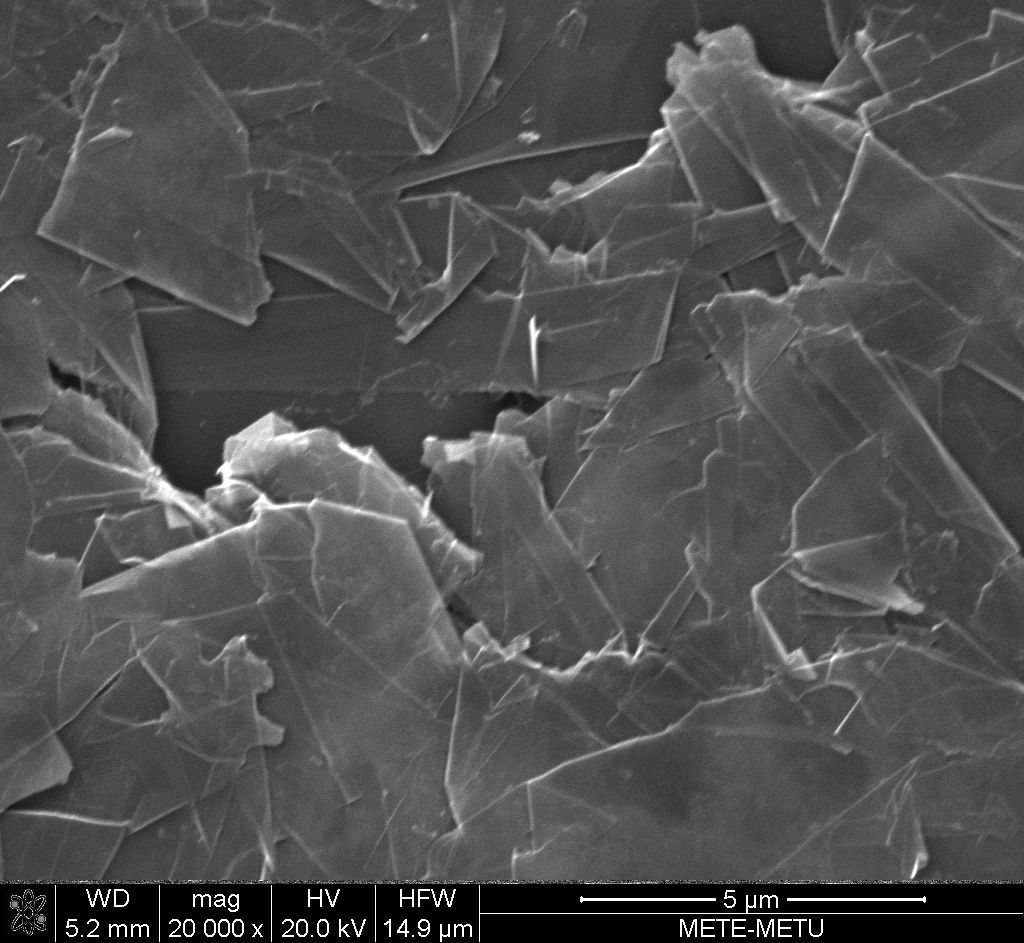
Graphene Sheet- SEM Image
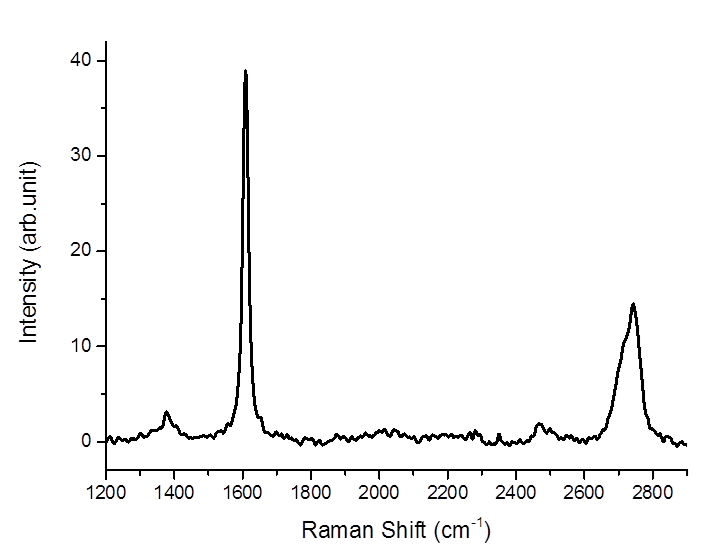
Graphene Sheet-Raman
FAQ
Technical FAQ About Graphene Sheet, 29 cm x 29 cm, 35 µm
1) What should be considered when selecting a 29 cm x 29 cm graphene sheet for thermal management?
Thermal selection should consider the 35 µm thickness, in-plane thermal conductivity of 1300-1500 W/(m·K), sheet dimensions and the thermal path required by the application. Nanografi offers this grade for thermal management and heat-spreading applications where lateral heat transfer across a larger sheet area is required.
2) Is Nanografi's 29 cm x 29 cm graphene sheet suitable for EMI shielding applications?
Yes. The 35 µm graphene sheet provides specified EMI shielding performance of 53-58 dB within the stated 30 MHz to 1.5 GHz range. Its surface resistivity of 0.06 Ω/sq and high in-plane electrical conductivity are also relevant when evaluating it for shielding systems.
3) Why is in-plane conductivity important for this graphene sheet?
In-plane conductivity describes electrical or thermal transport across the plane of the sheet rather than through its thickness. This is particularly relevant for applications such as heat spreading, conductive interfaces and EMI shielding where transport across a broad surface area is required.
4) Can the 29 cm x 29 cm graphene sheet be used in battery and supercapacitor research?
Yes. Battery and supercapacitor electrodes are among the listed applications for this graphene sheet. Its in-plane electrical conductivity and thin 35 µm form factor make it relevant for research involving conductive sheet-based electrode structures.
5) How does the 29 cm x 29 cm format affect application selection?
The larger 29 cm x 29 cm format provides more continuous surface coverage than smaller graphene sheet sizes. This can be useful when evaluating larger-area thermal interfaces, shielding layers, conductive surfaces or prototype components that require fewer sheet joints.
6) Can this graphene sheet be considered for electronics and LED thermal management?
Yes. Consumer electronics and LED lighting are among the listed application areas. The 1300-1500 W/(m·K) in-plane thermal conductivity is the primary specification to evaluate for heat-spreading applications in these systems.
7) What is the difference between surface resistivity and in-plane electrical conductivity for this grade?
Surface resistivity describes electrical resistance across the sheet surface and is specified at 0.06 Ω/sq, while in-plane electrical conductivity describes the material's ability to conduct current along the sheet and is specified at 4 x 10⁵ to 2 x 10⁶ S/m. Both parameters should be considered when evaluating conductive or shielding performance.
8) Can Nanografi's 35 µm graphene sheet be used at elevated temperatures?
The specified maximum operating temperature is 450°C. This value should be considered together with the operating environment, contact materials and thermal cycling conditions when selecting the sheet for high-temperature applications.
9) Is the 29 cm x 29 cm graphene sheet suitable only for electronics?
No. In addition to consumer electronics and LED lighting, application areas include energy storage, automotive, industrial, medical, military and aerospace systems. Final suitability depends on the electrical, thermal, dimensional and environmental requirements of the specific application.
10) Which specifications are most useful when comparing this Nanografi graphene sheet with other sheet sizes or grades?
The most relevant comparison parameters are sheet dimensions, thickness, in-plane thermal conductivity, in-plane electrical conductivity, surface resistivity, EMI shielding performance, density, tensile strength and maximum operating temperature. For Nanografi NG01GS0101, these specifications define the technical profile of the 29 cm x 29 cm, 35 µm grade.
Related Products
Related Products


Graphene Sheet, Size: 29 cm x 39 cm, Thickness: 35 µm, Highly Conductive


Graphene Sheet, Size: 1 cm x 1 cm, Thickness: 35 µm, Highly Conductive


Graphene Sheet, Size: 10 cm x 10 cm, Thickness: 35 µm, Highly Conductive


Graphene Sheet, Size: 5cm x 5cm, Thickness: 35 µm, Highly Conductive
