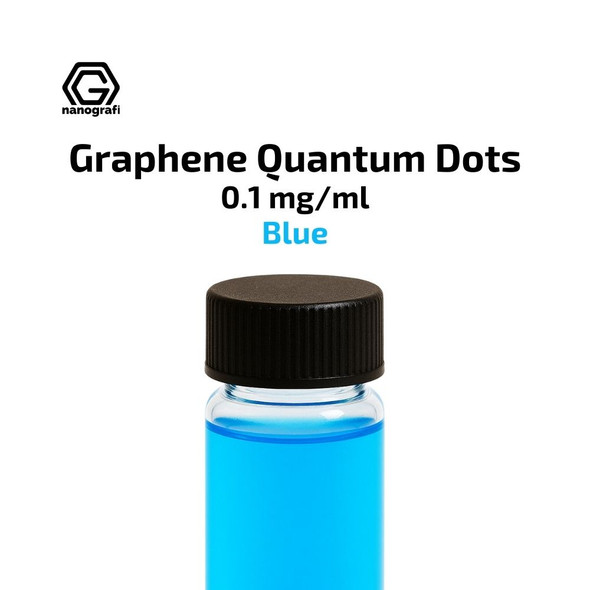
Green Graphene Quantum Dots (GQDs), Solvent: DI Water, Concentration: 1.0 mg/ml

- SKU:
- NG10GNPW0970
- Shipping:
- Calculated at Checkout


Description
25 ml: 45€
50 ml: 77€
100 ml: 120€
500 ml: 475€
1000 ml: 620€
Green Graphene Quantum Dots are available.
Contact us for tailored quotes on larger quantities & experience exceptional solutions from our experts.
Graphene Quantum Dots (GQDs)
Solvent: DI Water, Concentration: 1.0 mg/ml
Graphene Quantum Dots (GQDs), a specialized subset of zero-dimensional nanocrystals synthesized from graphene semiconductors, are notable for their distinct honeycomb-patterned lattice structure. These nanocrystals are uniquely compact, with dimensions that range between 1-50 nm. This size range allows for extraordinary versatility and potential in various applications, from electronics to biomedicine. The small size of GQDs contributes to their exceptional electronic and optical properties, making them ideal for innovative uses in fields such as energy, healthcare, and material science. Buy high-quality GQDs at Nanografi.
Technical Properties
| Diameter | <10 nm |
| Morphology | Spherical |
| Emission Wavelength Range | 530-560 nm |
| Color | Green |
| Solvent | DI Water |
| Concentration | 1.0 mg/ml |
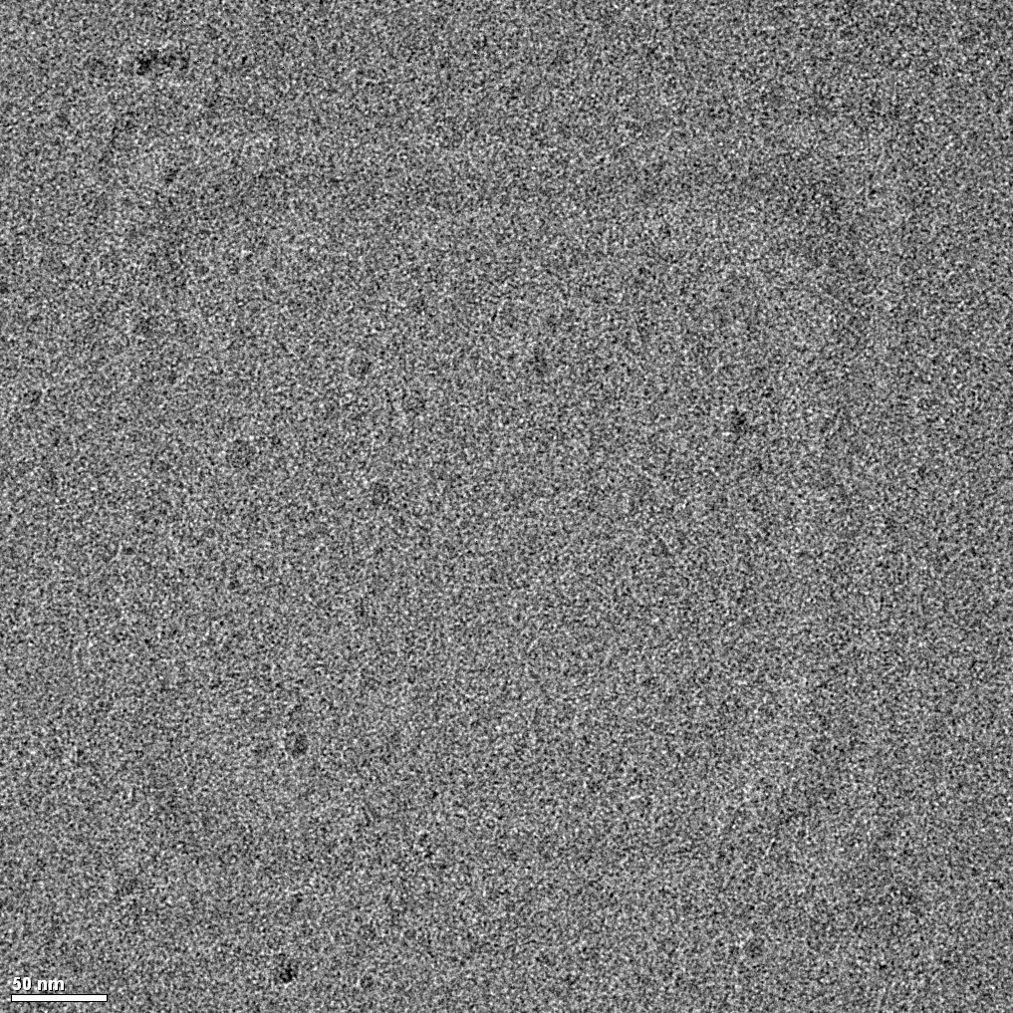
TEM Images
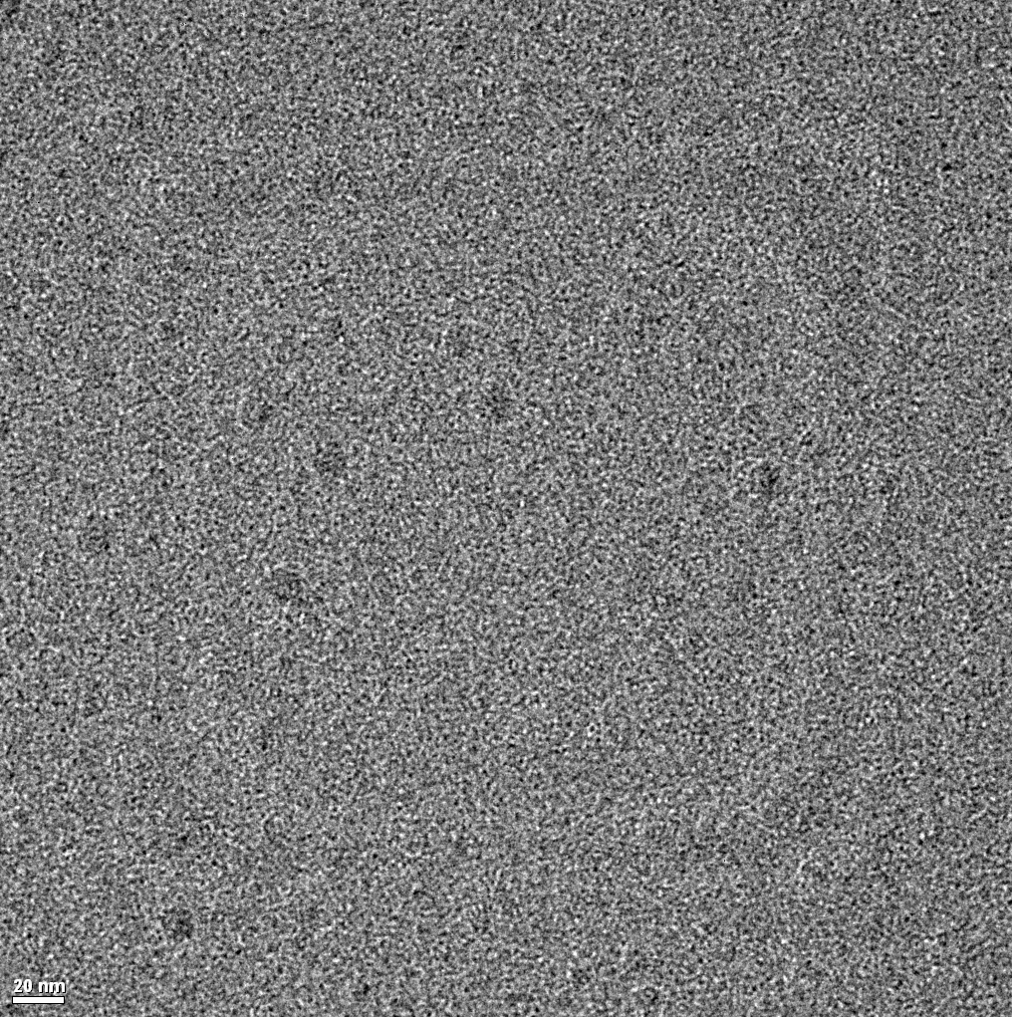
Analyzes we provide as standard:
- Excitation and Emission wavelength with PL Spectrophotometer
Other Extra Analyzes we can provide (extra fee must be paid for these analyzes)
- Particle Size Distribution
- Quantum Yield
- Fluorescence Lifetime
Applications
- Optoelectronics: GQDs are used in light-emitting devices (LEDs), photodetectors, and solar cells thanks to their strong and tunable photoluminescence properties.
- Biomedical Applications: Due to their excellent biocompatibility and low toxicity, GQDs are applied in bioimaging, biosensors, drug delivery systems, and photodynamic therapy for cancer treatment.
- Sensors (Including Agricultural Sensors): GQDs are employed in highly sensitive chemical and biological sensors to detect ions, molecules, and biomolecules. In agriculture, they are explored for smart sensors to monitor plant health, detect environmental stress, and enable controlled release of agrochemicals such as fertilizers and pesticides.
- Energy Storage and Conversion: GQDs enhance the performance of lithium-ion batteries and supercapacitors by improving conductivity and charge storage. They are also studied for applications in fuel cells and photocatalysis.
- Environmental Applications: GQDs are used in water purification, pollutant detection, and photocatalytic degradation of organic contaminants due to their high stability and redox activity.
FAQ
FAQ About Green Graphene Quantum Dots (GQDs), 1.0 mg/ml
1) What emission does the green grade produce?
This grade emits between 530 and 560 nm, in the green region of the visible spectrum. The dots are under 10 nm in diameter with spherical morphology, supplied dispersed in deionised water at 1.0 mg/ml. Emission range is the primary selection parameter for any fluorescence work, because it determines the filter set, the detection channel and how cleanly the signal separates from sample autofluorescence.
2) When should green be chosen over blue-emitting GQDs?
Green emission at 530–560 nm sits further from the short-wavelength region where biological samples autofluoresce most strongly, so it often gives better signal-to-background in cell and tissue imaging. It also pairs with standard FITC-type filter sets already present in most fluorescence microscopes. Blue-emitting grades are preferred when a shorter-wavelength channel is needed, or when green must be left free for a second fluorophore in a multiplexed experiment.
3) Why choose the 1.0 mg/ml concentration?
At 1.0 mg/ml this is the most concentrated of the three grades offered, which makes it the economical choice when the material will be diluted down for use, deposited as films, or loaded into composites where mass rather than optical density governs. Work requiring low optical density directly — quantitative fluorescence measurements where self-quenching must be avoided — is better served by starting from a more dilute grade.
4) What analysis is supplied as standard?
Excitation and emission wavelengths measured by PL spectrophotometry are provided by default. Particle size distribution, quantum yield and fluorescence lifetime are available as additional analyses for a separate fee. Requesting quantum yield in advance is worthwhile for any study that reports quantitative photophysical performance, because values measured under different reference standards and conditions are not directly comparable between laboratories.
5) Does the emission shift if I dilute or change the medium?
The material is specified in deionised water, which is the condition its emission range refers to. Graphene quantum dot photoluminescence is sensitive to pH, ionic strength and the surrounding solvent, so introducing buffers, salts or organic media can shift both intensity and peak position. Any change of medium should be characterised on a small volume before it is committed to a full experiment.
6) What are green GQDs used for?
Reported applications include light-emitting devices, photodetectors and solar cells; chemical and biological sensing, including agricultural sensors for plant health and controlled agrochemical release; bioimaging and photodynamic therapy research; conductivity and charge-storage enhancement in lithium-ion batteries and supercapacitors; and photocatalytic degradation of organic pollutants. Synthesis routes and property tuning are covered in graphene quantum dots: properties, synthesis and applications.
7) What volumes are available?
The dispersion is supplied in 25 ml, 50 ml, 100 ml, 500 ml and 1000 ml volumes, with larger quantities quoted on request, covering single-study academic use through to sustained device development. Other emission colours and concentrations are listed under graphene quantum dots.
Related Products
Related Products

Blue Graphene Quantum Dots (GQDs), Solvent: DI Water, Concentration: 1.0 mg/ml

Green Graphene Quantum Dots (GQDs), Solvent: DI Water, Concentration: 0.1 mg/ml

Green Graphene Quantum Dots (GQDs), Solvent: DI Water, Concentration: 0.01 mg/ml


Blue Graphene Quantum Dots (GQDs), Solvent: DI Water, Concentration: 0.01 mg/ml