
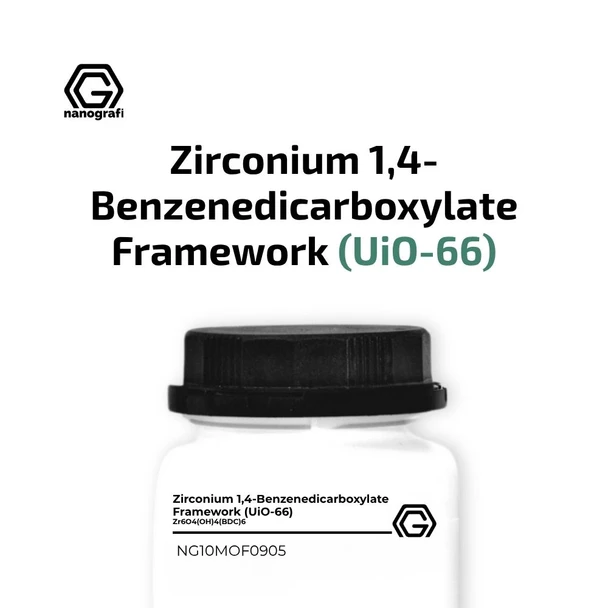
Zirconium 1,4-Benzenedicarboxylate Framework (UiO-66)
- SKU:
- NG10MOF0905
- Shipping:
- Calculated at Checkout


Description
1 gram/80 €
5 grams/295 €
10 grams/490 €
Contact us for tailored quotes on larger quantities & experience exceptional solutions from our experts.
Zirconium 1,4-Benzenedicarboxylate Framework (UiO-66) is a zirconium-based metal–organic framework (MOF) engineered by combining Zr-based inorganic clusters with terephthalic acid organic linkers to form a highly crystalline and stable porous structure. Renowned for its exceptional thermal, chemical, and hydrolytic stability, UiO-66 is intended for advanced research and formulation studies across adsorption, gas separation/storage, heterogeneous catalysis, sensing, and electrochemical applications, where application-specific properties should be validated under intended processing conditions.
Technical Properties
| Chemical Formula | Zr6O4(OH)4(BDC)6 |
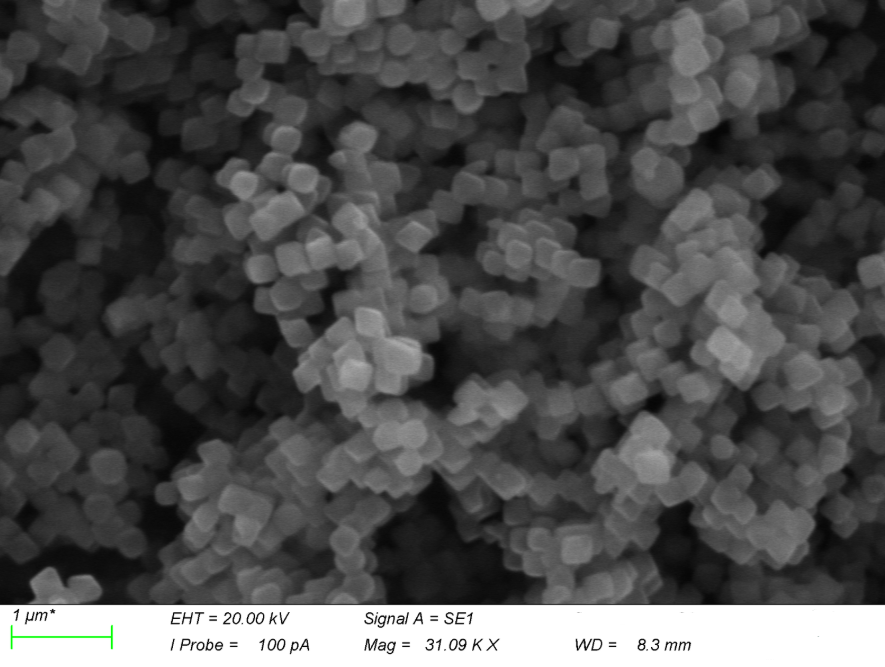
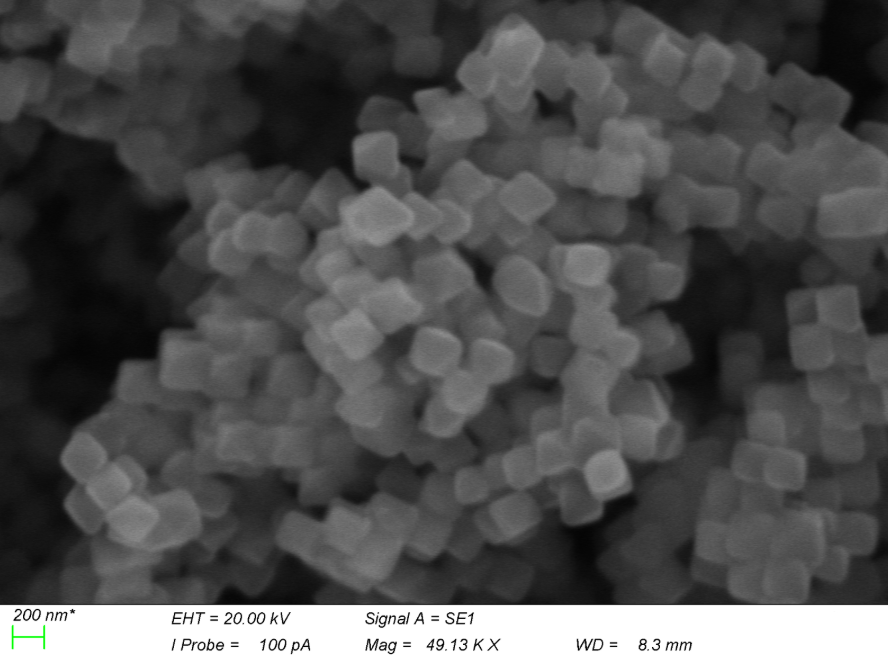
| Particle Size | 250-500 nm |
| Appearance | White Powder |
| CAS No | 1072413-89-8 |
SEM Images
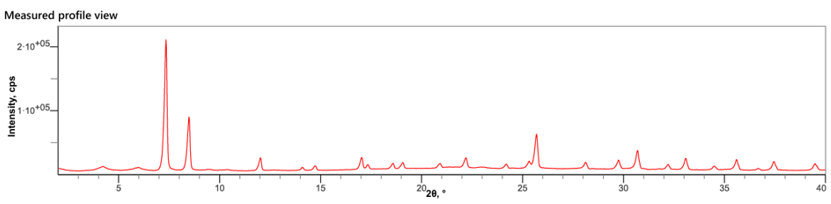
XRD Analysis
Applications
- Heterogeneous Catalysis: Acts as a high-performance Lewis acid catalyst for organic transformations, esterification, oxidation, and cross-coupling reactions due to its open zirconium coordination sites and defect-engineerable framework.
- Gas Adsorption and Carbon Capture: Leverages its ultra-high surface area and uniform micropores for the targeted separation and sequestration of CO2, as well as high-capacity storage of clean energy gases such as H2 and CH4.
- Environmental Remediation and Water Purification: Demonstrates exceptional chemical and hydrolytic stability in removing hazardous pollutants from aqueous systems, including heavy metals, fluoride, arsenic, toxic organic dyes, and pharmaceutical contaminants.
- Chemical Sensing and Detection: Integrated into sensory devices and optical/fluorescent platforms for the highly selective detection of volatile organic compounds (VOCs), explosives, heavy metal ions, and environmental toxins via host-guest interaction networks.
- Energy Storage and Conversion: Serves as a chemical matrix, active component, or porous precursor in advanced lithium-based batteries, supercapacitor electrodes, and proton-conductive fuel cell membranes.
- Advanced Drug Delivery: Functions as a biocompatible, high-capacity nanocarrier for the controlled release and targeted delivery of therapeutic molecules, nucleic acids, and bio-agents.
- Membranes and Separation Science: Embedded as a molecular-sieving filler in mixed-matrix membranes (MMMs) for high-efficiency nanofiltration, organic solvent nanofiltration (OSN), and gas mixture separations.
Related Products
Related Products

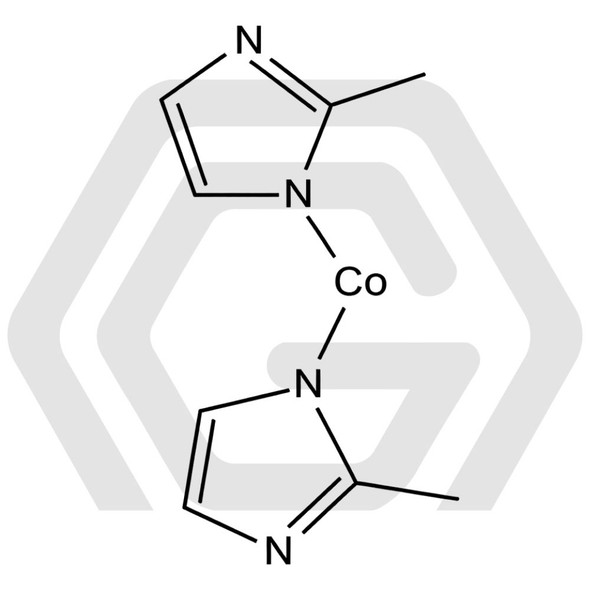
Zeolitic Imidazolate Framework-67 (ZIF-67)


Zeolitic Imidazolate Framework-8 (ZIF-8)
Zirconium (Zr) Micron Powder, Purity: 99.9 %, Size: 325 mesh

Zirconium Oxide (ZrO2) Nanopowder/Nanoparticles, Purity: 99.95+ %, Size: 30 nm
