
Styrene-Butadiene Rubber (SBR) Binder for Li-ion Battery Anode Materials

- SKU:
- NG08BE0308
- Shipping:
- Calculated at Checkout

Description
500 ml/148 €
1000 ml/247 €
Contact us for tailored quotes on larger quantities & experience exceptional solutions from our experts.
Product Overview of Styrene-Butadiene Rubber (SBR) Binder for Li-ion Battery Anode Materials
Styrene-Butadiene Rubber (SBR) Binder for Li-ion Battery Anode Materials is primary binder in Li-ion batteries and used significantly in the anodes of Lithium-ion cells. I is not only applicable to the fabrication of all the anode chemistries but also the same aqueous binder is used in the fabrication of cathode slurries. You can buy Styrene-Butadiene Rubber (SBR) Binder for Li-ion Battery Anode Materials with best prices and high quality.
Technical Properties of Styrene-Butadiene Rubber (SBR) Binder for Li-ion Battery Anode Materials:
|
Appearance |
Milky white liquid emulsion |
|
Total Solide (wt%) |
51.3 |
|
Styrene (wt%) |
24-26 |
|
Butadiene (wt%) |
71-73 |
|
Carboxyl (wt%) |
5 |
|
PH |
6-7 |
|
Broofield Viscosity (mPa.s) |
159 |
|
Dissolubility |
Water-Soluble |
|
Relative Density (water=1) |
1.52 |
|
Relative Vapor Density (air=1) |
1.23 |
|
Vitrification Temperature |
-18°C |
|
Storage Temperature |
0-38°C |
Applications of Styrene-Butadiene Rubber (SBR) Binder for Li-ion Battery Anode Materials
- Lithium-Ion Battery Anodes: Used as a polymer binder in anode formulations to enhance particle cohesion, electrode adhesion, and mechanical integrity.
- Graphite-Based Anode Materials: Supports the binding of graphite particles and their adhesion to copper current collectors during electrode fabrication.
- Silicon-Based Anode Research: Investigated as a flexible binder component to help accommodate mechanical stresses associated with silicon volume changes during charge-discharge cycling.
- Aqueous Electrode Processing: Suitable for water-based anode slurry formulations, supporting electrode coating and manufacturing processes.
- SBR/CMC Binder Systems: Combined with carboxymethyl cellulose (CMC) to provide complementary binding, flexibility, and rheological properties in aqueous electrode formulations.
- Electrode Coating and Adhesion: Used to improve coating cohesion and mechanical stability during electrode drying and processing.
- Battery Research and Development: Applied in studies focused on binder optimization, electrode durability, and cycling performance in rechargeable lithium-ion batteries.
FAQ
Frequently Asked Questions About Styrene-Butadiene Rubber (SBR) Binder for Li-ion Battery Anode Materials
1. What is SBR binder used for in lithium-ion batteries?
Styrene-butadiene rubber (SBR) is a polymer binder used in lithium-ion battery electrode formulations, particularly in water-based anode manufacturing. It helps maintain adhesion between active material particles and the current collector while supporting electrode flexibility and mechanical integrity. SBR is frequently combined with carboxymethyl cellulose (CMC) in graphite-based anodes. Its suitability depends on the electrode chemistry, formulation, and processing conditions. Explore Nanografi's Anode Materials for complementary electrode components.
2. What are the technical specifications of this SBR binder?
Nanografi supplies this SBR binder as a milky-white liquid emulsion with a reported total solids content of 51.3 wt%, pH of 6-7, and Brookfield viscosity of 159 mPa.s. The product specifications also list a styrene content of 24-26 wt%, butadiene content of 71-73 wt%, carboxyl content of 5 wt%, and vitrification temperature of -18°C. These parameters are relevant to slurry preparation, binder compatibility, and electrode processing. Researchers should consult the product documentation for measurement conditions and formulation-specific requirements.
3. What is the difference between SBR and CMC binders in battery anodes?
SBR and carboxymethyl cellulose (CMC) perform complementary functions in many aqueous lithium-ion battery anode formulations. SBR contributes elasticity, particle cohesion, and adhesion to the current collector, while CMC helps control slurry viscosity, particle dispersion, and electrode structure. Combining the two can provide a balance between mechanical flexibility and processability. The appropriate ratio depends on active material characteristics and electrode manufacturing conditions. Compare this product with Nanografi's Carboxymethyl Cellulose (CMC) Binder.
4. Is SBR binder suitable for water-based electrode slurry preparation?
Yes. SBR latex is widely used in aqueous electrode slurry preparation, particularly for graphite-based lithium-ion battery anodes. The water-based processing route can reduce dependence on certain organic solvents, although slurry stability, drying behavior, and material compatibility still require optimization. This product is supplied as a liquid emulsion, so it should be distinguished from a polymer that dissolves completely at the molecular level. Researchers should evaluate its compatibility with active powders, conductive additives, and other formulation components.
5. Can SBR binder be used with graphite and silicon-based anode materials?
SBR binder can be evaluated in graphite-based and selected silicon-containing composite anodes. In graphite electrodes, it supports mechanical cohesion and adhesion during processing and cycling. Silicon-containing anodes introduce additional challenges because silicon undergoes substantial volume changes during lithiation and delithiation. Binder selection and formulation design are therefore especially important. SBR alone does not guarantee long-term cycling stability. Researchers can explore Nanografi's Conductive Graphite Powder for Lithium Batteries for related anode research.
6. What does 51.3 wt% total solids content mean for this SBR emulsion?
A total solids content of 51.3 wt% means that approximately 51.3% of the supplied emulsion mass consists of nonvolatile material under the specified measurement conditions. For example, 10 grams of the emulsion nominally contain 5.13 grams of total solids. This distinction is important because binder loading in battery electrodes is generally calculated using dry electrode composition rather than the total mass of liquid binder added. Researchers should account for the solids content when preparing and comparing experimental slurry formulations.
7. How does SBR binder compare with PVDF and PTFE binders?
SBR, polyvinylidene fluoride (PVDF), and polytetrafluoroethylene (PTFE) are polymer binders used in different battery electrode processing systems. SBR latex is commonly associated with aqueous graphite anode formulations, while PVDF is frequently used in solvent-based electrode processing. PTFE is investigated in selected dry and other specialized electrode manufacturing approaches. These binders differ in mechanical behavior, processing requirements, and compatibility with electrode materials. Explore Nanografi's Battery Materials for related binder and electrode components.
8. Can SBR binder be combined with conductive carbon black?
SBR binder may be combined with conductive carbon additives in compatible electrode formulations. The binder contributes mechanical cohesion and adhesion, while conductive carbon black helps establish electronic pathways between active material particles. Uniform dispersion is important because carbon agglomeration or uneven binder distribution can affect slurry behavior and electrode performance. Mixing sequence, solids content, and coating conditions should be optimized for the selected chemistry. Researchers can explore Nanografi's C-NERGY Super P Conductive Carbon Black as a complementary material.
9. How should SBR binder be stored and handled?
Nanografi specifies a storage temperature range of 0-38°C for this SBR binder. The emulsion should be kept in tightly sealed, compatible containers and protected from contamination, freezing, and unsuitable temperature exposure. Storage conditions can influence latex stability and subsequent slurry processing. Before use, researchers should inspect the material for unexpected separation or coagulation and follow the product-specific Safety Data Sheet (SDS). Handling procedures should include appropriate protective equipment and measures to prevent spills and contamination.
Related Products
Related Products

Carboxymethyl Cellulose (CMC) Micron Powder for Li-ion Battery Anode Materials
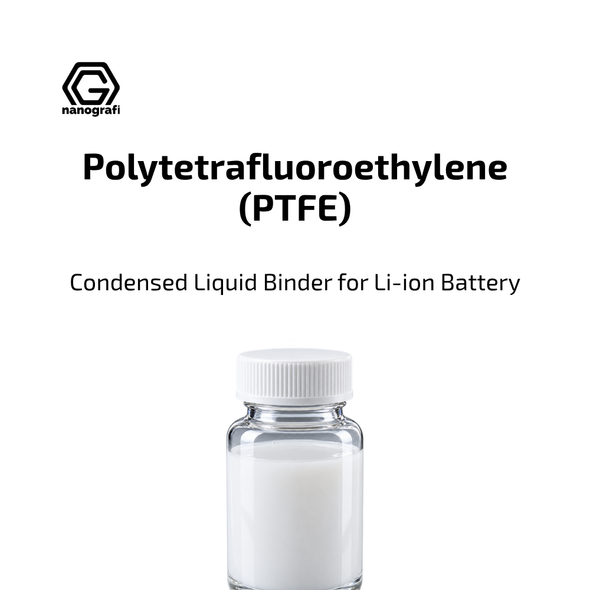
Polytetrafluoroethylene (PTFE) Condensed Liquid Binder for Li-ion Battery

PVDF Binder for Li-ion Battery Electrodes (set: 80g )
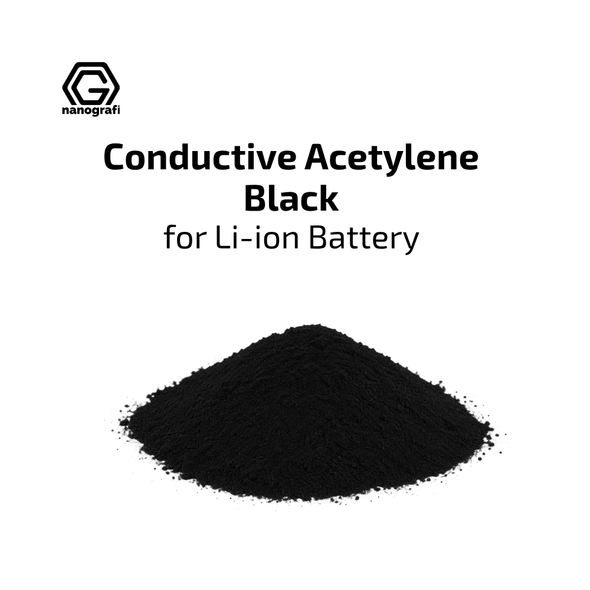
Conductive Acetylene Black for Li-ion Battery Anode/Cathode
