
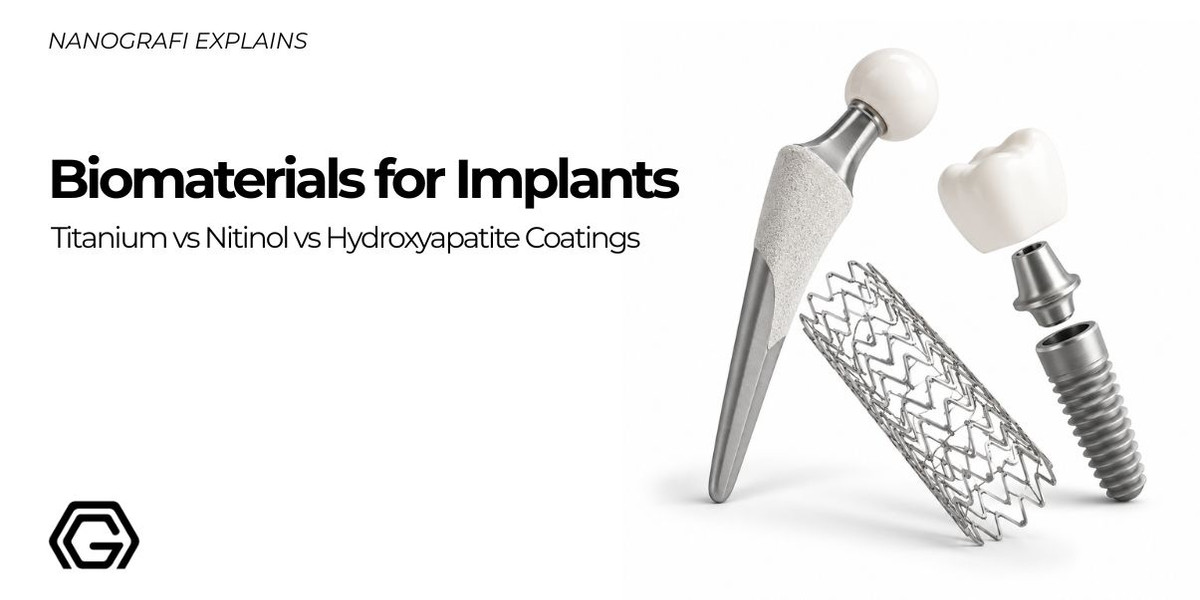
Biomaterials for Implants: Titanium vs Nitinol vs Hydroxyapatite Coatings
Implantable medical devices operate under very different mechanical and biological conditions. A hip stem must transfer repeated loads through bone, a coronary stent must deform with every cardiac cycle, and a dental implant must maintain stable fixation over years of service. For this reason, selecting an implant biomaterial is not simply a question of biocompatibility. The material must match the mechanical function, tissue interface and expected service conditions of the device.
Titanium, Nitinol and hydroxyapatite are used for different reasons. Titanium and its alloys provide structural integrity and osseointegration. Nitinol provides large recoverable strain, shape memory and controlled force. Hydroxyapatite (HA) is a bioactive calcium phosphate used primarily to improve the bone-facing surface of an implant.
In many medical devices these materials are therefore complementary rather than competing alternatives. A titanium implant may carry the mechanical load while a hydroxyapatite coating accelerates bone attachment. A Nitinol component, by contrast, is selected when flexibility, self-expansion or sustained force is required.
What Does an Implant Biomaterial Need to Do?
Biocompatibility is essential, but it is only one part of implant material selection. The physiological environment contains water, chloride ions, proteins and dissolved gases at approximately 37 °C, while local chemistry may change around inflamed or healing tissue. At the same time, many implants are exposed to millions of mechanical loading cycles.
The relevant requirements can therefore be grouped into four areas:
Chemical stability. The material should resist corrosion and avoid releasing degradation products or metal ions at levels that compromise device safety or adversely affect tissue response.
Mechanical compatibility. Strength and fatigue resistance must match the applied load, while excessive stiffness may alter normal load transfer to the surrounding bone.
Tissue response. The implant surface must be tolerated by the surrounding tissue and, in bone-contacting devices, often needs to support stable osseointegration.
Functional behavior. Some devices must bend, expand or maintain force through a large strain range. These functions cannot always be achieved with conventional rigid metals.
Titanium, Nitinol and hydroxyapatite address these requirements in different ways.
Titanium and Titanium Alloys for Implants
Why Is Titanium Used in Medical Implants?
Titanium is widely used in orthopedic and dental implants because it combines relatively high strength, low density, corrosion resistance and a favorable bone response.
Its corrosion resistance originates from a thin titanium oxide layer that forms spontaneously on the surface. When the oxide layer is damaged, it can repassivate rapidly in the presence of oxygen and water. This passive layer separates the metallic substrate from the physiological environment and strongly reduces corrosion.
Bone can also grow in close contact with appropriately prepared titanium surfaces. This direct structural connection between living bone and an implant surface is generally described as osseointegration and is fundamental to modern dental implants and many cementless orthopedic devices.
Commercially Pure Titanium and Ti-6Al-4V
The titanium grade depends on the mechanical requirements of the implant.
Commercially pure titanium is covered by ASTM F67 and is commonly used when corrosion resistance and tissue response are particularly important. Grade 4 combines the highest yield strength among the commercially pure grades with the surface characteristics required for many dental applications.
For higher-load components, Ti-6Al-4V ELI is widely used. ASTM F136 specifies wrought Ti-6Al-4V ELI for surgical implant applications. Compared with commercially pure titanium, the alloy provides substantially greater mechanical strength and is commonly associated with orthopedic fixation systems, spinal components and other load-bearing devices.
Other biomedical titanium alloys have been developed to modify mechanical properties or eliminate specific alloying elements. Ti-6Al-7Nb, for example, replaces vanadium with niobium and is standardized for surgical implant applications under ASTM F1295.
Elastic Modulus and Stress Shielding
One of titanium's principal advantages over stainless steel and cobalt-chromium alloys is its lower elastic modulus. Conventional titanium alloys are typically around 105-115 GPa, compared with approximately 200 GPa or more for many stainless steel and cobalt-chromium implant alloys.
Cortical bone, however, is considerably less stiff, typically around 10-30 GPa.
This difference matters because an implant that is significantly stiffer than the surrounding bone can carry a disproportionate share of the applied load. Reduced mechanical stimulation of the bone can contribute to bone resorption around the implant, a phenomenon known as stress shielding.
Current materials research addresses this problem through two main approaches. The first is the development of lower-modulus beta titanium alloys containing elements such as niobium, tantalum and zirconium. The second is structural rather than compositional: additive manufacturing can produce porous titanium architectures whose apparent elastic modulus is lower than that of fully dense titanium.
Porous structures can also provide interconnected pore networks for bone ingrowth, making pore geometry, porosity and surface condition important design variables in additively manufactured orthopedic implants.
For research involving powder metallurgy, coating development or additive manufacturing, titanium is available in different powder morphologies and particle-size ranges. Fine irregular titanium powders can be used in powder-processing studies, while controlled spherical powders are generally more appropriate for powder-bed additive manufacturing processes.
Limitations of Titanium
Titanium is not optimal for every mechanical interface.
Its relatively poor tribological behavior limits its use in continuously articulating surfaces. Sliding contact can result in galling, surface damage and wear debris. For this reason, bearing surfaces in joint replacements frequently use cobalt-chromium alloys or engineering ceramics rather than titanium alone.
Conventional titanium alloys also recover only a relatively small elastic strain. Where a device must undergo several percent reversible strain, a shape memory alloy such as Nitinol is usually more appropriate.
Nitinol for Medical Devices and Implants
Why Is Nitinol Different from Titanium?
Nitinol is a nickel-titanium shape memory alloy valued primarily for superelasticity and shape memory behavior rather than conventional structural stiffness.
These properties originate from a reversible transformation between austenitic and martensitic crystal structures. Under suitable conditions, applied stress can transform austenite into stress-induced martensite. When the stress is removed, the material returns toward its original structure and shape.
As a result, Nitinol can accommodate recoverable strains of several percent, commonly approaching approximately 8% under appropriate thermomechanical conditions. This is far greater than the recoverable elastic strain of conventional titanium alloys.
This behavior is central to devices that must be compacted during delivery and then recover a predefined geometry inside the body.
For a more detailed explanation of the transformation mechanism, see Nanografi's Shape Memory Metals: Nitinol article.
Nitinol in Stents, Guidewires and Orthodontic Devices
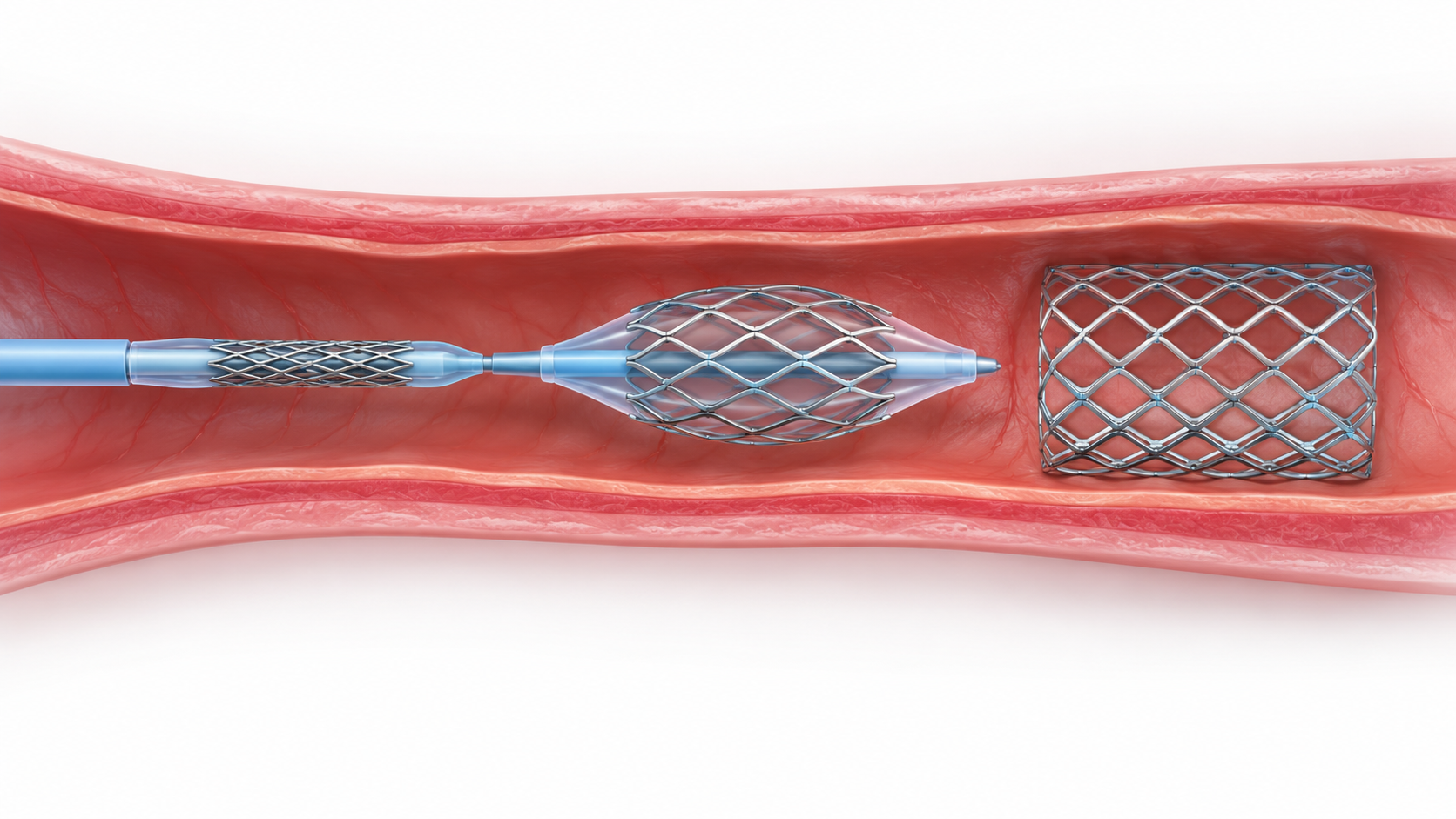
Self-expanding vascular stents provide a clear example. A Nitinol stent can be constrained inside a catheter, positioned at the target site and released so that it expands toward its programmed geometry.
The same material behavior is useful in heart-valve frames, guidewires, filters, orthodontic archwires and compression devices.
In orthodontics, superelastic Nitinol can deliver a nearly constant force over a broad deflection range. This is useful where a wire must continue applying force as tooth position changes.
For these applications, Nitinol is not selected because it is stronger than titanium. It is selected because its thermomechanical response provides a function that conventional rigid alloys cannot reproduce.
Why Is the Af Temperature Important?
A critical parameter in Nitinol design is the austenite finish temperature (Af). Above this temperature the transformation to austenite has been completed.
A device designed to behave superelastically at body temperature requires an Af temperature set below body temperature so that a fully austenitic phase is present at approximately 37 °C. In thermally activated devices, the transformation temperature may instead be engineered so that shape recovery occurs as the component warms.
Composition, thermomechanical processing and heat treatment all influence transformation behavior. For that reason, Nitinol cannot be adequately specified by nickel and titanium content alone.
Nanografi's Shape Memory Materials category includes Nitinol sheets and wires supplied with defined Af ranges for different research and engineering requirements.
Nickel Content, Corrosion and Surface Condition
Nitinol contains a high proportion of nickel. Current ASTM F2063 requirements for wrought nickel-titanium alloys used in medical devices specify nominal nickel contents in the 54.5-57.0 wt.% range.
The presence of nickel makes surface engineering particularly important.
On appropriately processed Nitinol, preferential oxidation of titanium produces a titanium dioxide-rich passive layer. Electropolishing, passivation, heat treatment and oxide control can therefore strongly influence corrosion resistance and nickel release.
Medical-device evaluation should consequently focus on the finished component, not simply the nominal chemistry of the alloy.
FDA guidance for Nitinol-containing medical devices addresses material composition, transformation behavior, corrosion, nickel release, fatigue and manufacturing-related characteristics. Cyclic potentiodynamic polarization and pitting corrosion assessments may use methods such as ASTM F2129 depending on the device and its intended use.
For patients with known nickel hypersensitivity, clinical suitability remains a device- and patient-specific medical decision.
Fatigue and Manufacturing Considerations
Nitinol components are often used under repeated cyclic strain, making fatigue performance a central design issue.
Fatigue behavior is influenced not only by nominal composition but also by strain amplitude, non-metallic inclusions, surface defects, heat treatment, geometry and manufacturing route. Metallurgical cleanliness is therefore particularly important for implantable Nitinol components.
The alloy is also more difficult to process than conventional structural metals. Laser cutting followed by thermomechanical shape setting is widely used for complex Nitinol components.
Additively manufactured porous NiTi is an active research field because it offers the possibility of combining controlled porosity with recoverable strain. Pre-alloyed Ni-Ti powder is one material form used in powder-processing and additive-manufacturing research.
Hydroxyapatite Coatings for Bone-Contacting Implants
Why Is Hydroxyapatite Used on Implants?
Hydroxyapatite, Ca₁₀(PO₄)₆(OH)₂, is a calcium phosphate chemically similar to biological apatite (the mineral phase of bone).
Its role is fundamentally different from that of titanium or Nitinol. Hydroxyapatite is not normally selected to provide the main load-bearing capacity of a highly loaded implant. Instead, it is used because its surface is bioactive and osteoconductive, making it valuable at the interface between an implant and bone.
Dense hydroxyapatite is a brittle ceramic with substantially lower fracture toughness than structural implant metals. A bulk HA component is therefore unsuitable for applications such as a conventional hip stem that must withstand bending, impact and repeated mechanical loading.
The established solution is to combine a metallic substrate with a hydroxyapatite surface.
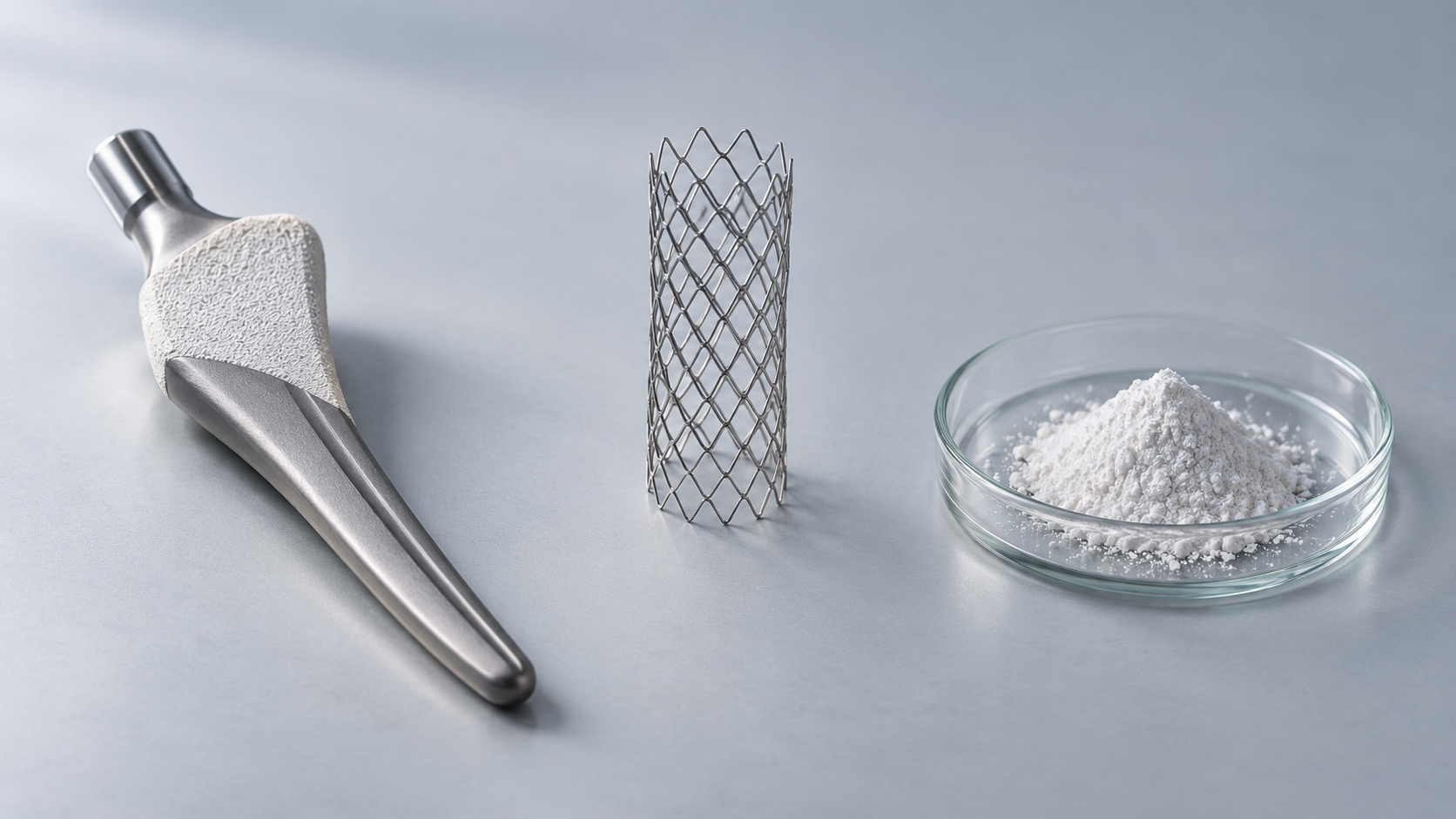
In an HA-coated titanium implant, titanium carries the mechanical load while hydroxyapatite modifies the early bone-interface response.
Plasma-Sprayed Hydroxyapatite Coatings
Thermal spraying, particularly plasma spraying, is one of the established industrial methods for applying hydroxyapatite to metallic implants.
During plasma spraying, HA feedstock is introduced into a high-temperature plasma plume. Heated particles are accelerated toward a prepared metallic substrate, where successive impacts build the coating.
The process must be carefully controlled. Excessive thermal exposure can partially decompose hydroxyapatite and produce secondary calcium phosphate phases or amorphous calcium phosphate. These phases may have different dissolution behavior from crystalline HA.
Coating quality therefore depends on variables such as crystallinity, chemical purity, phase composition, coating thickness, porosity and adhesive bond strength to the substrate.
ISO 13779-2:2018 specifies requirements for single-layer thermally sprayed hydroxyapatite coatings applied to metallic surgical implants and remains a key reference for this type of coating.
Does a Hydroxyapatite Coating Remain Permanently?
A hydroxyapatite coating should not be viewed simply as a non-resorbable or bioinert film.
Its most important role is often at the early stage of fixation, where it provides a favorable bone-facing interface. Depending on coating characteristics, implantation site and biological environment, HA can undergo partial dissolution and remodeling over time.
Long-term fixation then increasingly depends on the relationship between bone and the underlying rough or porous implant surface.
This explains why coating properties cannot be evaluated independently from substrate surface roughness, coating shear/bond strength, and implant geometry.
Nano Hydroxyapatite and Alternative Coating Methods
Plasma spraying is effective for many external surfaces but has limitations. As a line-of-sight deposition process, it is less suited to coating complex internal pore networks. Its high processing temperature also restricts the use of some substrate/coating combinations.
Alternative methods include electrophoretic deposition, electrochemical deposition, sol-gel processing, biomimetic precipitation, and magnetron sputtering / physical vapor deposition techniques.
Nano hydroxyapatite is particularly relevant to low-temperature deposition and composite biomaterial research. Nanoscale HA also attracts interest because biological apatite in natural bone is nanocrystalline and carbonated, although biological performance depends on considerably more than particle size alone.
Nanografi offers hydroxyapatite nanoparticles as well as hydroxyapatite micron powders for coating, composite, scaffold and materials-development research.
The differences between particle-size ranges, preparation methods and applications are discussed further in Hydroxyapatite Nano and Micron Powders: Synthesis and Applications.
Research also includes substituted/doped hydroxyapatites incorporating osteogenic elements, as well as composite systems containing antimicrobial components. Where silver-containing systems are investigated, the effect of silver concentration, release kinetics and cytotoxicity must be evaluated rather than assuming that antibacterial activity automatically translates into a suitable implant surface.
Titanium vs Nitinol vs Hydroxyapatite: Key Differences
|
Property |
Titanium / Ti-6Al-4V |
Nitinol (NiTi) |
Hydroxyapatite (HA) |
|
Material class |
Metal / titanium alloy |
Shape memory alloy |
Calcium phosphate ceramic |
|
Main implant function |
Structural support and bone fixation |
Large recoverable strain and sustained force |
Bioactive bone-facing coating or filler |
|
Typical elastic modulus |
~105-115 GPa |
~75-83 GPa austenite; lower in martensitic condition |
~80-110 GPa for dense HA |
|
Recoverable strain |
Generally elastic strain <1% |
Up to several percent, often ~8% under suitable conditions |
Very low; brittle |
|
Approximate density |
4.4-4.5 g/cm³ |
~6.45 g/cm³ |
~3.1 g/cm³ |
|
Bone interaction |
Supports direct osseointegration (especially on micro/nano-textured surfaces) |
Depends strongly on surface condition; porous structures may support tissue ingrowth |
Bioactive and osteoconductive |
|
Principal limitation |
Poor tribological performance and elastic modulus mismatch with bone |
Nickel content, processing sensitivity and fatigue |
Brittleness and coating integrity |
|
Relevant standards |
ASTM F67, ASTM F136, ISO 5832 series |
ASTM F2063, ASTM F2129 |
ISO 13779-2, ASTM F1185 |
|
Typical applications |
Dental implants, orthopedic fixation, hip stems, spinal devices |
Stents, guidewires, valve frames, orthodontic wires, compression devices |
Implant coatings, bone graft materials, scaffolds |
|
Common research forms |
Irregular or spherical powders |
Wire, sheet and pre-alloyed powder |
Nano and micron powders |
For context, cortical bone typically has a substantially lower elastic modulus than dense metallic implant materials. This elastic modulus mismatch is one reason porous structures, lower-modulus beta-phase titanium alloys and surface-engineered implants continue to receive significant research attention.
How Should an Implant Material Be Selected?
The most useful starting point is not to ask which biomaterial is universally “best,” but which failure mode and functional requirement dominate the application.
For a component expected to carry substantial structural load, fatigue limit and high yield strength become primary considerations, which favors titanium alloys such as Ti-6Al-4V ELI.
For a device that must be compressed for delivery, repeatedly flex or deliver sustained force through large recoverable strain, Nitinol offers a fundamentally different mechanical response.
Where the primary challenge is early fixation to bone, a bioactive hydroxyapatite surface can complement a titanium substrate.
Where the dominant problem is sliding wear at an articulating surface, neither titanium, Nitinol nor hydroxyapatite alone is usually the first choice. Cobalt-chromium alloys and advanced ceramics are more typical bearing materials.
The choice is therefore application-specific, and the material is only one part of the implant system. Geometry, manufacturing process, surface treatment, sterilization, fatigue behavior and regulatory validation must also be considered.
Why Are Titanium and Hydroxyapatite Often Used Together?
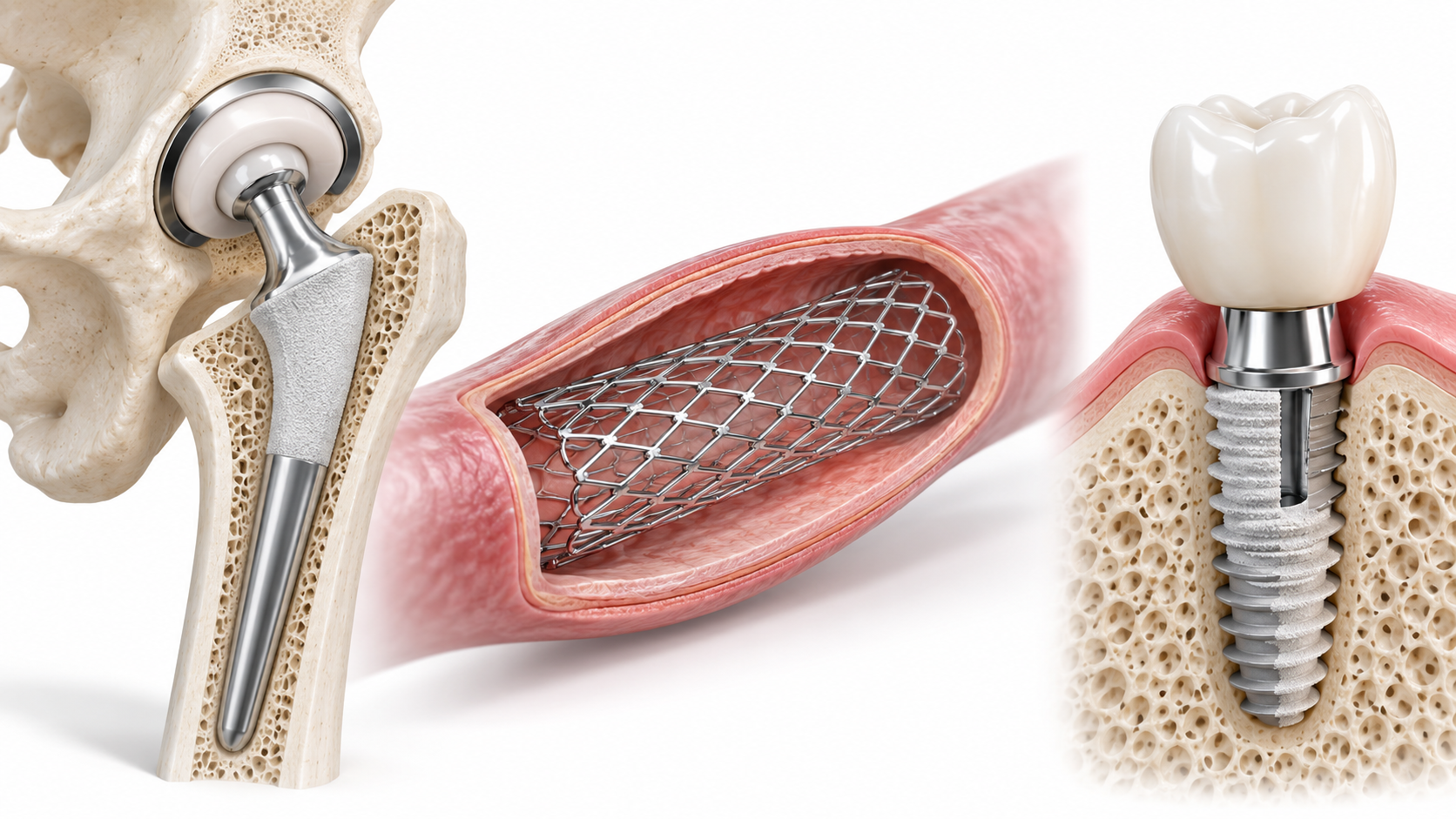
One of the clearest examples of complementary materials design is the hydroxyapatite-coated titanium implant.
Titanium provides structural integrity, fatigue resistance and a stable substrate. Hydroxyapatite modifies the biological interface and can support faster early osteogenesis and bone-implant contact.
A similar division of functions appears across biomedical engineering. Nitinol may provide a flexible or self-expanding component, while titanium provides rigid fixation elsewhere in the same treatment pathway.
In dentistry, for example, superelastic NiTi archwires can be used during orthodontic alignment, while permanent dental implants are commonly titanium based.
Related nanoscale approaches in dental materials are discussed in Nanografi's Latest Trends in Dental Applications of Nanomaterials article.
Research is increasingly extending these combinations. Additively manufactured porous titanium can be modified with calcium phosphate coatings or biomimetic nano-HA surface treatments, while Nitinol may receive oxide or calcium-phosphate treatments intended to modify corrosion and biological response.
Other biomaterials occupy different parts of the design space. Porous tantalum is used where a highly porous metallic structure and bone ingrowth are desirable. Zirconia provides high wear resistance and is also used in selected metal-free dental systems. PEEK offers an elastic modulus closer to natural cortical bone and radiolucency, making it relevant to spinal and orthopedic applications.
Materials for Implant and Biomaterials Research from Nanografi
Nanografi supplies materials used in implant, coating and biomaterials research, including titanium powders, Nitinol forms and hydroxyapatite powders.
Research options include titanium micron and spherical powders for powder processing and additive-manufacturing studies; Nitinol sheets and wires with defined transformation-temperature ranges; Ni-Ti alloy powder for powder metallurgy and additive-manufacturing research; and hydroxyapatite nanoparticles and micron powders for coating, scaffold and composite development.
These materials are supplied for research and development purposes unless otherwise specified. A material being chemically or crystallographically similar to a biomedical material does not by itself qualify a finished component for implantation. Implantable medical devices require appropriate medical-grade materials, validated manufacturing and sterilization processes, device-specific testing and applicable regulatory approval.
Frequently Asked Questions
Which is better for implants, titanium or Nitinol?
They serve different functions. Titanium is generally preferred for structural and load-bearing implant components because of its strength, corrosion resistance and established osseointegration behavior. Nitinol is preferred when a device requires large recoverable strain, self-expansion or sustained force.
Which is stronger, titanium or Nitinol?
A direct comparison based on a single strength value can be misleading because the materials are used differently. Ti-6Al-4V ELI is widely used for load-bearing structural components. Nitinol's main advantage is not greater structural rigidity but its ability to recover several percent strain through stress-induced phase transformation.
Is Nitinol safe for people with nickel allergy?
A properly processed Nitinol device features a titanium dioxide-rich passive layer that substantially limits nickel exposure. However, nickel-containing devices still require appropriate corrosion and biocompatibility assessment. Suitability for an individual with confirmed nickel hypersensitivity should be determined by the treating medical professional for the specific device.
Why is titanium preferred to stainless steel for many permanent implants?
Titanium offers high corrosion resistance, an elastic modulus closer to cortical bone and surfaces capable of supporting direct bone attachment. It is also lighter than steel. These properties make it attractive for long-term bone-contacting devices, although stainless steel remains useful in selected applications.
Why is hydroxyapatite used as a coating instead of a structural implant?
Hydroxyapatite has favorable biological characteristics but is brittle. It cannot provide the fracture and fatigue resistance needed for many load-bearing components. Applying HA to a metallic substrate allows the implant to combine structural strength with a bioactive bone-facing surface.
Does hydroxyapatite coating remain on an implant permanently?
Not necessarily. Depending on its composition, crystallinity and biological environment, part of the coating may dissolve or remodel over time. Its main value is often the promotion of early bone attachment, while longer-term fixation increasingly involves bone interaction with the underlying implant surface.
What is the difference between biocompatible, bioinert and bioactive materials?
A biocompatible material performs its intended function with an acceptable biological response. A bioinert material undergoes minimal chemical/biological interaction with surrounding host tissue, typically forming a thin fibrous capsule without direct chemical bonding. A bioactive material intentionally interacts with tissue and may form a direct interfacial bond or stimulate a desired biological response. Hydroxyapatite is a classic example of a bioactive bone-contacting material.
References
- Geetha, M., Singh, A. K., Asokamani, R., & Gogia, A. K. (2009). Ti based biomaterials, the ultimate choice for orthopaedic implants: A review. Progress in Materials Science, 54, 397-425. https://doi.org/10.1016/j.pmatsci.2008.06.004
- Niinomi, M. (2008). Mechanical biocompatibilities of titanium alloys for biomedical applications. Journal of the Mechanical Behavior of Biomedical Materials, 1, 30-42. https://doi.org/10.1016/j.jmbbm.2007.07.001
- Duerig, T., Pelton, A., & Stöckel, D. (1999). An overview of Nitinol medical applications. Materials Science and Engineering: A, 273-275, 149-160. https://doi.org/10.1016/S0921-5093(99)00294-4
- Shabalovskaya, S., Anderegg, J., & Van Humbeeck, J. (2008). Critical overview of Nitinol surfaces and their modifications for medical applications. Acta Biomaterialia, 4, 447-467. https://doi.org/10.1016/j.actbio.2008.01.013
- Elahinia, M. H., Hashemi, M., Tabesh, M., & Bhaduri, S. B. (2012). Manufacturing and processing of NiTi implants: A review. Progress in Materials Science, 57, 911-946. https://doi.org/10.1016/j.pmatsci.2011.11.001
- Sun, L., Berndt, C. C., Gross, K. A., & Kucuk, A. (2001). Material fundamentals and clinical performance of plasma-sprayed hydroxyapatite coatings: A review. Journal of Biomedical Materials Research, 58, 570-592. https://doi.org/10.1002/jbm.1056
- Karageorgiou, V., & Kaplan, D. (2005). Porosity of 3D biomaterial scaffolds and osteogenesis. Biomaterials, 26, 5474-5491. https://doi.org/10.1016/j.biomaterials.2005.02.002
- ISO 13779-2:2018. Implants for surgery. Hydroxyapatite. Part 2: Thermally sprayed coatings of hydroxyapatite. International Organization for Standardization.
- ASTM F67, ASTM F136 and ASTM F2063. ASTM International specifications for titanium and nickel-titanium materials used in surgical implant and medical-device applications.
- U.S. Food and Drug Administration. (2021). Technical Considerations for Non-Clinical Assessment of Medical Devices Containing Nitinol: Guidance for Industry and FDA Staff.
Recent Posts
-
Biomaterials for Implants: Titanium vs Nitinol vs Hydroxyapatite Coatings
Implantable medical devices operate under very different mechanical and biological conditions. A hip …7th Oct 2026 -
CNT Paste vs Silver Paste vs Carbon Paste: Which Conductive Adhesive Should You Use?
Conductive pastes quietly hold much of modern electronics together. They bond chips to substrates, d …1st Oct 2026 -
ZnO Nanoparticles in OLED and Perovskite Solar Cells
Many printed solar cells and inverted display stacks need a layer that collects electrons and passes …23rd Sep 2026