
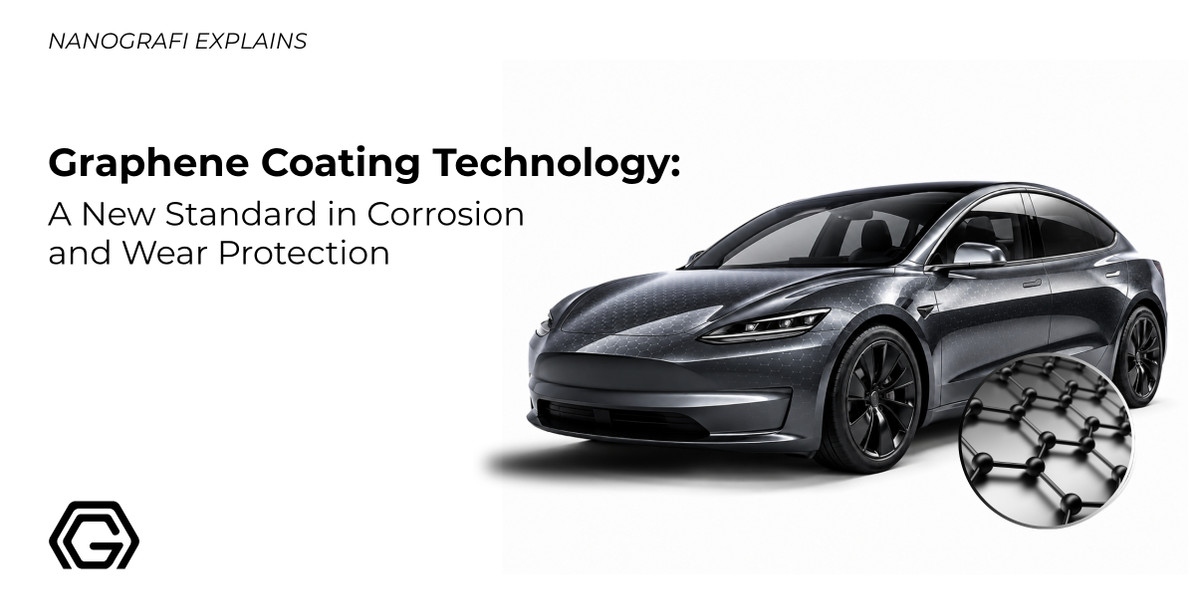
Graphene Coating Technology: A New Standard in Corrosion and Wear Protection
Every metal surface is, in a sense, already losing a slow chemical war. Oxygen, moisture, and dissolved salts constantly attack exposed metal, and corrosion costs the global economy hundreds of billions of dollars every year across infrastructure, transportation, and manufacturing. Coating technology has always been the main line of defense, but for decades the options have been limited: cheap barriers that degrade quickly, or expensive multilayer systems that are hard to apply and maintain. Graphene changes that equation. It is a single layer of carbon atoms arranged in a hexagonal honeycomb lattice, thin enough to be almost invisible on a surface yet possesses an impermeable lattice structure non-porous enough to block the molecules that cause corrosion in the first place. This article walks through how that works, where the research still disagrees, and where graphene coatings are already used in practice, especially in automotive applications.
What Makes Graphene an Effective Protective Layer
Graphene's usefulness as a coating comes down to two properties, both rooted in the same honeycomb carbon structure that Nanografi's own explained graphene breaks down in more detail. The first is impermeability. The lattice exhibits such a high electron density across its aromatic rings that oxygen, water, and chloride ions simply cannot pass through it, so a defect free graphene layer acts as a near complete physical barrier against the agents that drive metal degradation. The second is strength combined with extremely low thickness. Graphene is remarkably strong for its weight, and while its in-plane C–C bond length is 0.142 nanometers thick, which means a coating can add real reinforcement without adding meaningful bulk to the part underneath.
The Corrosion Protection Mechanism, and Why Researchers Still Disagree About It
Early research in this area found that graphene grown directly on copper and nickel could slow corrosion dramatically, with coated copper corroding roughly seven times slower than bare copper in lab testing [1]. That looked like a clear win, but a later study designed specifically to test long-term rather than short-term performance told a more complicated story. Over longer exposure periods, graphene coated copper actually corroded more than bare, uncoated copper would have on its own [2]. A separate study reached a similar conclusion, finding that corrosion was enhanced rather than reduced when graphene was present [3].
The explanation comes down to graphene's electrical conductivity. Because graphene conducts electricity well, any tiny defect in the coating, a pinhole, a wrinkle, a gap between grains, can turn into a small galvanic cell. The exposed metal underneath that defect acts as a small anode while the surrounding intact graphene acts as a large conductive cathode; this extremely small anode-to-cathode surface area ratio accelerates localized galvanic corrosion far beyond that of bare metal. This is the main caveat worth knowing before choosing pure, single layer graphene for a corrosion application. It is also why later research shifted toward fixing the defect problem rather than giving up on graphene altogether. One approach showed that graphene's defects can be chemically sealed after growth, restoring much of the long-term protection researchers were originally hoping for [4].
This is also why the industry has largely moved toward composite and functionalized coatings instead of bare graphene film. Nanografi rounds up this broader shift, including zinc rich and epoxy hybrids that sidestep the defect problem entirely, in advanced coatings for superior corrosion and wear resistance. Graphene oxide is a good example of this shift in practice. It carries oxygen functional groups that disrupt the conjugated electron system, rendering it electrically insulating rather than conductive, and forms a more defect tolerant, better adhering layer when mixed into a polymer matrix. The same logic, using nanoparticle additives to improve barrier performance across different substrate types, is explored further in anticorrosive nanocoatings. The original nickel and copper testing that kicked off this whole research area is discussed in more depth, along with different graphene growth methods, in the use of graphene based materials in anticorrosion coatings.
Choosing the Right Graphene Based Raw Material
Formulating a graphene coating starts with picking the right base material, and the options are not interchangeable. Pristine graphene is hydrophobic, hard to disperse without clumping, and conductive enough to carry some galvanic risk at defect sites, so it works best when grown directly on a substrate rather than mixed into a liquid coating. Graphene oxide is the opposite in most of these respects. It is hydrophilic, disperses easily in water, and its electrically insulating nature virtually eliminates that galvanic risk. Nanografi supplies this exact form as graphene oxide powder and as ready to use graphene dispersions in both water and NMP carriers, giving formulators an easier path to a stable coating solution for spraying, dip coating, or spin coating. Graphene nanoplatelets, by contrast, consist of multi-layer stacks that are better suited for bulk composite reinforcement and thick barrier coatings rather than nanometer-scale thin films. Deciding between powder, water dispersion, or solvent based dispersion should be an early decision in any formulation project, not an afterthought.

Automotive Applications: From Detailing to Structural Protection
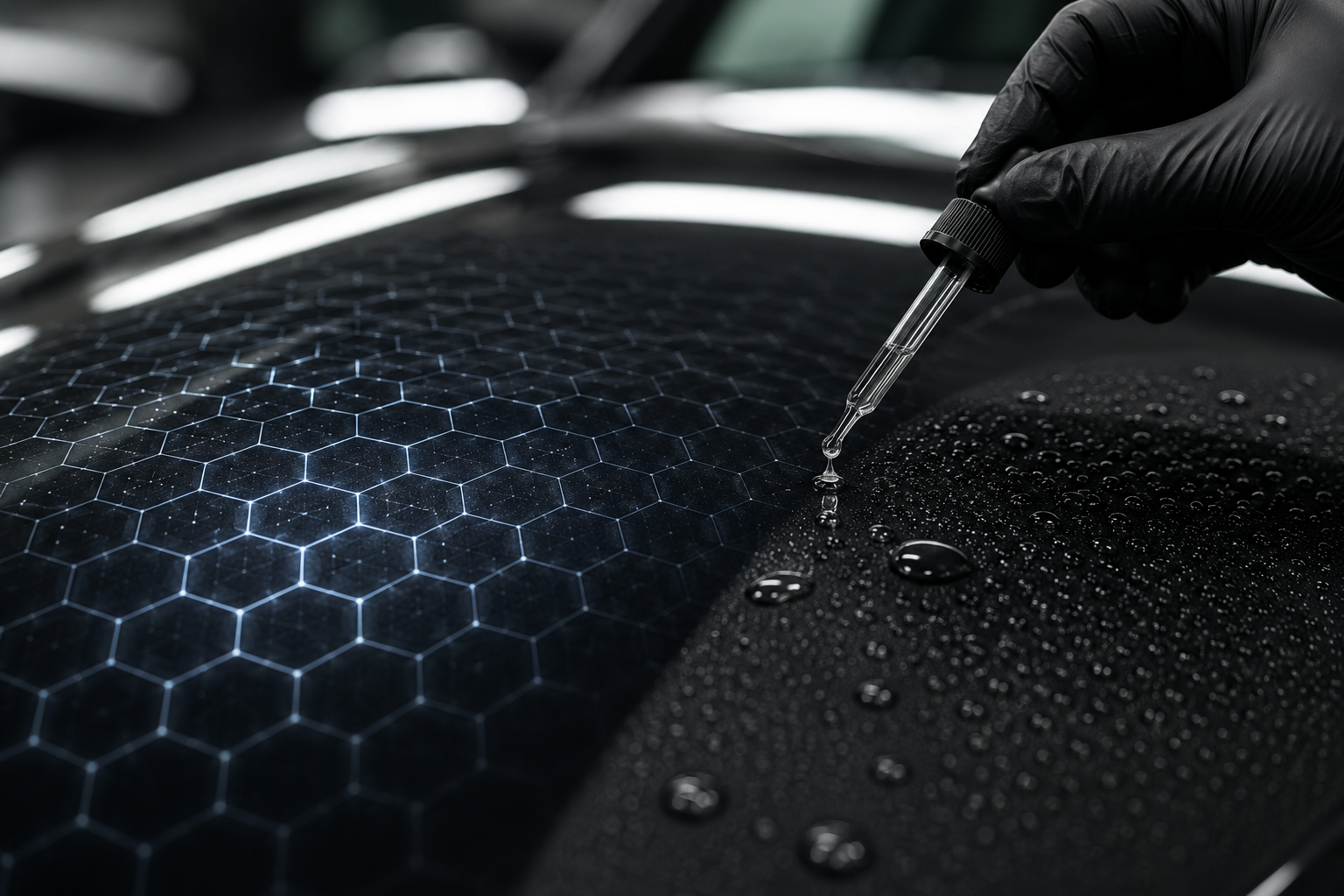
Automotive use is where most people actually run into graphene coatings today, and it covers two quite different jobs. The first is cosmetic. Graphene coatings sold for car detailing are almost never a pure single layer film. They are usually reduced graphene oxide blended into a silicon dioxide ceramic base, which completely eliminates the galvanic corrosion concern since the underlying substrate is a non-conductive polymeric clear coat rather than bare metal. Comparing a cured version of this hybrid against a straight ceramic coating, looking at durability, water spot resistance, ease of application, and cost, is exactly what the comparison of graphene and ceramic coatings sets out to do. The graphene component adds two practical benefits on top of what ceramic already offers: better heat dissipation, which spreads warmth more evenly across a panel instead of letting it concentrate in small spots that bake in hard water stains, and improved anti-static behavior, which slows how quickly dust and airborne contaminants stick between washes. Both hybrid and straight ceramic coatings still need the same careful prep work: a full wash, clay bar decontamination, paint correction, and an isopropyl alcohol wipe down, followed by a cure time that usually runs 24 to 48 hours before the car can get wet, and up to five days before the coating fully hardens.
Graphene also shows up under the hood, where performance is governed by tribological friction-reduction mechanisms, such as nano-tribofilm formation and low interlayer shear strength, rather than the electrical conductivity that causes galvanic corrosion. In one widely cited engine test, piston rings coated with graphene ran for 75 hours on a real engine after initial lab testing, and showed roughly 53 percent less friction along with two to five times better wear resistance compared with uncoated rings [5]. Other tests have looked at reduced graphene oxide mixed directly into engine oil as an additive rather than applied as a coating, and found measurable friction reductions at low concentrations, particularly during startup and low speed driving when metal surfaces are most likely to touch directly [6]. On the structural side, body panels, chassis parts, and increasingly the metal enclosures around EV battery packs face the same moisture, road salt, and oxygen exposure that causes corrosion anywhere else in a vehicle.
Wear Resistance and Antifriction Performance
Corrosion protection is only part of what graphene brings to a coated surface. Its layered 2D structure exhibits low interlayer shear strength due to weak van der Waals forces between sheets, allowing adjacent layers to slide easily, the same fundamental mechanism behind graphite-based antifriction coatings used long before graphene. That shared mechanism gives graphene coatings a role in reducing friction and wear well beyond cars, from bearings to industrial fasteners. Molybdenum disulfide and PTFE remain the standard dry lubricant coatings in many of these settings, and anyone considering a switch to something graphene based should look at the practical tradeoffs laid out in the differences between MoS2 and PTFE coatings, since both older materials still perform well on raw friction numbers. The broader dry film coating category, including application methods and where each option performs best, is covered in the guide to dry coating, which is worth reading alongside any graphene based alternative.
Practical Formulation and Application Considerations
Turning a graphene coating from raw material into a finished product involves a few practical steps that determine whether the lab level performance shows up in real use. Dispersion stability isthe primary challenge, as unstabilized graphene sheets undergo irreversible inter-sheet van der Waals restacking into 3D graphite-like agglomerates, severely reducing the active barrier area and tortuous diffusion pathways upon drying. Surface preparation is just as critical as the formulation itself, as inadequate surface energy and poor wettability lead to weak interfacial adhesion, creating localized defects where galvanic corrosion or adhesive wear initiates, and getting that prep right is what surface modification techniques for improving material properties walks through step by step.
How Graphene Coatings Compare to Established Alternatives
|
Coating Type |
Corrosion Resistance |
Wear Resistance |
Typical Cost |
Best Suited For |
|
Graphene / Graphene Oxide Composite |
High short term, sensitive to defects long term |
High |
Moderate to high |
Metal parts needing barrier plus mechanical reinforcement |
|
Ceramic Coatings |
High |
Very high |
Lower |
Automotive detailing, high hardness needs |
|
Zinc Rich Primers |
Moderate, sacrificial protection |
Low to moderate |
Low |
Structural steel, large scale infrastructure |
|
MoS2 / PTFE Dry Film Lubricants |
Low, not a barrier coating |
Very high, low friction focus |
Moderate |
Moving parts, fasteners, bearings |
Market Outlook and Adoption Challenges
Despite strong lab results, a few practical hurdles stand between graphene coatings and everyday industrial use. The disagreement over long-term corrosion performance is itself part of the challenge, since buyers cannot simply assume every graphene coating behaves the same way. It matters whether a product uses defect sealed graphene, a graphene oxide composite, or a hybrid system before trusting it near bare metal. High quality, defect free graphene also costs more to produce at scale than conventional coating additives, and achieving consistent dispersion in commercial batches is significantly more challenging due to its high specific surface area compared to traditional zinc dust or ceramic micro/nanoparticles. Standard testing methods are still developing too, so comparing products across suppliers is not always straightforward. None of this is permanent. As functionalized graphene oxide formulations mature and manufacturing costs fall, adoption should keep expanding from aerospace and premium automotive work into broader industrial use.
A Thin Layer With a Significant Impact
Graphene will not replace every coating technology overnight, and for many jobs a well designed zinc rich or ceramic system will stay the more practical choice for years to come. But for surfaces where an ultra-thin profile, low mass, and wear resistance are paramount, and where galvanic corrosion risks have been mitigated via composite matrix or functionalized formulations, graphene and graphene oxide coatings offer a genuine technical advantage, one backed by more than a decade of testing and still being refined.
Frequently Asked Questions
Does pure graphene coating always improve corrosion resistance? Not reliably over the long term. While pristine graphene initially acts as a passivating barrier, reducing short-term copper corrosion by roughly sevenfold, its high electrical conductivity forms micro-galvanic cells at defect sites over extended periods, accelerating localized substrate corrosion. This is why electrically insulating composites, such as graphene oxide in a polymer matrix, are preferred commercially.
What is the difference between graphene and graphene oxide for coating work? Pristine graphene is hydrophobic, challenging to disperse in liquid solvents, and electrically conductive, carrying galvanic corrosion risks at defect sites, making it better suited for direct CVD growth methods. Conversely, graphene oxide (GO) is hydrophilic, disperses readily in aqueous and polar media, exhibits significantly lower electrical conductivity, and serves as the primary raw material for sprayable or dip-coated anti-corrosion formulations today.
How does graphene compare to ceramic coatings for cars? Most detailing products marketed as graphene coatings are really reduced graphene oxide (rGO) or nanoplatelets blended into a siloxane/ceramic matrix, rather than a pure graphene film. This hybrid enhances thermal dissipation, anti-static properties, and water-spot resistance due to superior hydrophobic contact angles, whereas traditional ceramic coatings remain more cost-effective and widely available.
Can graphene coatings also reduce friction and wear? Yes, and the experimental evidence is considerably more consistent than for corrosion protection, as tribological performance depends on interlayer shear strength rather than electrical conductivity. Engine testing on graphene-coated piston rings demonstrates roughly a 53 percent reduction in friction coefficient and a two-to-fivefold improvement in wear resistance compared to uncoated components.
What raw material form of graphene should be used for a coating project? It depends on the application method and the corrosion susceptibility. Water- or solvent-based graphene oxide (GO/rGO) dispersions are optimal for spray, dip, or spin coating due to their low galvanic risk. Conversely, graphene nanoplatelet (GNP) powders are better suited for bulk polymer composite reinforcement rather than ultra-thin protective barrier films.
References
- Prasai, D., Tuberquia, J. C., Harl, R. R., Jennings, G. K., & Bolotin, K. I. (2012). Graphene: Corrosion-Inhibiting Coating. ACS Nano, 6(2), 1102 to 1108. https://pubs.acs.org/doi/10.1021/nn203507y
- Schriver, M., Regan, W., Gannett, W. J., Zaniewski, A. M., Crommie, M. F., & Zettl, A. (2013). Graphene as a Long-Term Metal Oxidation Barrier: Worse Than Nothing. ACS Nano, 7(7), 5763 to 5768. https://pubs.acs.org/doi/10.1021/nn4014356
- Zhou, F., Li, Z., Shenoy, G. J., Li, L., & Liu, H. (2013). Enhanced Room-Temperature Corrosion of Copper in the Presence of Graphene. ACS Nano, 7(8), 6939 to 6947.
- Hsieh, Y. P., Hofmann, M., Chang, K. W., Jhu, J. G., Li, Y. Y., Chen, K. Y., et al. (2013). Complete Corrosion Inhibition through Graphene Defect Passivation. ACS Nano, 8(1), 443 to 448.
- Review of tribological behavior of graphene coatings on piston rings in engines. Industrial Lubrication and Tribology, 72(2), 243 to 251. https://www.emerald.com/ilt/article-abstract/72/2/243/171394
- Kaleli, H. et al. (2023). Experimental investigation of the effect of tribological performance of reduced graphene oxide additive added into engine oil on gasoline engine wear. Lubrication Science. https://onlinelibrary.wiley.com/doi/abs/10.1002/ls.1627
Recent Posts
-

Graphene Coating Technology: A New Standard in Corrosion and Wear Protection
Every metal surface is, in a sense, already losing a slow chemical war. Oxygen, moisture, and dissol …28th Jul 2026 -
Graphene Dispersion vs CNT Dispersion: Use Cases and How to Choose
If you have ever tried to formulate a conductive ink, a battery slurry, or an anti-static coating, y …16th Jul 2026 -
The 10 Strongest Advanced Materials of All Time (2026 Guide)
The phrase "strongest material" is more ambiguous than it first appears. In materials science, mecha …7th Jul 2026