
Iron Oxide (Fe3O4) Nanopowder/Nanoparticles, High Purity: 99.5+%, Size: 30 nm

- SKU:
- NG04SO1501
- Shipping:
- Calculated at Checkout

Description
5 grams/25 €
25 grams/48 €
100 grams/95 €
500 grams/195 €
1000 grams/263 €
Product Overview of Iron Oxide (Fe3O4) High Purity: 99.5+%, Size: 30 nm
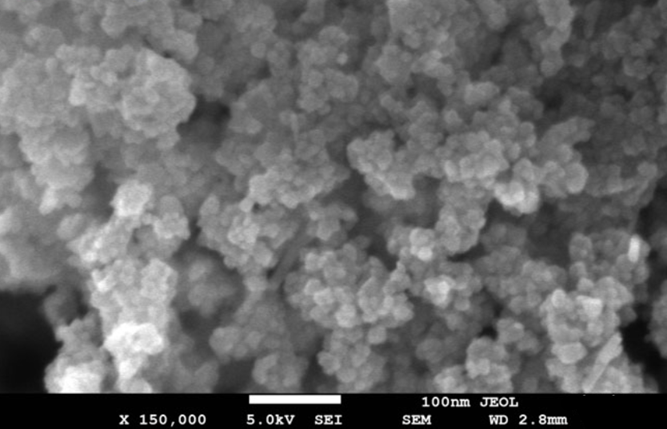
Iron Oxide (Fe3O4) Nanoparticles are high-purity crystalline materials engineered for precision at the nanoscale. These particles exhibit a consistent spherical morphology, which provides a uniform surface area-to-volume ratio and predictable magnetic behavior. A defining characteristic of this nanopowder is its superparamagnetic nature, allowing the particles to become strongly magnetized under an external field while retaining no residual magnetism once the field is removed. This unique behavior, combined with their distinct brown color, makes them highly effective for applications requiring magnetic manipulation and recovery. Furthermore, their high purity ensures chemical stability and prevents interference in sensitive catalytic or biological environments.
Technical Properties of Iron Oxide (Fe3O4) High Purity: 99.5+%, Size: 30 nm
| Purity | 99.5+ |
| Average Particle Size | 30 nm |
| Spesific Surface Area | 50-100 m2/g |
| Melting Temperature | 1597 °C |
| Morphology | Spherical |
| Color | Brown |
| CAS No | 1317-61-9 |
SEM Image
Applications of Iron Oxide (Fe3O4) High Purity: 99.5+%, Size: 30 nm
- Advanced Magnetic Fluids: Primary component in the synthesis of high-stability ferrofluids and electro-magnetorheological fluids for adaptive mechanical seals and damping systems.
- Targeted Nanomedicine: Utilized in the magnetically controlled transport of anti-cancer drugs, enabling site-specific delivery and reducing systemic toxicity.
- Biotechnological Separation: Employed in magnetic cell separation and biomolecule purification, allowing for rapid and non-destructive isolation in clinical diagnostics.
- Thermal Management: Integrated into magnetic refrigeration systems, leveraging the magnetocaloric effect for energy-efficient cooling technologies.
- High-Performance Electronics: Used as a functional material in the fabrication of semiconductors, microwave devices, and magneto-optical components.
- Sensing and Detection: Acts as the active element in high-sensitivity magnetic detectors and magnetic field sensors.
- Functional Coatings: Applied in the development of specialized magnetic coatings for electromagnetic interference (EMI) shielding and surface protection.
- Imaging and Printing: Utilized as a high-contrast agent in medical imaging and as a magnetic toner component in high-precision laser printers.
FAQ
Frequently Asked Questions About Iron Oxide (Fe3O4) Nanopowder, 30 nm
1. What are 30 nm Fe3O4 nanoparticles used for?
Iron oxide (Fe3O4) nanoparticles, also known as magnetite nanoparticles, are investigated for magnetic separation, water treatment, catalysis, magnetic fluids, sensors, and functional composites. Their magnetic response and nanoscale dimensions make them attractive for applications requiring magnetic manipulation or recovery. Performance depends on particle size, surface chemistry, dispersion, and magnetic properties. Explore NANOGRAFi's Magnetic Nanoparticles collection for related materials.
2. What is the difference between magnetite (Fe3O4) and maghemite (gamma-Fe2O3)?
Magnetite (Fe3O4) contains both Fe2+ and Fe3+ ions, whereas maghemite (gamma-Fe2O3) is an iron(III) oxide with a related spinel-type structure. Both materials exhibit magnetic behavior, but they differ in oxidation state, structural defects, and magnetic properties. Magnetite may gradually oxidize toward maghemite under suitable conditions. Researchers can compare this material with Gamma Iron Oxide (Fe2O3) Nanopowder, 20 nm when selecting a magnetic iron oxide phase.
3. How does 30 nm Fe3O4 compare with 100 nm Fe3O4 nanoparticles?
Particle size influences surface area, magnetic response, agglomeration, and dispersion behavior. Smaller Fe3O4 nanoparticles generally have a higher surface-area-to-volume ratio, while larger particles may exhibit different magnetic domain behavior and sedimentation characteristics. However, the magnetic performance of a specific grade must be established through characterization rather than particle size alone. Researchers can compare this product with Fe3O4 Nanopowder, 100 nm, 99.5+% Purity.
4. Are 30 nm Fe3O4 nanoparticles superparamagnetic?
Superparamagnetic behavior depends on magnetic core size, crystallinity, temperature, particle interactions, and measurement timescale. Although nanoscale magnetite can exhibit superparamagnetism, a nominal particle size of 30 nm does not independently confirm the absence of remanent magnetization. Researchers should review magnetic characterization data, including hysteresis measurements, when superparamagnetic behavior is essential to their application. NANOGRAFi's Magnetic Fe3O4 Powder guide provides additional background on magnetite properties and applications.
5. Can Fe3O4 nanoparticles be used for magnetic separation and wastewater treatment?
Fe3O4 nanoparticles are investigated as magnetically recoverable components in adsorbents and catalysts for water treatment. Their magnetic response can facilitate separation from liquid media after treatment. However, adsorption capacity and pollutant removal efficiency depend on surface functionalization, solution pH, competing ions, and contact conditions. Unmodified magnetite should not be assumed to remove all contaminants effectively. Researchers can explore related materials in NANOGRAFi's Iron Oxide Nanoparticles category.
6. What is the difference between Fe3O4 nanopowder and Fe3O4 water dispersion?
Fe3O4 nanopowder is supplied as a dry particulate material, allowing researchers to prepare their own formulations and select appropriate solvents or surface treatments. A water dispersion contains iron oxide particles suspended in an aqueous medium and may be more convenient for selected liquid-phase applications. Dispersion stability and particle characteristics must still be evaluated. For comparison, NANOGRAFi offers Fe3O4 Water Dispersion, 13-18 nm, 22 wt%.
7. How can magnetite nanoparticles be dispersed and surface-functionalized?
Magnetite nanoparticles may agglomerate because of magnetic dipole interactions and surface forces. Controlled ultrasonication, suitable dispersants, pH adjustment, and surface modification can improve dispersion in selected systems. Depending on the application, researchers may investigate silica coatings, polymer coatings, or other functional surface layers. The selected treatment should be evaluated for its effects on magnetic response, colloidal stability, and surface reactivity. NANOGRAFi's Metal and Oxide Dispersions collection provides alternative liquid formulations.
8. Can Fe3O4 nanoparticles be used in biomedical imaging or drug delivery research?
Magnetite nanoparticles are widely investigated for magnetic resonance imaging, magnetic targeting, hyperthermia, and controlled drug delivery. However, suitability for biomedical research depends on particle size distribution, surface coating, colloidal stability, magnetic properties, and biological compatibility. Research-grade Fe3O4 powder should not be assumed to be sterile, biocompatible, or approved for clinical use. Application-specific characterization and safety assessments are necessary before biological experiments.
9. How should high-purity Fe3O4 nanopowder be stored and handled?
Fe3O4 nanopowder should be stored in a tightly sealed container under clean, dry conditions to reduce contamination and unwanted changes in surface chemistry. Exposure to oxidizing environments may alter magnetite surfaces over time. Handling should minimize airborne nanoparticles through suitable containment, ventilation, and personal protective equipment. Researchers should consult the product-specific Safety Data Sheet (SDS) and follow appropriate laboratory safety procedures.
Related Products
Related Products

Iron Oxide (Fe3O4) Nanopowder/Nanoparticles, Purity: 99.5+%, Size: 100 nm

Iron Oxide (Fe2O3) Nanopowder/Nanoparticles, Gamma, High Purity: 99.5+%, Size: 20 nm

Nickel Iron Oxide (NiFe2O4) Nanopowder/Nanoparticles, Purity: 99.5+%, Size: 20 nm

Vanadium Oxide (VO2) Nanopowder/Nanoparticles, Purity: 99.5+%, Size: 30-60 nm
