

How to Choose the Right Nanoparticles for Your Research
Selecting the right nanoparticles is one of the most consequential decisions a researcher can make. Whether you are developing a targeted drug delivery vector, engineering a polymer nanocomposite, or optimizing a heterogeneous catalytic system, the performance of your entire experimental workflow depends on matching particle properties to functional requirements. With hundreds of compositions, size distributions, crystal phases, and surface chemistries available from modern nanoparticle suppliers, a systematic and parameter-driven selection framework is not optional; it is essential.
This guide walks you through the critical selection parameters: composition, particle size distribution, phase purity, specific surface area, morphology, and surface functionalization. The goal is to help you buy nanoparticles that deliver reproducible, publication-quality results.
1. Define Your Application Requirements Before Selecting a Material
Before browsing any product catalog, clearly articulate what you need the nanoparticles to accomplish at the functional level. The same elemental composition can yield dramatically different performance depending on the target application, and a mismatch at this stage cascades into wasted time and resources.
Biomedical research (drug delivery, MRI contrast enhancement, magnetic hyperthermia) demands biocompatible, low-cytotoxicity materials with well-characterized surface chemistry. Superparamagnetic iron oxide remain a benchmark in this space due to their high saturation magnetization, FDA-precedented safety profile, and straightforward surface functionalization pathways (Huber, 2005; John, 2025). Fe₃O₄ and γ-Fe₂O₃ phases are preferred over α-Fe₂O₃ because of their superior magnetic response at the nanoscale.
Electronics and thermal management applications typically require particles that combine electrical insulation with high thermal conductivity. Aluminum nitride (AlN) nanoparticles are a strong candidate here: AlN exhibits thermal conductivity exceeding 200 W/mK (surpassing copper at elevated temperatures), a wide direct bandgap of 6.2 eV, and excellent chemical stability. These properties make AlN nanoparticles effective fillers for thermally conductive but electrically insulating polymer composites used in IC substrate packaging and LED heat sinks.
Catalysis and energy storage benefit from high-surface-area, electronically conductive nanomaterials. Carbon nanotubes (both SWCNTs and MWCNTs) and graphene derivatives are frequently chosen as electrode materials and catalyst supports because of their exceptional electron mobility, chemical inertness, and tunable surface chemistry through oxidation or doping.
Mapping your functional requirements to specific material classes at the outset eliminates entire categories from consideration and focuses your evaluation on the parameters that actually matter for your system.

2. Particle Size Distribution: The Parameter That Governs Everything Else
Size is arguably the single most influential variable in nanoparticle performance. A comprehensive review in ACS Applied Nano Materials demonstrated that nanoparticle dimensions directly regulate biodistribution kinetics, cellular uptake efficiency, and intracellular transport mechanisms in biological systems (Wang & Wei, 2021). In non-biological contexts, size controls optical absorption spectra (through quantum confinement and Mie scattering), catalytic turnover frequency, melting point depression, and colloidal stability in dispersion media.
Consider these size-dependent regimes when making your selection:
Sub-20 nm particles exhibit pronounced quantum confinement effects and extremely high surface-to-volume ratios. This makes them excellent candidates for catalysis and fluorescent labeling (e.g., quantum dots), but their thermodynamic instability means they are highly prone to Ostwald ripening and aggregation. Storage under inert atmosphere is typically required, and shelf life must be carefully managed.
20 to 50 nm represents a versatile range that balances high specific surface area with reasonable colloidal stability in aqueous and organic media. This is the most commonly specified range for composite fillers, biomedical nanocarriers, and functional coatings.
50 to 100 nm particles offer easier dispersion processing, lower aggregation tendency, and reduced sensitivity to ambient conditions. They are preferred for polymer matrix reinforcement, thick-film sensor fabrication, and applications where deep tissue penetration is not a design criterion.
Above 100 nm, particles technically enter the sub-micron regime and begin to lose the quantum-scale properties that define nanomaterials. However, they remain valuable for applications requiring bulk-like behavior at a finer grain size, such as thermal spray feedstocks and powder metallurgy.
Critically, always request the full particle size distribution (PSD) from your supplier, not just a single nominal diameter. A D50 value without accompanying D10/D90 data or a polydispersity index tells you very little about what is actually in the bottle. Standard characterization methods include TEM image analysis for primary particle size, dynamic light scattering (DLS) for hydrodynamic diameter in suspension, and laser diffraction for broader distributions (Sreelatha et al., 2025; Aziz et al., 2025).
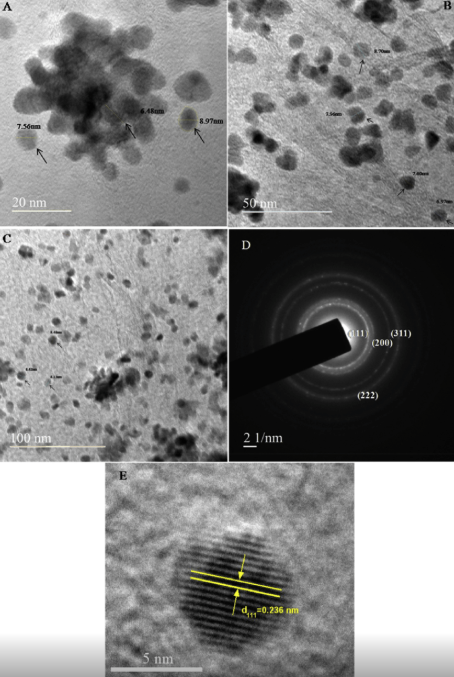
Figure 1. Scale diagram comparing nanoparticle sizes with atoms, proteins, viruses and cells
3. Phase Purity and Chemical Composition
Impurities, even at parts-per-million concentrations, can fundamentally alter experimental outcomes. In heterogeneous catalysis, trace contaminant metals can shift reaction selectivity, poison active sites, or introduce competing side reactions that are nearly impossible to diagnose without elemental analysis. In semiconductor and photonic applications, incorrect phase composition means incorrect bandgap, rendering the material useless for its intended function.
When evaluating a nanoparticle product, assess the following:
Stated purity grade. There is a meaningful difference between 99.9% and 99.95% metal basis purity. Higher-purity grades carry a cost premium but are essential for sensitive analytical techniques, optical device fabrication, and any in vivo biomedical work where contaminant toxicity is a regulatory concern.
Phase identification via X-ray diffraction (XRD). This is non-negotiable for metal oxide nanoparticles. Iron oxide, for instance, can crystallize as magnetite (Fe₃O₄, inverse spinel, ferrimagnetic), maghemite (γ-Fe₂O₃, defect spinel, ferrimagnetic), or hematite (α-Fe₂O₃, corundum structure, weakly ferromagnetic). Each phase has fundamentally different magnetic, catalytic, and electronic properties, yet they can coexist in a single batch if synthesis conditions are not tightly controlled. In particular, top-down synthesis methods such as ball milling and laser ablation require precise control of energy input and milling parameters to achieve consistent phase purity and size homogeneity.
Certificate of analysis (CoA) that includes elemental composition data from ICP-OES or ICP-MS, confirming both the target element concentration and trace impurity levels. Reputable suppliers such as Nanografi provide lot-specific CoA documentation, enabling researchers to verify batch-to-batch consistency before committing to a full experimental campaign.
4. Specific Surface Area and Morphology
The Brunauer-Emmett-Teller (BET) specific surface area, measured via nitrogen gas adsorption, is a direct quantitative indicator of how much reactive or functional surface a given mass of nanoparticles provides. High BET values (typically >50 m²/g for sub-50 nm particles) are desirable in catalysis, gas sensing, and adsorption applications, but may complicate dispersion homogeneity in dense polymer matrices due to increased interparticle van der Waals attraction.
A 2025 study in Analytical and Bioanalytical Chemistry highlighted that certified reference materials for nanoparticle surface area characterization remain limited in both number and compositional diversity, underscoring the importance of sourcing well-characterized commercial products with documented BET data rather than relying on nominal catalog specifications alone (Mielke et al., 2025).
Morphology is equally consequential. Spherical particles provide isotropic properties, predictable packing density, and reproducible flow behavior in powder processing. Non-spherical morphologies (rods, platelets, cubes, tubes) introduce anisotropic thermal, electrical, or mechanical properties that can be engineered for directional functionality. Carbon nanotubes are a prime example: their extreme aspect ratio (length-to-diameter ratios exceeding 1000:1) enables percolation-threshold conductivity in composites at very low filler loadings. Always request TEM or SEM micrographs from the supplier when morphology is a design-critical parameter.
5. Surface Chemistry and Functionalization
As-synthesized nanoparticles rarely perform optimally without some degree of surface engineering. Surface modification techniques, including silane coupling, polymer grafting, ligand exchange, and plasma treatment, can dramatically improve dispersion stability, biocompatibility, chemical selectivity, or interfacial adhesion in composite systems.
When selecting nanoparticles for purchase, consider which surface state best fits your workflow:
Uncoated (bare) particles are appropriate when you intend to apply your own functionalization protocol and need a clean, well-defined starting surface. Be aware that bare metallic nanoparticles (Fe, Cu, Al) are often pyrophoric or rapidly oxidize in ambient conditions.
Passivated particles (e.g., carbon-coated iron nanoparticles, oxide-shell-protected copper nanoparticles) provide oxidation resistance and extended shelf life while preserving core material properties. These are the practical choices for most laboratory settings without dedicated glove box infrastructure.
Pre-functionalized particles modified with specific chemical groups (-NH₂, -COOH, -SH, PEG chains) are available for immediate use in bioconjugation, targeted delivery, or self-assembly protocols. Purchasing pre-functionalized particles saves significant bench time but limits flexibility if your surface chemistry requirements evolve during the project.
6. Practical Procurement Checklist
Before placing an order, systematically verify the following with your supplier:
Characterization data package. At minimum, expect TEM/SEM images confirming morphology and primary particle size, XRD pattern confirming phase composition, BET surface area measurement, and particle size distribution data (DLS or laser diffraction). Any supplier that cannot provide these basic characterization results should be approached with caution.
Storage and handling requirements. Many nanoparticle systems, particularly metallic and chalcogenide compositions, are air-sensitive, moisture-sensitive, or both. Confirm recommended storage conditions (inert gas, desiccated, refrigerated) and expected shelf life under those conditions.
Quantity scalability. Verify that the supplier can maintain consistent quality from initial research quantities (5 to 25 g) through to pilot-scale orders (1 to 10 kg) if your project advances toward application development. Lot-to-lot variability at scale-up is a common failure mode in nanomaterials procurement.
Technical support availability. A knowledgeable supplier should be able to advise on product grade selection, recommend characterization protocols, and provide application-specific guidance based on their materials expertise.
Conclusion
Choosing the right nanoparticles is not simply a matter of picking a composition from a catalog. It requires deliberate alignment of particle size distribution, phase purity, specific surface area, morphology, and surface chemistry with your defined research objectives. By following a systematic, parameter-driven selection process and partnering with a supplier that provides comprehensive and lot-specific characterization data, you can minimize experimental variability and accelerate your path from hypothesis to reproducible, publishable results.
Explore Nanografi's complete range of nanoparticles and microparticles to find the precisely characterized material for your next project.
References
- Aziz, A., Shaikh, H., Abbas, A., Zehra, K. E., & Javed, B. (2025). Microscopic techniques for nanomaterials characterization: A concise review. Microscopy Research and Technique, 88, 1599-1614. https://doi.org/10.1002/jemt.24799
- Huber, D. L. (2005). Synthesis, properties, and applications of iron nanoparticles. Small, 1(5), 482-501. https://doi.org/10.1002/smll.200500006
- John, J. (2025). Cutting-edge nanoparticle innovations in biomedical science: Synthesis, applications, challenges, and future prospects. Journal of Nanotechnology and Nanomaterials, 6(1), 43-66.
- Mielke, J., et al. (2025). Nanoscale reference and test materials for the validation of characterization methods for engineered nanomaterials: Current state, limitations, and needs. Analytical and Bioanalytical Chemistry, 417(12), 2405-2425.
- Sreelatha, K., et al. (2025). A comprehensive review of nanoparticle characterization techniques. International Journal of Research and Review, 12(1).
- Wang, H., & Wei, W. (2021). Nanoparticle size effects in biomedical applications. ACS Applied Nano Materials, 4(7), 6471-6496. https://doi.org/10.1021/acsanm.1c00987
Recent Posts
-

MXene for EMI Shielding: Materials, Mechanisms and Applications
Electromagnetic interference has become a design constraint rather than an afterthought. Densely pac …10th Sep 2026 -

Handling and Storage Best Practices for Metal Oxide Nanopowders
A metal oxide nanopowder is bought for a property that a coarse powder cannot deliver: a specific su …1st Sep 2026 -

Activated Carbon vs Zeolites vs MOFs: Which Adsorbent Material Should You Choose?
Activated carbon, zeolites and metal-organic frameworks (MOFs) represent three distinct adsorbent cl …20th Aug 2026